
Stellite Alloy CNC Machining Solutions for Boosting Compressor Components
Introduction
Stellite alloys are widely recognized for their outstanding wear resistance, thermal stability, and corrosion resistance, making them an excellent choice for compressor components operating in extreme conditions. At Neway AeroTech, we provide precision CNC machining services for Stellite alloys, delivering high-performance compressor parts with dimensional tolerances as tight as ±0.005 mm and superior mechanical properties.
By utilizing advanced multi-axis CNC machines, optimized cutting strategies, and aerospace-grade quality control, Neway ensures that Stellite compressor components achieve maximum operational reliability, fatigue resistance, and extended service life.
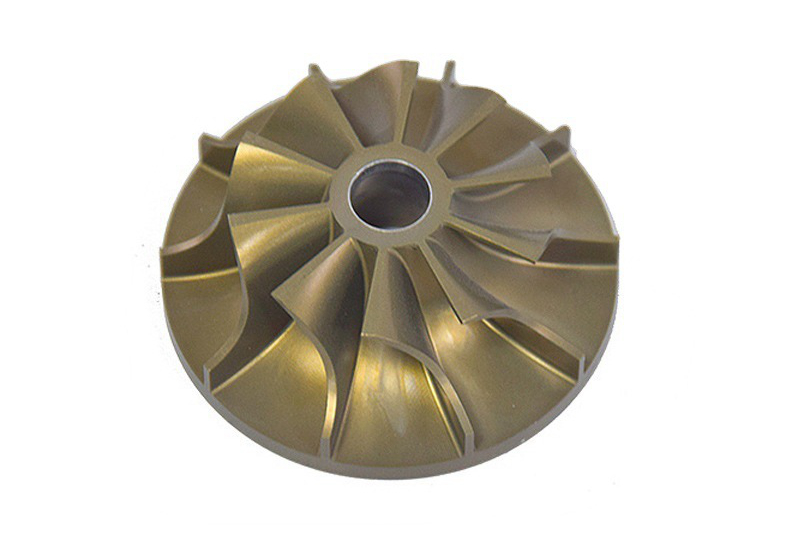
Core Manufacturing Challenges for Stellite Compressor Components
CNC machining Stellite alloys like Stellite 6 and Stellite 21 presents several critical challenges:
Extremely high hardness (HRC 40–55), causing accelerated tool wear and demanding specialized tooling.
Maintaining ultra-precise dimensional tolerances (±0.005 mm) is necessary for sealing surfaces and rotor balancing.
Managing high machining heat and minimizing work hardening during the cutting process.
Achieving fine surface finishes (Ra ≤0.8 µm) is essential for dynamic efficiency and reduced friction.
Precision CNC Machining Process for Stellite Compressor Components
Our CNC machining process for Stellite compressor parts includes:
Material Analysis: Detailed assessment of Stellite microstructure to select optimal cutting parameters and tooling.
Advanced Tooling: Use of carbide or ceramic inserts designed for high-hardness materials.
Multi-Axis CNC Machining: 5-axis machining to create complex geometries and achieve precise features in a single setup.
Optimized Machining Parameters: Controlled speeds (15–40 m/min) and low feeds (0.02–0.10 mm/rev) to balance productivity and surface quality.
Surface Finishing Passes: Light finishing cuts to achieve Ra ≤0.8 µm, ensuring performance and reliability.
Dimensional Inspection: Full verification using CMM systems to guarantee ±0.005 mm dimensional tolerances.
Comparison of Manufacturing Methods for Stellite Compressor Parts
Manufacturing Method | Dimensional Accuracy | Surface Finish (Ra) | Wear Resistance | Thermal Stability | Cost Efficiency |
|---|---|---|---|---|---|
Precision CNC Machining | ±0.005 mm | ≤0.8 µm | Superior | Superior | Medium-High |
Wire EDM Machining | ±0.003 mm | ≤0.4 µm | Excellent | Excellent | High |
Conventional CNC Machining | ±0.01 mm | ≤1.6 µm | Good | Good | Medium |
Manufacturing Method Selection Strategy
Choosing the optimal machining method depends on component function and precision requirements:
Precision CNC Machining: Ideal for compressor components requiring excellent mechanical properties, tight tolerances (±0.005 mm), and smooth surface finishes to enhance dynamic performance.
Wire EDM Machining: Suitable for ultra-high precision internal features but less efficient for larger volumes.
Conventional Machining: Acceptable for simpler parts where ±0.01 mm tolerances are sufficient and cost control is prioritized.
Stellite Alloy Performance Matrix
Alloy Material | Hardness (HRC) | Tensile Strength (MPa) | Creep Resistance | Thermal Stability | Typical Applications |
|---|---|---|---|---|---|
43–50 | 900 | Good | 800°C | Compressor rotors, valve seats | |
35–45 | 870 | Moderate | 800°C | Sealing rings, thrust bearings | |
48–55 | 950 | Good | 850°C | Compressor blades, erosion shields | |
35–42 | 820 | Moderate | 780°C | Valve stems, sealing surfaces | |
42–48 | 870 | Good | 800°C | Compressor shafts, wear-resistant components | |
30–38 | 850 | Moderate | 950°C | Turbine hot-section compressor parts |
Alloy Selection Strategy for Compressor Components
Selecting the right Stellite alloy ensures maximum performance and service life:
Stellite 6: Best suited for compressor rotors and valves requiring high wear and corrosion resistance with stability up to 800°C.
Stellite 21: Ideal for components needing better ductility and corrosion resistance, while maintaining good strength at 800°C.
Stellite 12: Chosen for blades and shields exposed to severe erosive environments and high temperatures up to 850°C.
Stellite 20: Used in valve stems and sealing elements requiring moderate strength and thermal stability.
Stellite 6B: Selected for shafts and rotating compressor parts subjected to continuous mechanical and thermal stresses.
Stellite 25: Preferred for high-temperature compressor components needing oxidation resistance and mechanical stability at temperatures approaching 950°C.
Key Post-processing Techniques
Post-processing is essential for final component performance:
Precision Surface Finishing: Polishing and micro-finishing to achieve Ra ≤0.8 µm.
Heat Treatment: Stress-relieving and aging treatments to improve ductility and wear resistance.
Protective Coatings: Wear and corrosion-resistant coatings for prolonged service life.
Hot Isostatic Pressing (HIP): Enhances density and eliminates internal porosity.
Testing Methods and Quality Assurance
Neway AeroTech enforces strict quality control measures:
Coordinate Measuring Machine (CMM): Dimensional verification with ±0.005 mm accuracy.
X-ray Inspection: Non-destructive internal defect detection.
Metallographic Microscopy: Microstructure evaluation.
Tensile Testing: Verification of strength and ductility.
All manufacturing processes adhere to AS9100 aerospace quality standards.
Case Study: CNC Machined Stellite 6 Compressor Rotors
Neway AeroTech manufactured Stellite 6 compressor rotors for industrial turbo systems, achieving:
Operating Conditions: Continuous service up to 600°C
Dimensional Precision: Maintained ±0.005 mm across all critical features
Surface Finish: Achieved Ra ≤0.7 µm after polishing
Certification: Full compliance with AS9100 aerospace and industrial quality standards
FAQs
Why is Stellite alloy suitable for compressor components in harsh environments?
What dimensional tolerances can be achieved when machining Stellite compressor parts?
How does Neway AeroTech manage machining challenges for high-hardness Stellite alloys?
Which Stellite grades are recommended for rotors, blades, and sealing rings?
What quality control methods ensure the reliability of Stellite CNC machined parts?
