
Stellite 6 CNC Machining for Turbine Vane Rings with Enhanced Durability
Introduction
Stellite 6 is a cobalt-chromium-tungsten alloy known for excellent wear resistance, corrosion resistance, and high-temperature strength up to 870°C. With a typical hardness of 43–46 HRC and tensile strength around 930 MPa, it is the ideal choice for turbine vane rings subjected to abrasive, erosive, and thermal fatigue environments.
At Neway AeroTech, we specialize in precision CNC machining of Stellite 6 turbine vane rings, delivering ±0.01 mm dimensional accuracy and Ra ≤0.8 µm surface finishes, ensuring maximum efficiency and service life under extreme turbine conditions.
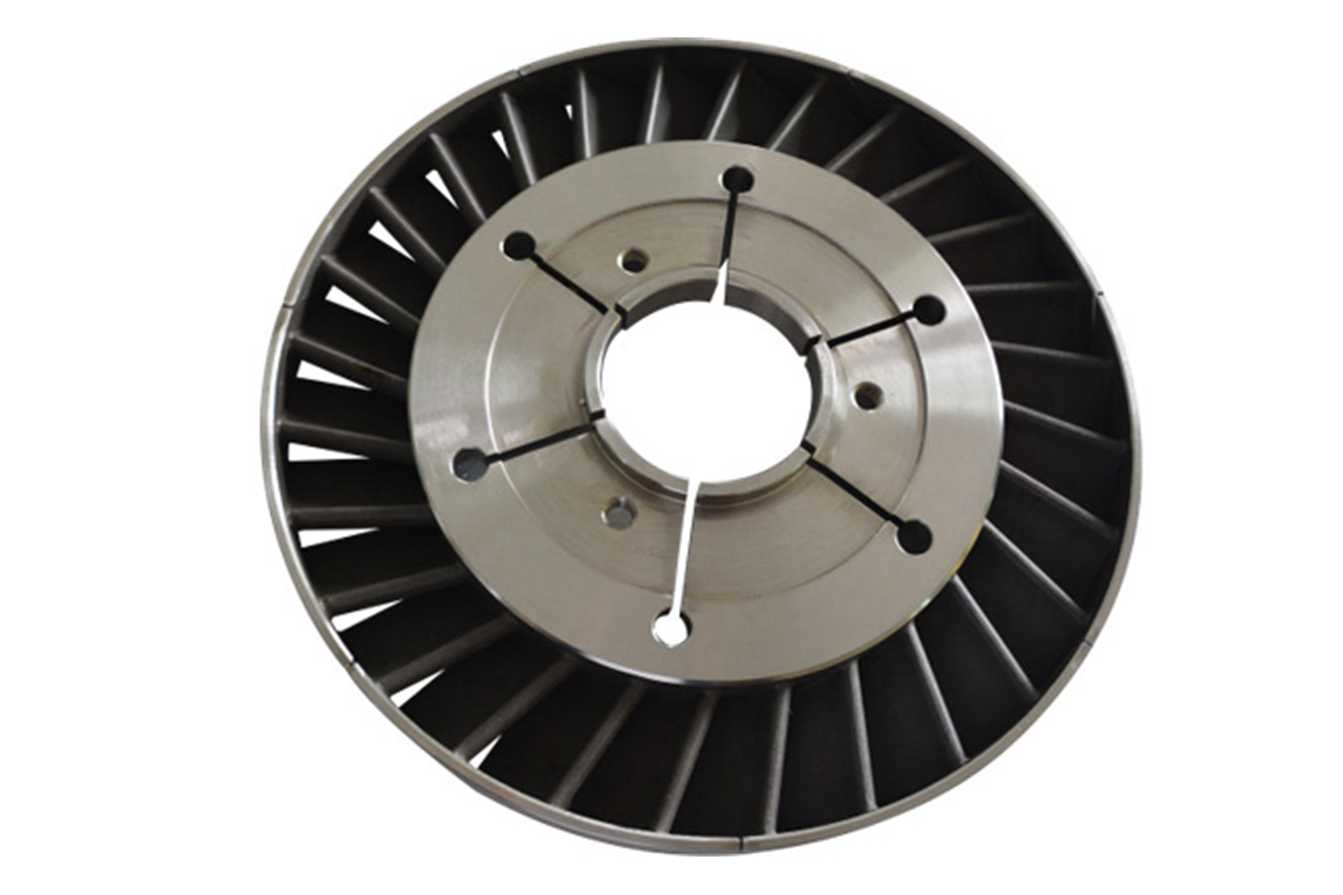
Technical Challenges in Stellite 6 Turbine Vane Ring Machining
Maintaining tight tolerances (±0.01 mm) for precise aerodynamic profiles.
Machining high-hardness material (43–46 HRC) without causing thermal damage.
Achieving smooth surfaces (Ra ≤0.8 µm) to optimize airflow.
**Ensuring resistance to erosion, corrosion, and thermal fatigue at 870°C operation.
Precision Machining Process for Turbine Vane Rings
The manufacturing process includes:
Material Preparation: Vacuum investment casting or forging Stellite 6 billets with initial quality inspections.
Rough Machining: PCBN or ceramic tooling used to rough contour without overheating the workpiece.
Heat Treatment: Stress relieving to enhance dimensional stability post-machining if needed.
Semi-Finishing: Accurate intermediate shaping, preparing for final pass machining.
Precision Finishing: CNC contouring and grinding to meet tight tolerances and surface quality.
Final Inspection: CMM and non-destructive testing ensure conformity to specifications.
Comparative Analysis of Machining Methods for Vane Rings
Machining Method | Surface Finish Quality | Dimensional Accuracy | Tool Life | Suitable for Stellite 6 | Production Efficiency |
|---|---|---|---|---|---|
Precision CNC Machining | Excellent (Ra ≤0.8 µm) | Very High (±0.01 mm) | Moderate | Yes | High |
EDM | Good (Ra ~2 µm) | High (±0.02 mm) | High | Limited | Low |
Grinding and Polishing | Excellent (Ra ≤0.4 µm) | Very High (±0.005 mm) | High | Yes | Moderate |
Conventional Machining | Poor (Ra ~8–12 µm) | Low (±0.1 mm) | Low | No | Low |
Optimal Machining Strategy for Turbine Vane Rings
Precision CNC machining: Achieves aerodynamic profiles with Ra ≤0.8 µm and ±0.01 mm tolerance.
Grinding and polishing: Enhances surface finish to Ra ≤0.4 µm for aerodynamic optimization.
EDM machining: Used selectively for complex contours or fine features.
[Conventional machining]: Unsuitable due to extreme tool wear and poor precision.
Stellite 6 Alloy Performance Overview
Property | Value | Application Relevance |
|---|---|---|
Hardness | 43–46 HRC | Superior erosion and abrasion resistance |
Max Operating Temperature | ~870°C | Excellent mechanical strength at high temperatures |
Corrosion Resistance | Excellent | Ideal for harsh chemical and gas environments |
Tensile Strength | ~930 MPa | Reliable mechanical load capacity |
Thermal Expansion Coefficient | ~13.8 µm/m·°C | Maintains dimensional stability under heat cycling |
Advantages of Using Stellite 6 for Turbine Vane Rings
Superior erosion resistance against high-velocity particle-laden gases extends service life.
High thermal stability preserves mechanical integrity up to 870°C.
Outstanding corrosion resistance ensures durability in chemically aggressive environments.
Dimensional reliability guarantees optimal airflow efficiency in turbines.
Post-processing Techniques for Turbine Vane Rings
Hot Isostatic Pressing (HIP): Densifies microstructure, eliminating internal voids at ~1160°C, 100 MPa.
Thermal Barrier Coating (TBC): Reduces thermal fatigue and protects from heat erosion.
Non-destructive Testing (NDT): Detects subsurface defects to ensure reliability.
Precision CNC Finishing: Delivers final contours for aerodynamic efficiency.
Inspection and Quality Assurance for Turbine Vane Rings
Coordinate Measuring Machine (CMM): Ensures ±0.01 mm accuracy on critical surfaces.
Ultrasonic Testing (UT): Internal flaw detection without damaging parts.
Dye Penetrant Testing (PT): Detects surface cracks as small as 0.002 mm.
Metallographic Analysis: Verifies grain structure compliance with aerospace standards.
Industry Applications and Case Study
Stellite 6 turbine vane rings produced by Neway AeroTech are widely used in aerospace engines, land-based gas turbines, and industrial turbo-machinery. In a recent aerospace turbine upgrade project, Stellite 6 vane rings increased operating life by over 30% under high-speed and high-temperature conditions compared to conventional nickel alloys, significantly reducing maintenance costs.
FAQs
What precision levels does Neway AeroTech achieve for Stellite 6 turbine vane rings?
Why is Stellite 6 preferred for high-temperature turbine vane applications?
How does CNC machining enhance the performance of Stellite 6 vane rings?
What industries most commonly use Stellite 6 turbine vane components?
How does Neway AeroTech ensure quality control for Stellite 6 vane rings?
