
Special High-Temperature Alloy Investment Casting Nozzle Ring Manufacturer
Introduction
Nozzle rings crafted from specialized high-temperature alloys play a critical role in gas turbine performance, enduring continuous temperatures over 1100°C. Utilizing advanced vacuum investment casting processes, Neway AeroTech produces nozzle rings with dimensional accuracy of ±0.05 mm, excellent surface finishes (Ra ≤1.6 µm), and superior metallurgical consistency.
Employing industry-standard alloys such as Inconel and Hastelloy, Neway AeroTech meets stringent aerospace and industrial performance criteria, ensuring durability and reliability under severe operational conditions.
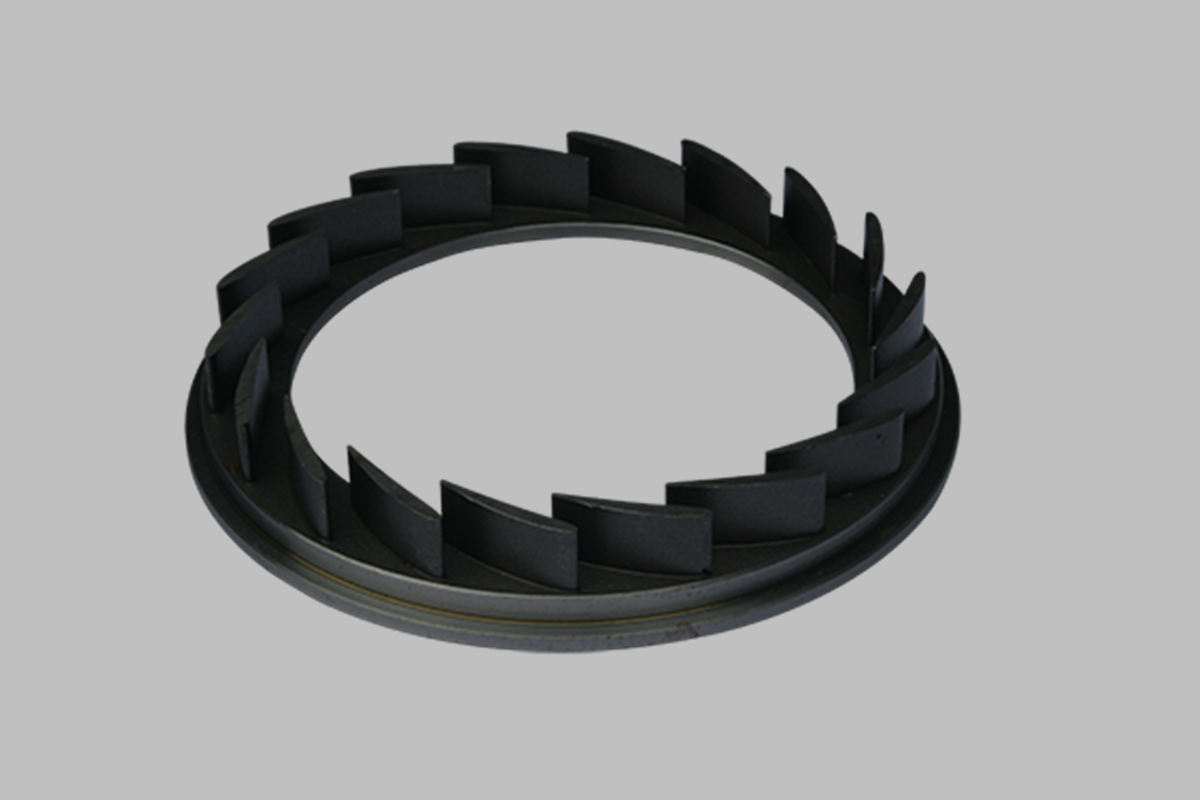
Core Manufacturing Challenges for High-Temperature Alloy Nozzle Rings
Producing nozzle rings from high-temperature alloys like Inconel 713C and CMSX-4 involves addressing several technical challenges:
High melting points (1300-1450°C) require specialized vacuum furnaces.
Achieving dimensional precision within ±0.05 mm for complex aerodynamic features.
Maintaining superior surface finishes (Ra ≤1.6 µm) is essential for aerodynamic efficiency.
Precise control of grain structure (single-crystal, directional, or equiaxed) to optimize creep resistance.
Investment Casting Process for Nozzle Rings
The investment casting process for high-temperature alloy nozzle rings includes:
Wax Pattern Creation: Precision wax patterns are produced via CNC machining or additive manufacturing.
Ceramic Shell Formation: Multiple ceramic slurry and refractory sand layers coat wax patterns to create molds.
Dewaxing: Wax removal through autoclave steam treatment at approximately 150°C.
Vacuum Casting: Pouring molten alloy into molds under high vacuum (<0.01 Pa) to avoid impurities and oxidation.
Controlled Solidification: Directional or single-crystal solidification is managed precisely to enhance structural integrity.
Shell Removal and Finishing: Mechanical and chemical methods to remove ceramic shell, followed by CNC machining for precise dimensions.
Comparison of Nozzle Ring Manufacturing Methods
Manufacturing Method | Dimensional Accuracy | Surface Finish (Ra) | Grain Structure Control | Mechanical Performance | Cost Efficiency |
|---|---|---|---|---|---|
Vacuum Investment Casting | ±0.05 mm | ≤1.6 µm | Excellent | Superior | Medium |
Powder Metallurgy | ±0.03 mm | ≤1.2 µm | Excellent | Superior | High |
Precision Forging | ±0.2 mm | ≤3.2 µm | Moderate | Good | Medium |
CNC Machining | ±0.01 mm | ≤0.8 µm | Limited | Good | High |
Manufacturing Method Selection Strategy
Selection strategy for nozzle ring fabrication includes:
Vacuum Investment Casting: Optimal for nozzle rings requiring intricate shapes, tight tolerances (±0.05 mm), excellent surface quality (Ra ≤1.6 µm), and complex grain structures.
Powder Metallurgy: Best for nozzle rings needing superior creep and fatigue resistance with very fine microstructures and tighter tolerances (±0.03 mm).
Precision Forging: Suitable for nozzle rings with simpler designs where moderate dimensional precision (±0.2 mm) and higher production efficiency are priorities.
CNC Machining: Ideal for limited volume runs, prototyping, or finishing operations requiring precise dimensions (±0.01 mm) and smooth surface finishes.
High-Temperature Alloy Performance Matrix
Alloy Material | Melting Range (°C) | Service Temp (°C) | Tensile Strength (MPa) | Oxidation Resistance | Typical Applications |
|---|---|---|---|---|---|
1310-1355 | 950 | 1200 | Exceptional | High-temp nozzle rings | |
1315-1345 | 1150 | 1250 | Superior | Single-crystal nozzle rings | |
1260-1355 | 900 | 860 | Superior | Combustor nozzle rings | |
1320-1360 | 950 | 1200 | Excellent | Gas turbine nozzles | |
1320-1365 | 1150 | 1150 | Superior | Aero-engine nozzle rings | |
1260-1350 | 800 | 870 | Excellent | Valve and pump nozzles |
Material Selection Strategy for Nozzle Rings
Material selection strategies include:
Inconel 713C: Ideal for nozzle rings operating at high temperatures (950°C), requiring superior oxidation resistance and tensile strength (1200 MPa).
CMSX-4: Preferred for single-crystal nozzle rings requiring exceptional creep strength and stability at temperatures up to 1150°C.
Hastelloy X: Selected for combustor nozzle rings due to reliable high-temperature corrosion resistance, moderate strength (860 MPa), and service up to 900°C.
Nimonic 90: Optimal for gas turbine nozzle applications needing excellent mechanical strength (1200 MPa), oxidation resistance, and operational stability at 950°C.
Rene N5: Best suited for aero-engine nozzle rings requiring extraordinary fatigue and creep resistance at extreme temperatures (~1150°C).
Stellite 6: Chosen for nozzle components such as valves and pumps demanding wear resistance, moderate temperature stability (800°C), and tensile strength (~870 MPa).
Key Post-processing Technologies
Crucial post-processing steps for nozzle rings:
Hot Isostatic Pressing (HIP): Eliminates internal porosity, improving fatigue life significantly.
Thermal Barrier Coating (TBC): Ceramic coatings (100-250 µm thick) reduce surface temperature, enhancing longevity.
Precision CNC Machining: Final machining achieving aerospace-level tolerances (±0.01 mm), vital for precision assembly.
Controlled Heat Treatment: Tailored solution annealing and aging processes optimize microstructure and mechanical properties.
Testing Methods and Quality Assurance
Neway AeroTech utilizes advanced quality control and testing methods to ensure nozzle rings meet rigorous aerospace standards, including:
Coordinate Measuring Machine (CMM): Precise dimensional verification (±0.005 mm).
X-ray Inspection: Non-destructive detection of internal defects and porosity.
Metallographic Microscopy: Detailed microstructural evaluation ensuring grain integrity.
Tensile Testing: Verification of mechanical properties such as tensile strength and yield strength compliance.
Quality procedures adhere strictly to AS9100 aerospace quality standards, encompassing rigorous assessments and fatigue performance validations.
Case Study: CMSX-4 Single-Crystal Nozzle Rings
Neway AeroTech supplied CMSX-4 nozzle rings for aerospace applications using vacuum investment casting and HIP, achieving:
Operational Temperature: Continuous service at 1150°C
Fatigue Life: Improved by 40%
Dimensional Precision: ±0.03 mm consistently maintained
Certification: AS9100 aerospace standards compliance
FAQs
What advantages does vacuum investment casting offer for nozzle ring production?
Which superalloys are optimal for high-temperature nozzle ring applications?
How precise are dimensional tolerances achievable with vacuum investment casting?
What post-processing methods enhance nozzle ring fatigue life and thermal resistance?
How does material selection influence nozzle ring performance in extreme environments?
