
Casting Superalloys Nimonic 75 Nozzle Guide Vanes Vacuum Investment Casting Manufacturer
Introduction
Nimonic 75 is a nickel-chromium alloy engineered for outstanding oxidation resistance, superior thermal stability, and mechanical strength at service temperatures up to 950°C. With a tensile strength of ~750 MPa and excellent creep resistance, it is highly suited for manufacturing nozzle guide vanes operating in high-temperature, corrosive gas turbine environments.
At Neway AeroTech, we specialize in producing Nimonic 75 nozzle guide vanes using precision vacuum investment casting, ensuring exceptional dimensional accuracy, defect-free surfaces, and optimal metallurgical integrity critical for aerospace and industrial gas turbine applications.
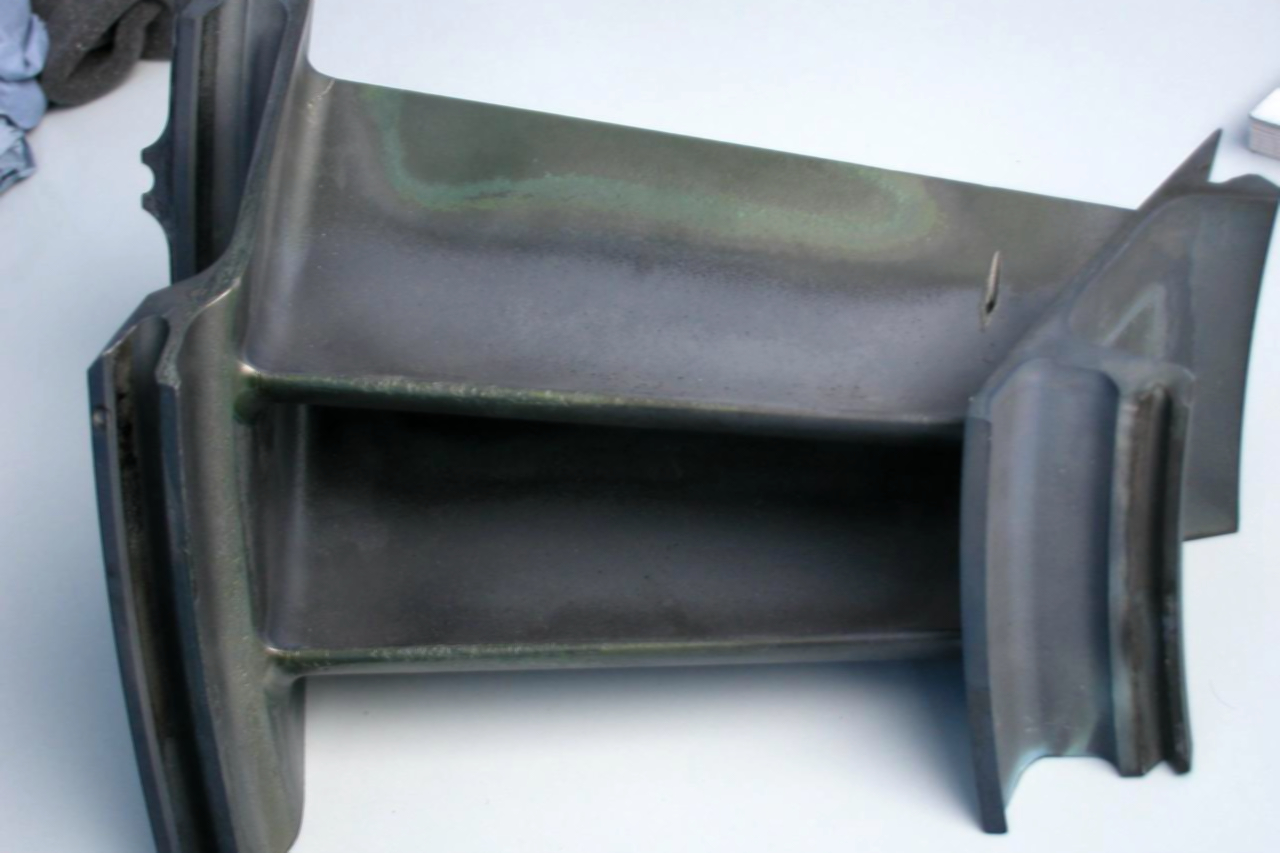
Key Manufacturing Challenges for Nimonic 75 Nozzle Guide Vanes
Maintaining strict alloy composition with ≥75% nickel and ≥20% chromium for corrosion and oxidation resistance.
Controlling solidification rate (~5–7°C/min) to prevent microsegregation and grain coarsening.
Achieving ±0.05 mm dimensional precision to meet stringent aerodynamic performance requirements.
Producing surface finish Ra ≤1.6 µm to optimize gas flow and minimize drag losses.
Vacuum Investment Casting Process for Nimonic 75 Vanes
The manufacturing process includes:
Wax Pattern Fabrication: Wax patterns dimensionally accurate to within ±0.1% are created using precision molds.
Ceramic Shell Formation: Application of fine-grain ceramic slurry layers and zircon-based refractory sand.
Dewaxing: Steam autoclaving at ~150°C cleanly removes wax, maintaining mold shell integrity.
Vacuum Melting and Pouring: Nimonic 75 alloy melted and poured at ~1400°C under vacuum (<10⁻³ Pa) to prevent oxidation.
Controlled Solidification: Uniform cooling promotes equiaxed fine-grain microstructure, improving creep resistance.
Shell Removal and Final Machining: Shell is removed, surfaces cleaned, and critical dimensions CNC-machined to ±0.05 mm accuracy.
Comparative Analysis of Casting Methods for Nozzle Guide Vanes
Process | Surface Finish Quality | Dimensional Precision | Mechanical Strength | Oxidation Resistance | Cost Level |
|---|---|---|---|---|---|
Vacuum Investment Casting | Excellent (Ra ≤1.6 µm) | Very High (±0.05 mm) | Excellent (~750 MPa) | Outstanding | Moderate |
Equiaxed Crystal Casting | Good (Ra ~3 µm) | High (±0.05 mm) | Very Good (~730 MPa) | Excellent | Moderate |
Sand Casting | Moderate (Ra ~12 µm) | Moderate (±0.5 mm) | Good (~650 MPa) | Moderate | Low |
CNC Machining from Billet | Excellent (Ra ≤0.8 µm) | Very High (±0.01 mm) | Excellent (~760 MPa) | Good | High |
Optimal Manufacturing Strategy for Nimonic 75 Vanes
Vacuum investment casting: Preferred for complex aerodynamic vanes requiring superior surface quality and metallurgical cleanliness.
Equiaxed crystal casting: Used for non-critical vanes needing good strength at lower cost.
Sand casting: Suitable for large non-precision turbine components.
CNC machining: Reserved for secondary operations to achieve ultra-high dimensional precision.
Nimonic 75 Alloy Performance Overview
Property | Value | Application Relevance |
|---|---|---|
Tensile Strength | ~750 MPa | Maintains load-bearing strength up to 950°C |
Max Operating Temperature | ~950°C | Resists thermal degradation in turbine service |
Creep Resistance | Excellent up to 900°C | Maintains shape and dimension under stress |
Corrosion Resistance | Very Good | Suitable for aggressive exhaust gas environments |
Thermal Expansion Coefficient | ~13.3 µm/m·°C | Ensures dimensional stability during thermal cycling |
Advantages of Using Nimonic 75 for Nozzle Guide Vanes
High-temperature strength preserves structural integrity at turbine entry temperatures.
Exceptional oxidation resistance minimizes degradation in hot gas streams.
Good creep performance ensures vane stability during prolonged high-load operation.
Excellent formability and castability allow production of complex aerodynamic shapes.
Post-processing Techniques for Nimonic 75 Vanes
Hot Isostatic Pressing (HIP): Densifies the structure, eliminating internal porosity at ~1160°C and 100 MPa.
Thermal Barrier Coating (TBC): Ceramic coatings (~250 µm) reduce thermal fatigue and protect the surface.
Precision CNC Machining: Achieves ±0.01 mm tolerances critical for aerodynamic surface optimization.
Non-destructive Testing (NDT): Verifies material integrity, detecting cracks, porosity, or metallurgical inconsistencies.
Inspection and Quality Assurance for Nozzle Guide Vanes
Coordinate Measuring Machine (CMM): Measures critical surfaces with ±0.05 mm accuracy.
Ultrasonic Testing (UT): Detects internal voids and microcracks without damaging parts.
Dye Penetrant Testing (PT): Identifies surface flaws as small as 0.002 mm.
Metallographic Analysis: Confirms grain structure and homogeneity compliance per aerospace standards.
Industry Applications and Case Study
Nimonic 75 nozzle guide vanes produced by Neway AeroTech are extensively used in aerospace turbines, industrial gas turbines, and power generation facilities. In a leading aerospace engine program, our vacuum investment cast Nimonic 75 vanes demonstrated 30% longer operational life at continuous 920°C exposure than conventional alloys, reducing turbine maintenance costs and improving overall engine efficiency.
FAQs
What dimensional accuracy can Neway AeroTech achieve for Nimonic 75 nozzle guide vanes?
Why is vacuum investment casting preferred for manufacturing Nimonic 75 vanes?
How does Nimonic 75 perform compared to other Nimonic alloys under high-temperature turbine conditions?
Which industries commonly use Nimonic 75 nozzle guide vanes?
How does Neway AeroTech ensure the metallurgical quality of Nimonic 75 castings?
