Maximizing Strength: Heat Treatment for Alloy Castings
“Maximizing strength” is not a sufficient heat-treatment instruction for an alloy casting. The required cycle must balance the buyer-approved material condition, tensile and creep behavior, ductility, fatigue response, oxidation or corrosion needs, dimensional stability, and downstream machining or coating. The RFQ should define the alloy, casting structure, governing requirement, starting condition, target delivery condition, and evidence needed for release.
A heat-treatment supplier can execute and document an approved route, but should not invent a cycle from a broad alloy family name. Inconel, Rene, Nimonic, Hastelloy, cobalt alloys, titanium alloys, equiaxed castings, directionally solidified castings, and single-crystal castings do not share one universal treatment. Part geometry and section size also influence furnace loading, thermal uniformity, cooling, and distortion.
Define the Property Objective Before Selecting a Cycle
State which material condition the drawing or purchase specification requires. The objective may include dissolving undesirable phases, homogenizing segregation within an approved route, developing strengthening precipitates, stabilizing the structure, relieving manufacturing stress, or preparing the surface and substrate for a later operation. More hardness or tensile strength is not always the correct target if it reduces ductility or creates an incompatible downstream condition.
Provide operating and upset temperatures only as buyer-controlled context, not as a request for the heat treater to design the component. The buyer’s engineering authority should approve the alloy and required properties. The supplier then reviews whether the specified cycle is feasible for the casting envelope, furnace capability, monitoring method, cooling arrangement, and requested documentation.
If multiple specifications apply, identify precedence and revision. Conflicts between a material standard, drawing note, and customer process instruction should be resolved before loading the furnace. A verbal instruction such as “standard heat treatment” cannot control a high-value casting lot.
Identify Alloy, Crystal Structure, and Starting Condition
The RFQ should include full alloy designation, heat or lot identity, casting route, crystal form, prior thermal exposure, HIP status, rough-machining status, and any approved repair. The starting condition determines what the next cycle can accomplish. A casting that has already been solution treated or welded may need a different review from an as-cast blank.
Equiaxed castings contain multiple grains and grain boundaries. Directionally solidified castings control grain alignment along a preferred direction. Single-crystal castings require preservation of the intended crystal structure and careful control of solutioning risk. The heat-treatment instruction should match the exact alloy and structure rather than borrow a cycle from another casting class.
Prior HIP, weld repair, brazing, coating diffusion treatment, or thermal cleaning can add significant exposure. List those operations and their order. The engineering review should consider cumulative thermal history, not only the final furnace cycle shown on the purchase order.
Separate Solution, Stabilization, Aging, and Stress Management
Cycle function | Buyer question | Evidence to define |
Solution or homogenization step | What approved phase or segregation condition is being addressed? | Cycle reference, monitoring, cooling method, coupon relationship |
Stabilization step | What structure or service condition is required? | Alloy-specific instruction, sequence position, inspection |
Aging step | Which property condition is required after precipitation development? | Time-temperature reference, load records, test plan |
Stress-management step | Which prior operation created stress and what geometry must remain stable? | Starting dimensions, support method, post-cycle inspection |
Coating-related diffusion step | How does the thermal exposure interact with substrate condition? | Coating route, masking, cumulative thermal review |
These functions should not be treated as interchangeable labels. A multi-step cycle may combine them, but the route must show each controlled stage and cooling transition. The supplier should identify whether one furnace run covers a complete cycle or whether the parts leave controlled custody between operations.
When a cycle includes rapid transfer or controlled cooling, confirm equipment layout and timing capability before quotation. The purchase instruction should define required monitoring and acceptance without assuming that every furnace has the same loading geometry or quench arrangement.
Review Section Size, Furnace Load, and Support
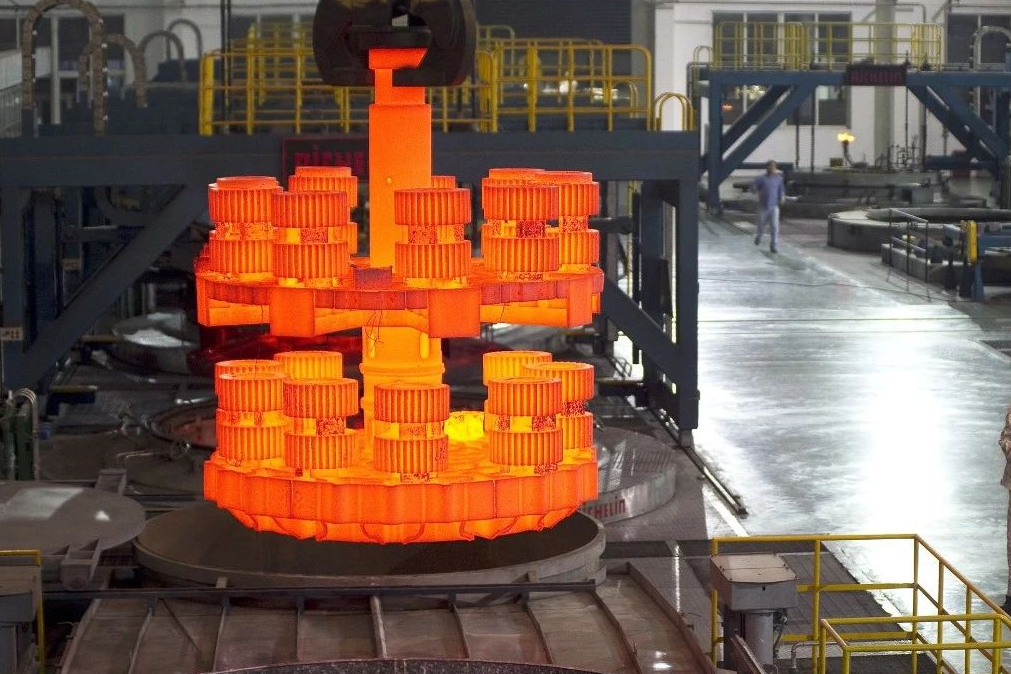
A thermocouple reading for furnace air does not automatically prove that a thick hub and thin airfoil reached the same condition at the same time. The heat treater should review maximum and minimum section, total load mass, part spacing, furnace working zone, shielding, and support points. The approved process instruction determines whether load or part monitoring is required.
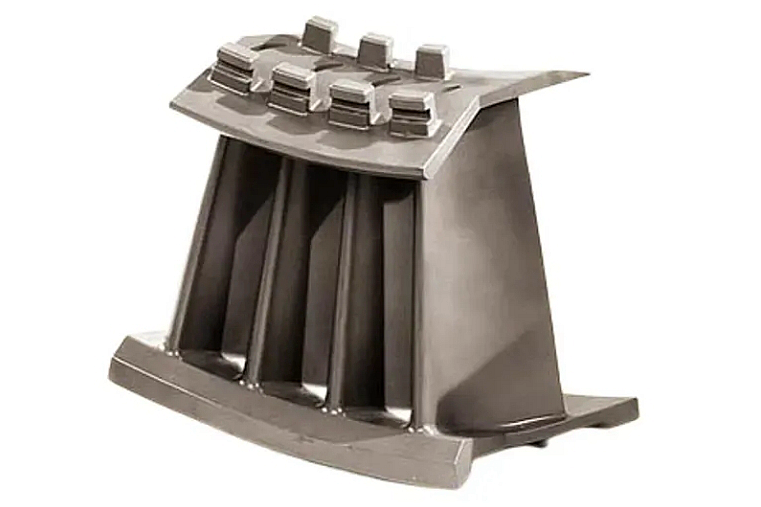
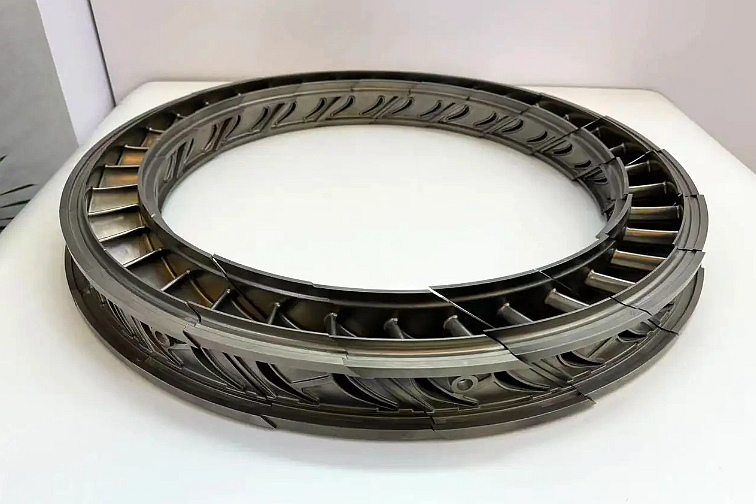
Support strategy affects distortion. A long casing, thin vane segment, ring, blade, or impeller should be fixtured so its own weight and thermal expansion do not create an avoidable dimensional shift. Fixtures must use compatible materials and avoid contaminating contact surfaces. The RFQ should identify critical datums and surfaces that need protection.
Mixed loads require caution. Parts of different alloy, section, condition, or geometry may not be suitable in one cycle even if the nominal setpoint matches. Define lot grouping rules and traceability so the records show which castings shared the same load and processing condition.
Place Heat Treatment Correctly in the Manufacturing Route
Sequence heat treatment with HIP, rough machining, repair, finish machining, drilling, EDM, and coating. HIP and heat treatment serve different functions: HIP can reduce eligible sealed internal porosity under an approved route, while heat treatment controls material condition. Neither process repairs inclusions, wrong chemistry, blocked passages, or missing geometry.
Rough machining before heat treatment may improve section balance or prepare inspection surfaces, but enough stock must remain for scale, movement, and final cleanup. Finish machining before a high-temperature cycle may risk dimensional change or surface oxidation. The casting supplier and machine shop should agree on a feature-based allowance map.
Approved weld repair or assembly joining can require pre- or post-weld thermal steps. The RFQ should identify allowed repair zones, joining instruction ownership, cycle sequence, and repeat NDE. The heat treater should not assume that a weldable alloy permits unrestricted casting repair.
Control Distortion and Dimensional Evidence
Record critical dimensions before treatment when the cycle may move the part, then repeat them afterward at the agreed stage. Typical controls can include flatness, runout, bore position, wall relationship, blade or vane profile, flange spacing, and datum targets. The inspection method should match the feature and should not rely on a fixture that forces a distorted part into compliance.
If straightening is permitted, define the stage, method, temperature condition, dimensional target, and examination required afterward. Straightening is a manufacturing operation with its own risk, not an invisible correction. Any material removal after heat treatment must preserve the minimum wall and machining stock.
CNC machining after heat treatment should use the final material condition expected by the process plan. Hardness, work hardening, scale, and residual stress influence tool life and part movement. A quotation should state whether machining trials, sacrificial setup pieces, or intermediate inspection are included.
Use Representative Coupons and Tests
Test evidence is useful only when the sample represents the casting heat, process lot, section, orientation, and thermal condition required by the purchase specification. Define whether coupons are cast-on, separately cast, machined from a prolongation, removed from a sacrificial part, or supplied by another approved method. State when they are separated from the component.
Material testing and analysis may include tensile properties, hardness, metallography, grain size, phase review, or other requirement-driven checks. A hardness result alone cannot establish every mechanical or microstructural objective. The buyer should request only evidence linked to applicable acceptance requirements.
For metallography, identify sample location, preparation, magnification or evaluation method, and acceptance basis where required. For mechanical tests, identify orientation, test temperature if applicable, specimen relationship, and retest rules from the governing requirement. Results should remain traceable to the furnace load and part lot.
Recognize What Heat Treatment Cannot Correct
Heat treatment cannot restore a casting below dimensional stock, remove ceramic from a passage, close a surface-breaking crack, eliminate an inclusion, correct a stray grain, repair recrystallization, or replace missing material. Some internal porosity may be addressed through an approved HIP route, but that still requires suitable defect morphology and follow-up inspection.
Do not use heat treatment as a generic response to failed properties without a documented engineering review. An additional cycle changes cumulative exposure and may affect grain condition, precipitates, coating compatibility, dimensions, or repair status. Any reheat or retest should follow the designated disposition authority.
The supplier should quarantine a lot when records, identification, temperature control, or cooling sequence deviate from the approved route. Final properties cannot retroactively prove that every required process control was satisfied.
First-Article and Production Release Gate
For a new alloy, geometry, furnace load, or route, use a production-intent first article or qualification lot as required by the buyer. Review incoming material identity, starting condition, route sequence, furnace records, load arrangement, cooling evidence, dimensional change, surface condition, test results, NDE, and downstream machining or coating readiness.
After acceptance, define notification triggers for furnace source, fixture design, load arrangement, cycle revision, monitoring method, cooling equipment, HIP source, repair route, and test laboratory. Repeat production should remain connected to the accepted thermal route.
Heat-Treatment RFQ Checklist
Send the casting drawing and model, alloy and crystal form, heat and lot identity, starting condition, prior HIP or repair, approved cycle reference, quantity and load grouping, part envelope and section range, critical datums, fixture restrictions, cooling requirement, post-cycle surface condition, dimensional inspection, coupon plan, tests, documentation, and first-article hold points.
Request separate prices for fixture development, thermal cycles, cleaning, dimensional checks, NDE, test coupons, laboratory work, reports, packaging, and any approved rework review. This makes the quoted delivery condition and evidence package explicit.
Related FAQs
What Are the Main Types of Heat Treatment Processes Used in Superalloy Casting?
What Types of Superalloys Benefit the Most from Heat Treatment?
How Does Heat Treatment Differ for Single-Crystal and Equiaxed-Crystal Castings?
What Inspection Methods Are Commonly Used After Heat Treatment?
What Is the Difference Between Heat Treatment and Hot Isostatic Pressing?
How Does Heat Treatment Affect the Mechanical Properties of Superalloy Parts?