What are the main types of heat treatment processes used in superalloy casting?
Overview of Heat Treatment for Superalloys
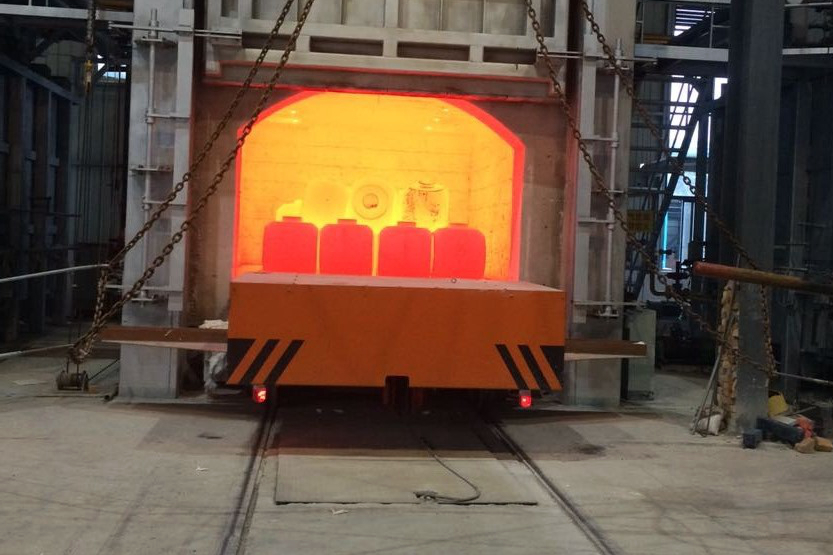
Heat treatment is essential to unlock the full mechanical and thermal capabilities of cast superalloys. The process stabilizes the microstructure, enhances creep and fatigue resistance, and improves dimensional stability during high-temperature operation. Depending on alloy type and application, combinations of solutionizing, aging, stress relief, and densification via hot isostatic pressing (HIP) are applied to optimize performance.
Alloy systems such as Inconel 738 or equiaxed structures produced through equiaxed crystal casting require tailored treatment cycles to manage grain boundary stability and prevent segregation.
Solutionizing and Homogenization
Solution treatment dissolves undesirable phases and redistributes alloying elements. This process is particularly important for alloys produced through vacuum investment casting, where temperature gradients during solidification may create microsegregation. Homogenization at elevated temperatures ensures a uniform matrix and prepares the alloy for subsequent aging or precipitation hardening.
For complex geometries or internal channels, solution treatment is followed by precise cooling to prevent grain coarsening and preserve mechanical strength.
Aging and Precipitation Hardening
Aging cycles promote controlled precipitation of γ′ and carbides, directly improving high-temperature strength and creep resistance. Nickel-based alloys such as Inconel 718 rely heavily on multi-stage aging to optimize γ′/γ″ distribution. The resulting fine structure significantly delays crack initiation during thermal cycling. These processes are crucial for high-stress applications in power generation turbines and aerospace engine sections.
Cobalt-based alloys also benefit from aging, as it enhances carbide distribution and improves abrasion resistance during dynamic loading.
Stress Relief and HIP Processing
Residual stresses introduced during casting or machining may lead to dimensional distortion or premature fatigue failure. Stress relief treatments at moderate temperatures reduce internal stress without affecting microstructure. For critical high-temperature components, stress relief is often combined with HIP treatment to eliminate porosity and enhance bulk density. This greatly improves long-term reliability in turbine blades and combustor housings.
Microstructural validation post-HIP is typically performed via advanced material testing and analysis, ensuring consistent phase distribution and crack resistance.
Application-Driven Customization
Different crystallographic structures demand tailored heat treatment. third-generation single crystal alloys require restricted temperature windows to prevent rafting or unwanted grain nucleation. Equiaxed alloys may require longer solutionizing to improve grain boundary resistance. The choice of cooling rate and treatment duration depends heavily on the casting method, part geometry, and service environment, especially in demanding sectors such as aerospace and aviation and nuclear power systems.
Through carefully controlled heat treatment sequences, superalloy castings achieve the structural integrity and thermal stability essential for long-term operation in extreme conditions.