
Hastelloy B Equiaxed Crystal casting Aircraft Exhaust Systems Manufacturer
Introduction
Hastelloy B is a nickel-molybdenum alloy renowned for its exceptional corrosion resistance, particularly against hydrochloric acid, and maintains structural integrity at temperatures up to 900°C. The Equiaxed Crystal Casting process ensures grain uniformity, optimizing mechanical properties such as tensile strengths exceeding 550 MPa at elevated temperatures.
Leveraging advanced casting technology, Hastelloy B components offer superior reliability in critical aerospace applications, specifically for aircraft exhaust systems and demanding sectors like power generation.
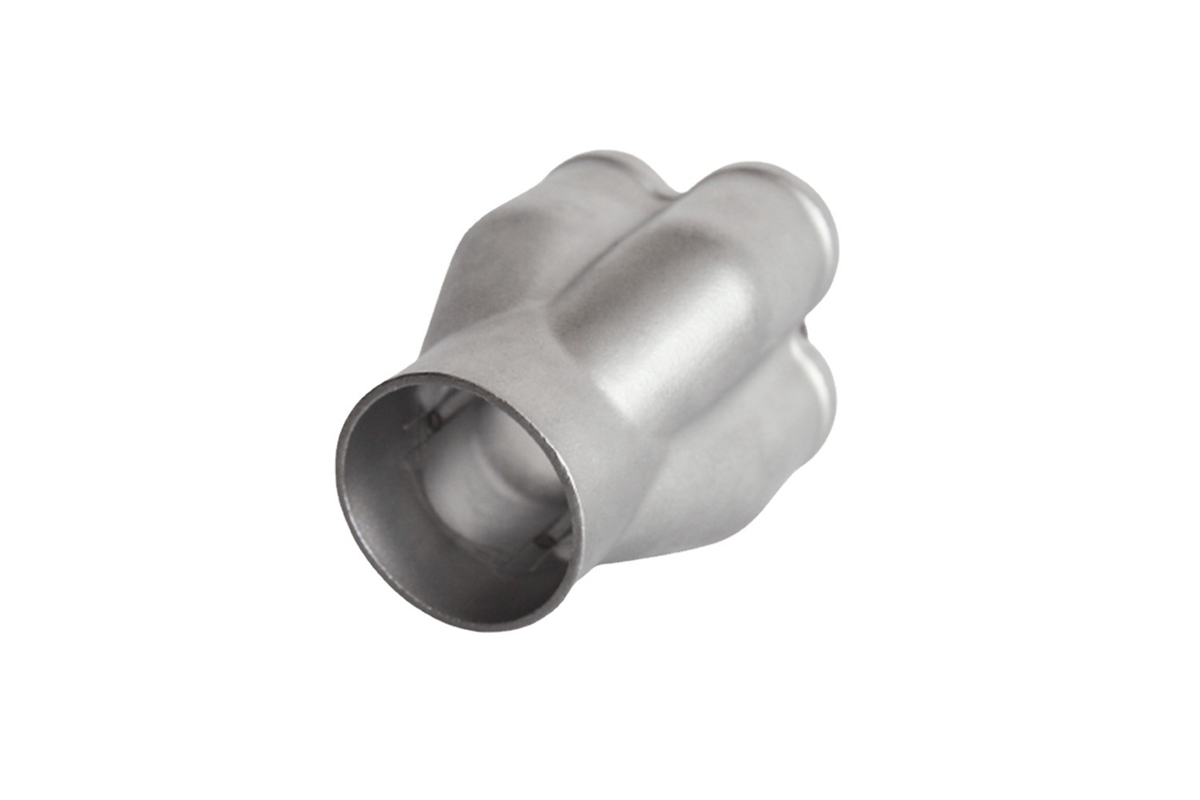
Core Technology of Hastelloy B Equiaxed Crystal Casting
Equiaxed crystal casting technology involves controlled solidification processes to produce uniform microstructures, enhancing isotropic mechanical properties. By precisely managing thermal gradients and cooling rates (typically within 50-200 °C/min), manufacturers achieve optimal grain sizes ranging from 0.5 to 3 mm. This technology effectively reduces structural defects such as porosity and microcracking, crucial for ensuring reliability and longevity of Hastelloy B components operating continuously at temperatures exceeding 900°C.
Material Characteristics of Hastelloy B
Hastelloy B, a nickel-molybdenum alloy, offers exceptional resistance to corrosion, particularly against hydrochloric acid and hydrogen chloride environments. Its excellent mechanical properties at elevated temperatures make it suitable for high-performance aerospace applications. Specific characteristics include:
Property | Value |
|---|---|
Melting Point | 1330–1380°C |
Density | 9.24 g/cm³ |
Yield Strength (at 760°C) | 230 MPa |
Tensile Strength (at 760°C) | 550 MPa |
Elongation | ≥40% |
Thermal Expansion Coefficient | 11.2 µm/m°C |
These distinct properties position Hastelloy B as an ideal choice for manufacturing high-stress aircraft exhaust components.
Case Study: Hastelloy B Aircraft Exhaust Systems Equiaxed Crystal Casting
Project Background
The project involved the production of high-performance aircraft exhaust systems using Hastelloy B through equiaxed crystal casting. Driven by the need for enhanced durability, corrosion resistance, and thermal stability in aerospace applications, the components were manufactured to comply with stringent aerospace standards (AMS5755, ASTM B333). The end-use environment demanded reliable operation at sustained exhaust temperatures above 850°C.
Typical Exhaust Systems Models and Applications
F110 Engine Exhaust Ducts: Military jet engines requiring high corrosion resistance and structural stability under temperatures up to 900°C operation.
GE CF34 Nozzle Assemblies: Commercial aviation turbofan engines needing superior thermal fatigue resistance and corrosion durability during frequent flight cycles.
Pratt & Whitney PW1000G Exhaust Components: Advanced turbofan engine parts optimized for weight reduction and exceptional strength at elevated operational temperatures.
Honeywell 131-9 APU Exhaust: Auxiliary power units demanding reliable thermal stability and resistance to exhaust gas corrosion during continuous ground operations.
These components effectively withstand severe thermal cycling, aggressive chemical environments, and mechanical stresses inherent to aerospace and defense operations.
Exhaust Systems Component Manufacturing Solutions
Manufacturing Process Components are produced through vacuum investment casting employing equiaxed crystal solidification. Precise control of casting temperatures (around 1400°C), mold preheating at 950-1100°C, and strict solidification rates ensure uniform microstructure, consistent grain size (1-3 mm), and dimensional tolerances within ±0.05 mm.
Post-processing Process After casting, parts undergo hot isostatic pressing (HIP), conducted at approximately 1150°C under inert argon atmosphere and pressures of 100-120 MPa. This critical step reduces porosity below 1%, significantly enhancing structural density, mechanical properties, and fatigue performance.
Surface Treatment To further protect against high-temperature oxidation and corrosive gases, components receive a thermal barrier coating (TBC) applied via plasma spraying. The TBC, typically consisting of yttria-stabilized zirconia (YSZ), effectively insulates the substrate, reduces operating temperature by up to 200°C, and significantly extends component life.
Testing Process Comprehensive quality control includes nondestructive inspections such as digital X-ray radiography, verifying internal integrity to less than 1% porosity. Mechanical evaluations encompass tensile testing at elevated temperatures and detailed microstructural examinations via metallographic microscopy, confirming adherence to stringent aerospace material standards.
Core Manufacturing Challenges of Turbine Discs
Manufacturing Hastelloy B turbine discs posed critical challenges including:
Maintaining dimensional accuracy within ±0.05 mm tolerances.
Managing internal defects due to alloy solidification shrinkage (~1-2%).
Ensuring consistent mechanical properties across production batches, verified by tensile strength ≥550 MPa at elevated temperatures.
Results and Verification
Final exhaust components underwent rigorous verification processes:
Achieved less than 1% porosity, verified by X-ray inspection.
Passed fatigue life tests exceeding 10,000 thermal cycles between ambient and 900°C.
Complied with AMS and ASTM standards, validating mechanical performance through documented tensile and yield strengths exceeding required thresholds.
FAQs
What makes Hastelloy B suitable for manufacturing aircraft exhaust components?
How does equiaxed crystal casting technology enhance the durability of Hastelloy B components?
What are the specific inspection methods used to ensure Hastelloy B casting quality?
Which aerospace exhaust system applications commonly use Hastelloy B alloy?
How do you control porosity and grain uniformity during the Hastelloy B casting process?
