
Fast and Affordable Plastic 3D Printing for Prototyping and Production
Introduction to Plastic 3D Printing Solutions
Plastic 3D printing delivers rapid, cost-effective solutions for both prototyping and low-volume production. It offers exceptional geometric freedom, reduced tooling investment, and turnaround times as short as 24 hours.
At Neway Aerotech, our plastic 3D printing services are engineered to support complex part development with professional-grade polymers and post-processing, ideal for consumer electronics, medical devices, and industrial applications.
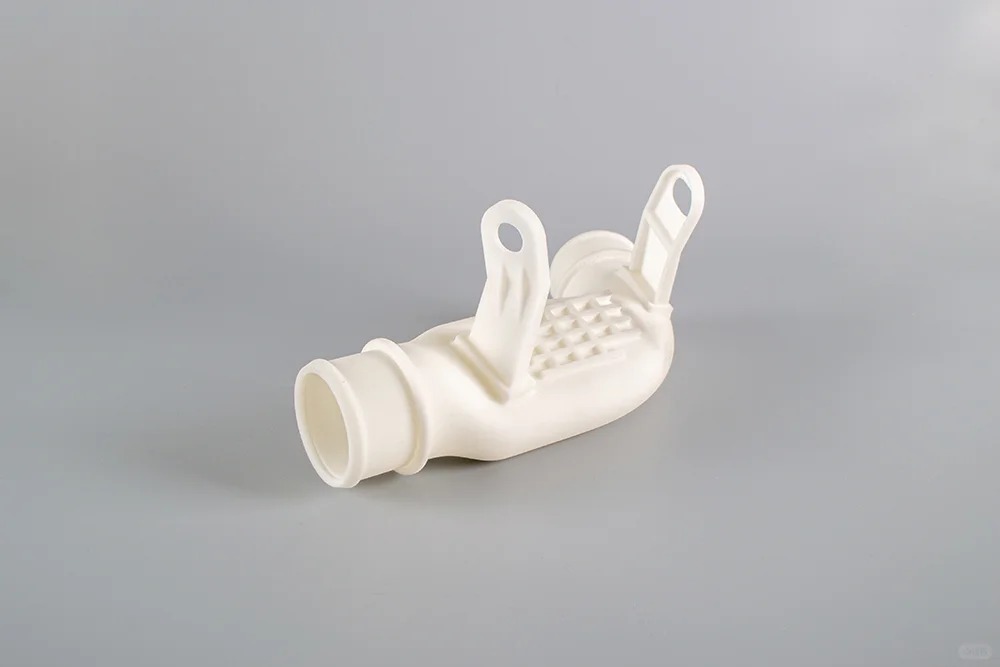
Plastic 3D Printing Technology Overview
Classification of Plastic 3D Printing Processes
Process | Layer Thickness (μm) | Dimensional Tolerance (mm) | Surface Roughness (Ra, μm) | Build Speed (mm/h) | Min. Feature Size (mm) |
|---|---|---|---|---|---|
FDM | 100–300 | ±0.2–0.5 | 10–20 | 80–120 | ~0.8 |
SLA | 25–100 | ±0.05–0.15 | 1–5 | 40–60 | ~0.3 |
SLS | 80–120 | ±0.1–0.3 | 8–12 | 50–70 | ~0.6 |
MJF | 70–100 | ±0.1–0.25 | 6–10 | 60–100 | ~0.5 |
Note: Process capability may vary based on part geometry, support strategy, and material characteristics.
Selection Strategy by Process
FDM: Cost-effective, great for simple mechanical parts and large prototypes with low material cost and fast iteration.
SLA: Ideal for detailed aesthetic models, high-resolution surfaces, and transparent or fine-feature applications.
SLS: Best for durable, functional parts with good thermal resistance and no need for support structures.
MJF: Recommended for small production batches due to consistent mechanical strength and efficient nesting.
Plastic Materials for 3D Printing
Common Plastic Materials Used
Material | Tensile Strength (MPa) | Heat Deflection Temp (°C) | Impact Resistance (kJ/m²) | Key Properties | Applications |
|---|---|---|---|---|---|
PLA | ~60 | ~55 | Low | Easy to print, biodegradable | Concept models, low-stress applications |
ABS | ~45 | ~96 | Moderate | Impact resistant, surface finishable | Housings, enclosures, jigs |
PETG | ~50 | ~70 | High | Chemically resistant, good ductility | Medical tools, containers, fixtures |
PA12 (Nylon) | ~50 | ~180 | High | Durable, flexible, wear-resistant | Hinges, gears, snap-fit functional components |
TPU | ~30 | ~60 | Very High | Flexible, tear resistant, elastomeric | Gaskets, insoles, protective covers |
Material Selection Strategy
PLA: Chosen for cost-sensitive designs requiring fast validation and low mechanical stress.
ABS: Used when high dimensional accuracy and post-processing options are required.
PETG: Suitable for durable parts needing chemical resistance and slight flexibility.
Nylon PA12: Preferred for moving or load-bearing parts due to its toughness and temperature resistance.
TPU: Ideal for soft-touch, flexible components or protective mechanical buffers.
Case Study: Plastic 3D Printed Rapid Prototyping for Consumer Electronics
Project Background
A client in the consumer electronics industry needed functional prototype enclosures for a compact IoT device. The product demanded high dimensional stability, a matte finish, and rapid lead time to align with investor demos.
Manufacturing Work Flow
Material Selection: Nylon PA12 chosen for its strength, flexibility, and thermal resistance in tight PCB enclosures.
3D CAD File Review: Wall thickness adjusted to 1.2 mm with added fillets for stress reduction.
Printing Process: SLS technology used to build 20 enclosures in a single batch within 14 hours.
Post-Processing: Bead blasting performed for surface smoothing; dimensional tuning achieved via precision trimming at ±0.15 mm.
Assembly Testing: Each part tested with internal electronics to verify screw bosses, snap fits, and port tolerances.
Post Process
Surface Blasting: Achieved matte finish with Ra ≈ 6 μm for professional appearance.
Dimensional Refinement: Critical internal slots adjusted via light milling to ±0.1 mm.
Inspection: 100% inspection via 3D scanning to ensure fit across all units.
Results and Verification
All printed enclosures met functional test requirements with zero dimensional rejections. Tolerances held at ±0.15 mm, even on snap-fit details.
Surface finish exceeded client expectations, enabling direct investor presentation without additional coating or painting processes.
Prototype cycle from CAD submission to tested physical sample was completed in 3.5 business days.
Client proceeded to small-volume production using the same digital workflow with only minor STL modifications.
FAQs
What is the minimum order quantity for plastic 3D printed production runs?
How do you ensure consistent dimensional accuracy across batches?
What finishing options are available for plastic 3D printed parts?
Which plastic materials are suitable for load-bearing functional parts?
Can I provide my own CAD file or must it be redesigned?
