
Custom Aerospace Accessory and Structural Parts Manufacturer for Engine and Airframe Assemblies
NewayAeroTech manufactures custom aerospace accessory and structural parts for engine assemblies, airframe systems, UAV platforms, propulsion test rigs, and low-volume aerospace development projects. Our manufacturing scope covers brackets, housings, rings, supports, mounting parts, custom aerospace machined components, and precision interface components used in engine and airframe assemblies.
Unlike compressor wheels, impellers, turbine blades, or combustion liners, aerospace accessory and structural parts are mainly defined by interface accuracy, mounting reliability, structural strength, lightweight design, vibration resistance, datum control, hole position, flatness, and assembly consistency. These components may not rotate or directly face hot gas, but their accuracy strongly affects final system fit-up and mechanical reliability.
NewayAeroTech supports aerospace and aviation parts manufacturing through CNC machining, precision forging route review, vacuum investment casting, heat treatment, post-processing, titanium and Inconel material support, dimensional inspection, surface finishing, and documentation for custom aerospace structural components.
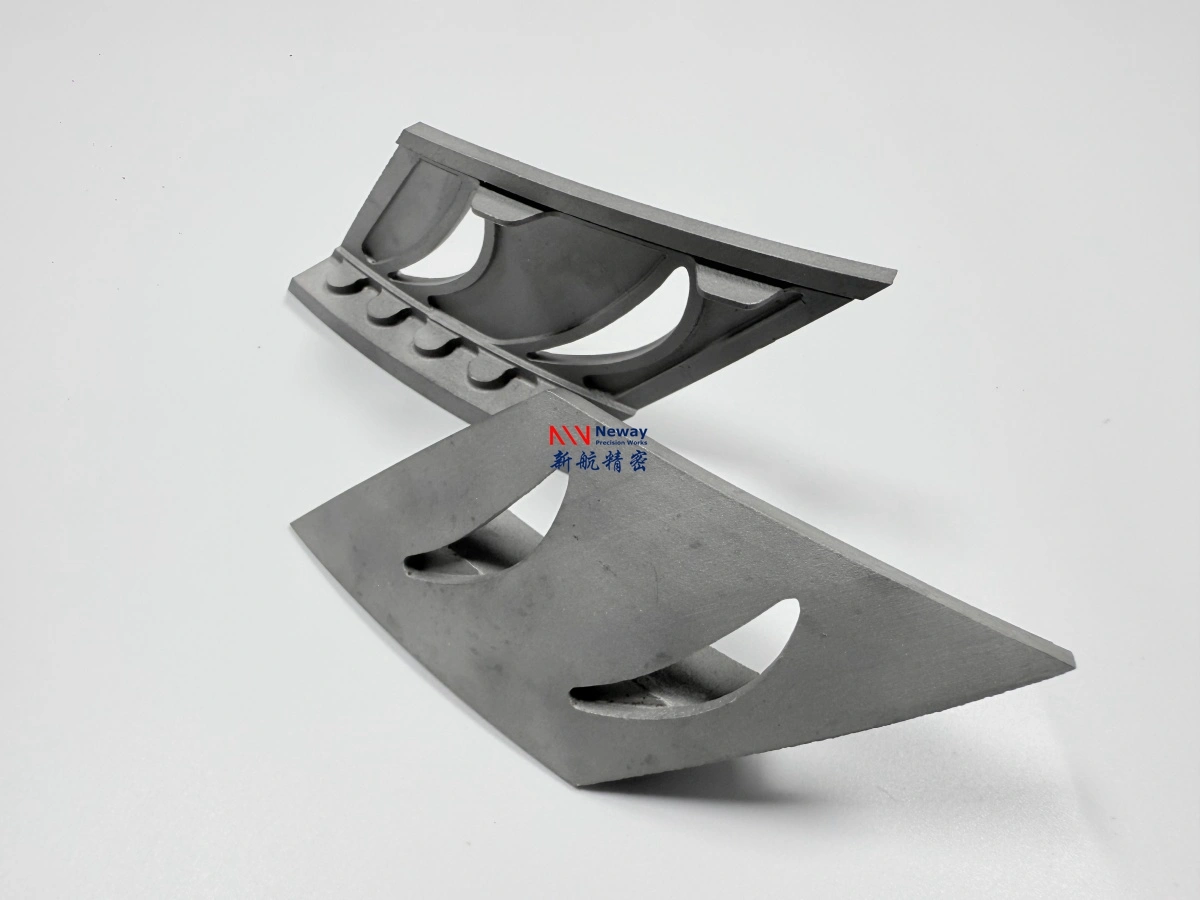
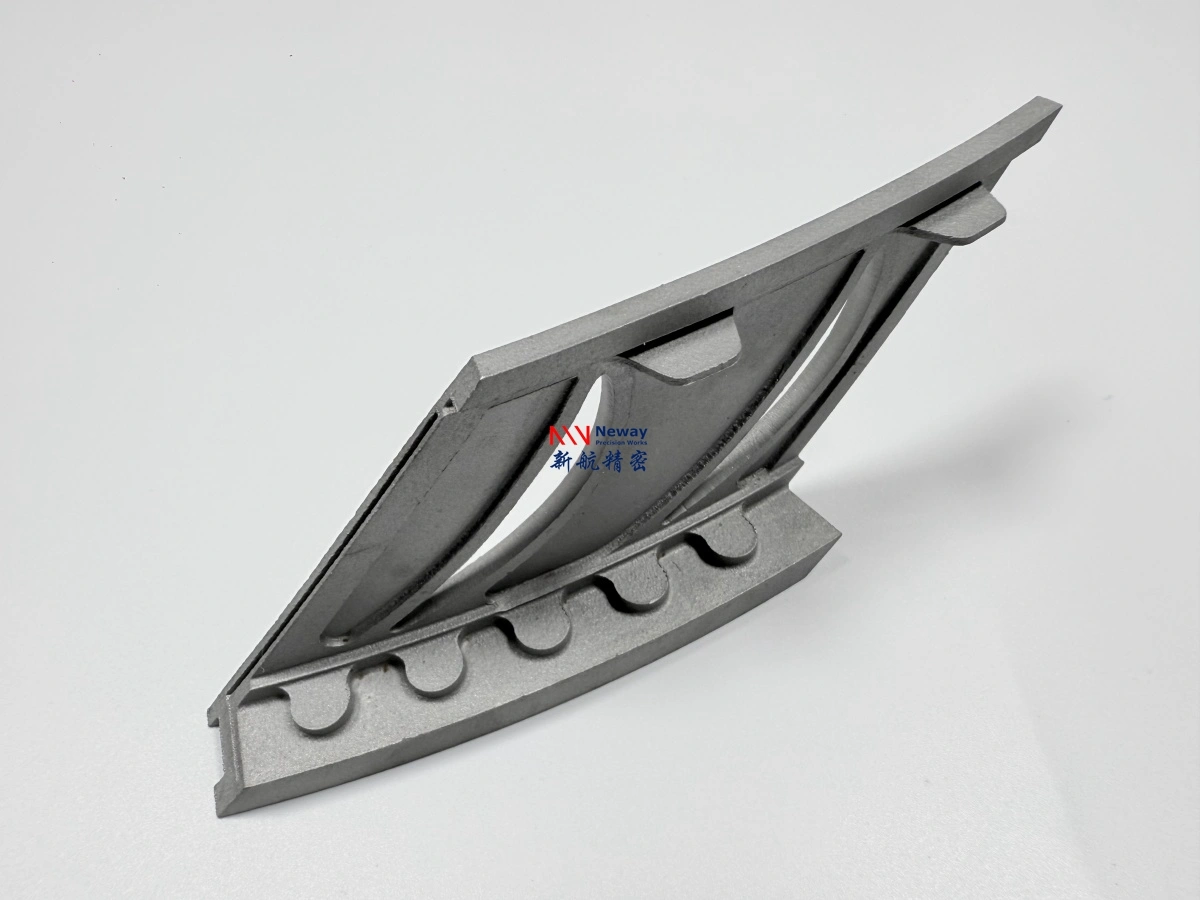
Custom Structural Parts for Engine and Airframe Assemblies
Custom aerospace accessory and structural parts are used to connect, position, support, protect, and stabilize engine and airframe systems. These parts often serve as mechanical interfaces between propulsion hardware, housings, brackets, ducts, sensors, covers, rings, and structural frames.
NewayAeroTech supports custom manufacturing for:
Aerospace brackets and lightweight mounting supports
Engine housings, covers, cases, and precision machined bodies
Rings, sleeves, spacers, and structural interface components
Mounting plates, flanges, adapters, and locating parts
Custom airframe components for low-volume assembly projects
Precision aerospace machined components for engine and airframe systems
Prototype and engineering test parts from drawings, samples, or 3D CAD files
For broader low-volume custom development projects, NewayAeroTech also supports custom aerospace components manufacturer services for drawings-based, sample-based, reverse-engineered, and engineering test components.
Interface Accuracy for Aerospace Assembly
Interface accuracy is one of the most important requirements for aerospace structural parts. A bracket, housing, support, or mounting ring may appear simple, but it often controls the position of adjacent systems. If the datum surfaces, mounting holes, or flatness are not controlled, the final assembly may shift, bind, vibrate, or fail inspection.
Critical interface requirements include:
Mounting face flatness and perpendicularity
Datum surface accuracy for assembly alignment
Position tolerance of bolt holes, dowel holes, and threaded holes
Hole-circle accuracy for rings and circular interface parts
Parallelism and angular alignment between mounting planes
Fit-up consistency between engine, housing, bracket, and airframe interfaces
Surface finish control on contact faces and sealing-related areas
For aerospace assemblies, inspection should focus on datum relationships rather than only individual dimensions. A part can meet several local sizes but still fail if the assembly datum system is not controlled correctly.
Lightweight Strength and Vibration Resistance
Aerospace structural components must reduce weight while maintaining strength, stiffness, and vibration resistance. Lightweight brackets and housings often include pockets, ribs, thin walls, bosses, cutouts, and complex contours. These features reduce mass but also increase machining and inspection difficulty.
Key structural design and manufacturing priorities include:
Weight reduction through pockets, ribs, and optimized wall thickness
Maintaining stiffness around mounting and load-bearing areas
Avoiding sharp transitions that may create fatigue-sensitive regions
Controlling thin-wall distortion after machining or heat treatment
Maintaining hole position and thread quality after material removal
Improving surface finish and edge quality in vibration-sensitive areas
For UAV systems, aircraft engine accessory parts, and airframe interfaces, structural reliability depends on both material selection and machining strategy. Lightweight design should be reviewed together with manufacturability and inspection requirements.
CNC Machining for Brackets, Housings, and Supports
CNC machining is the main route for many aerospace accessory and structural parts because these components require accurate datums, holes, surfaces, pockets, threads, bosses, and complex assembly features.
NewayAeroTech provides superalloy CNC machining for aerospace machined components made from titanium alloys, Inconel alloys, stainless steels, nickel-based alloys, and other high-performance materials.
Critical CNC machining features include:
Deep pockets, cavities, and lightweight structural cutouts
Thin-wall housing sections and complex external contours
Precision mounting faces and datum surfaces
Threaded holes, dowel holes, bolt holes, and hole patterns
Flanges, bosses, ribs, support arms, and reinforced regions
Ring grooves, sealing surfaces, locating shoulders, and mating interfaces
Surface finishing and deburring for assembly and fatigue-sensitive edges
For low-volume aerospace parts, CNC machining from qualified stock is often efficient. For more complex shapes, vacuum investment casting or forging may be reviewed before final CNC machining to reduce material waste or improve blank structure.
Material Selection for Structural Aerospace Components
Material selection for aerospace accessory and structural parts depends on weight target, strength requirement, operating temperature, corrosion environment, vibration exposure, and assembly function. Different parts may require titanium alloys, Inconel alloys, stainless steels, heat-resistant alloys, or other aerospace-grade materials.
NewayAeroTech supports titanium alloy vacuum investment casting for selected lightweight and high-strength aerospace applications, and Inconel alloy vacuum investment casting for high-temperature or strength-critical aerospace components.
Material Family | Typical Structural Use | Selection Logic |
|---|---|---|
Titanium alloys | Lightweight brackets, supports, housings, rings, and airframe interface parts | Selected when high strength-to-weight ratio is important |
Inconel alloys | High-temperature brackets, engine accessory parts, rings, and support hardware | Useful where elevated-temperature strength and oxidation resistance are required |
Stainless steels | Precision housings, brackets, covers, supports, rings, and mounting parts | Practical for corrosion resistance, machinability, and structural stability |
Heat-resistant alloys | Engine-adjacent supports, shields, housings, and interface parts | Reviewed when structural parts are near hot engine zones |
For high-strength blanks or load-bearing structural parts, superalloy precision forging may be reviewed when improved strength, controlled grain flow, and stable blank quality are required before final machining.
Prototype and Low-Volume Structural Part Manufacturing
Aerospace accessory and structural parts are often required for prototype assemblies, engineering tests, UAV platforms, airframe fit-up, engine mounting development, and low-volume production. These projects may involve frequent design changes and require fast manufacturability feedback.
Prototype and low-volume structural part manufacturing can support:
Aircraft engine bracket and housing validation
UAV engine mounting and support structure development
Airframe interface and custom mounting component testing
Prototype rings, sleeves, covers, adapters, and precision supports
Engineering test parts for assembly, vibration, fit-up, or thermal exposure
Design iteration before small-batch aerospace component production
For related precision assembly work, NewayAeroTech also supports aerospace rotating and structural parts manufacturing, including rings, housings, supports, brackets, and precision engine assembly components.
Inspection for Datum, Flatness, and Mounting Features
Inspection for aerospace structural parts should verify assembly datums, mounting features, flatness, hole position, threaded features, surface finish, and material traceability. These requirements should be confirmed before production because they affect fixture design, machining sequence, and reporting.
Inspection Item | What to Check | Why It Matters |
|---|---|---|
CMM inspection | Datums, holes, pockets, bosses, surfaces, interfaces, and profiles | Confirms dimensional accuracy and assembly consistency |
Flatness | Mounting faces, flanges, covers, housing interfaces, and contact surfaces | Ensures reliable fit-up and prevents assembly stress |
Position tolerance | Bolt holes, dowel holes, threaded holes, slots, and locating features | Maintains alignment between engine and airframe assemblies |
Threaded features | Thread size, depth, position, quality, and insert compatibility | Supports fastening reliability and repeated assembly use |
Surface roughness | Mating faces, sealing surfaces, pockets, edges, and fatigue-sensitive areas | Supports fit-up, fatigue resistance, and surface treatment quality |
Material report | Alloy grade, chemical composition, certificate, heat number, heat treatment record | Supports traceability and customer quality review |
Additional inspection may include hardness testing, surface treatment review, dimensional reports, first article inspection, and customer-specific quality documentation. For project-specific inspection planning, NewayAeroTech can support quality review through testing equipment and related measurement resources.
Surface Treatment and Post Process for Structural Parts
After CNC machining, forging, or casting, aerospace accessory and structural parts may require heat treatment, stress relief, deburring, cleaning, surface finishing, passivation, coating preparation, or other post-processing steps. These steps help improve dimensional stability, assembly readiness, corrosion resistance, and surface quality.
NewayAeroTech supports superalloy post process for aerospace components that require controlled finishing and documentation before delivery.
Post-processing may include:
Heat treatment or stress relief according to material and drawing requirements
Deburring around holes, pockets, slots, threads, and thin edges
Surface finishing on mating faces, brackets, housings, and support structures
Cleaning before inspection, surface treatment, or assembly
Preparation for coating, passivation, anodizing, or customer-specified surface treatment
Final dimensional and visual inspection after finishing when required
For precision structural parts, post-processing must not damage datum surfaces, hole positions, edge quality, or thin-wall features. Process sequence should be planned before machining begins.
RFQ Checklist for Aerospace Brackets and Housings
To quote aerospace brackets, housings, supports, rings, and custom machined structural parts accurately, customers should provide technical information related to geometry, material, tolerance, surface treatment, assembly requirements, and quantity.
A complete RFQ should include:
Component name, aircraft or engine system, assembly position, part number, and revision level if available
2D drawings with GD&T, datums, flatness, position tolerance, threaded features, and surface finish requirements
3D CAD files for brackets, housings, rings, supports, mounting parts, or custom machined components
Material grade, material standard, acceptable alternatives, and certificate requirements
Manufacturing route preference, such as CNC machining, forging, casting, heat treatment, or post-processing
Surface treatment requirement, such as passivation, coating preparation, anodizing, polishing, or customer-specific finish
Assembly requirements such as mating surfaces, mounting holes, inserts, sealing faces, datum references, and installation clearance
Inspection requirements such as CMM, flatness report, position report, thread inspection, material report, roughness report, or first article report
Quantity for prototype, engineering test, low-volume production, or long-term supply
Delivery schedule, packaging, documentation, and test objectives
If the project is based on an existing sample, customers should provide photos, 3D scan data, CMM reports, material information, assembly notes, wear condition, and functional interface requirements.
Conclusion
Custom aerospace accessory and structural parts require precise control of mounting interfaces, structural strength, lightweight geometry, vibration resistance, hole systems, tolerances, datum surfaces, complex housings, and assembly consistency. These parts include brackets, housings, rings, supports, mounting parts, custom aerospace machined components, and engine or airframe system interfaces.
NewayAeroTech supports aerospace structural parts manufacturing through CNC machining, precision forging route review, vacuum investment casting, heat treatment, post-processing, titanium and Inconel alloy manufacturing, dimensional inspection, flatness checks, hole position inspection, thread inspection, material verification, and final documentation.
For aerospace accessory or structural part quotation, please send 2D drawings, 3D CAD files, tolerances, material requirements, surface treatment requirements, assembly requirements, inspection standards, quantities, and delivery targets. NewayAeroTech can review the most suitable manufacturing route for your brackets, housings, rings, supports, mounting parts, or custom aerospace machined components.
