
Custom Aerospace Components Manufacturer for Low-Volume and Engineering Test Parts
NewayAeroTech manufactures custom aerospace components for low-volume production, engineering test parts, prototype validation, UAV turbine development, aircraft engine testing, and custom propulsion system projects. These parts can be manufactured from 2D drawings, 3D CAD files, samples, reverse engineering data, 3D scan data, CMM reports, material specifications, or engineering test requirements.
Unlike standard aerospace hardware, custom aerospace components often start from incomplete technical data, prototype concepts, old samples, or evolving engineering requirements. The customer may need a part for a test rig, a prototype engine, a material validation project, a small-batch assembly, or a design verification program. In these cases, manufacturing support must combine DFM review, material selection, process route planning, precision machining, inspection, and documentation.
NewayAeroTech supports aerospace and aviation parts manufacturing through vacuum investment casting, CNC machining, EDM, deep hole drilling, heat treatment, post-processing, material verification, testing support, and final inspection for custom low-volume aerospace parts.
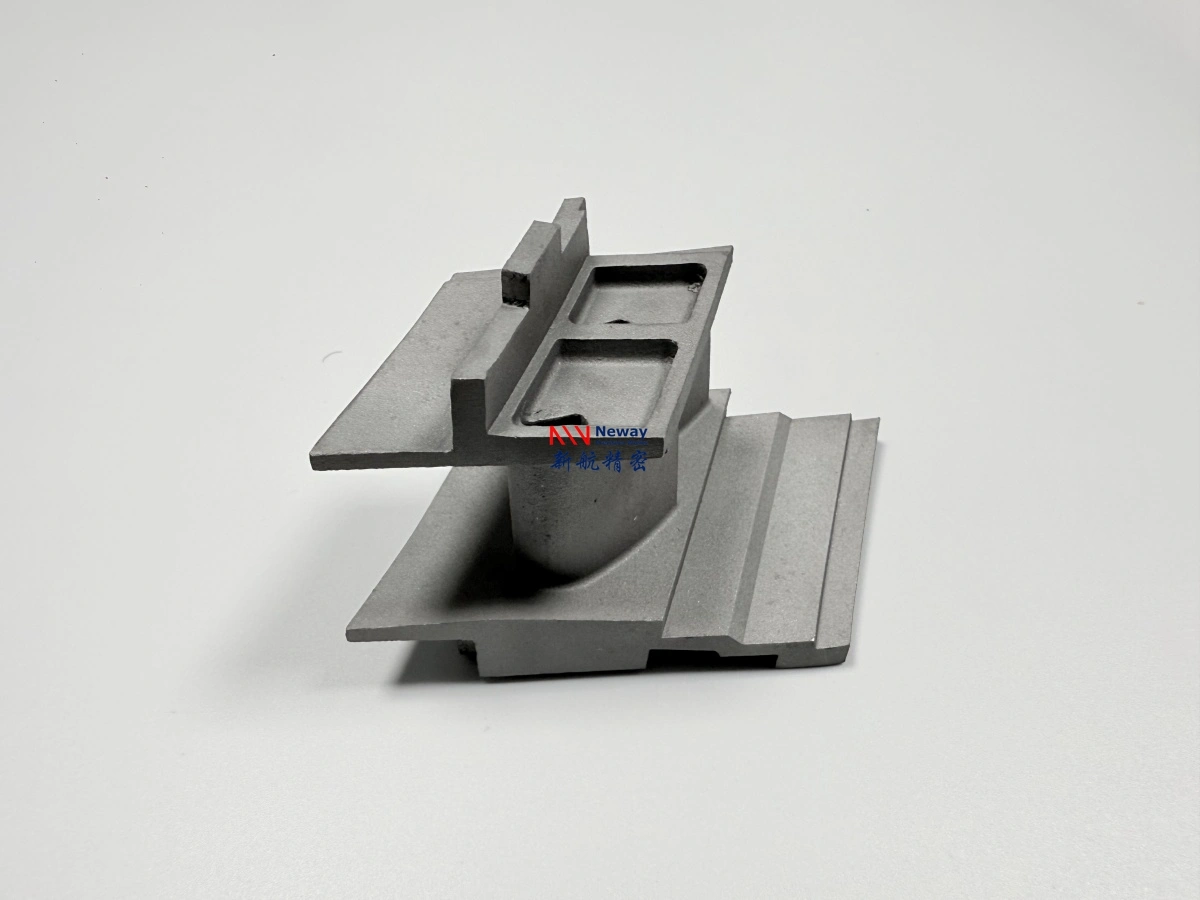
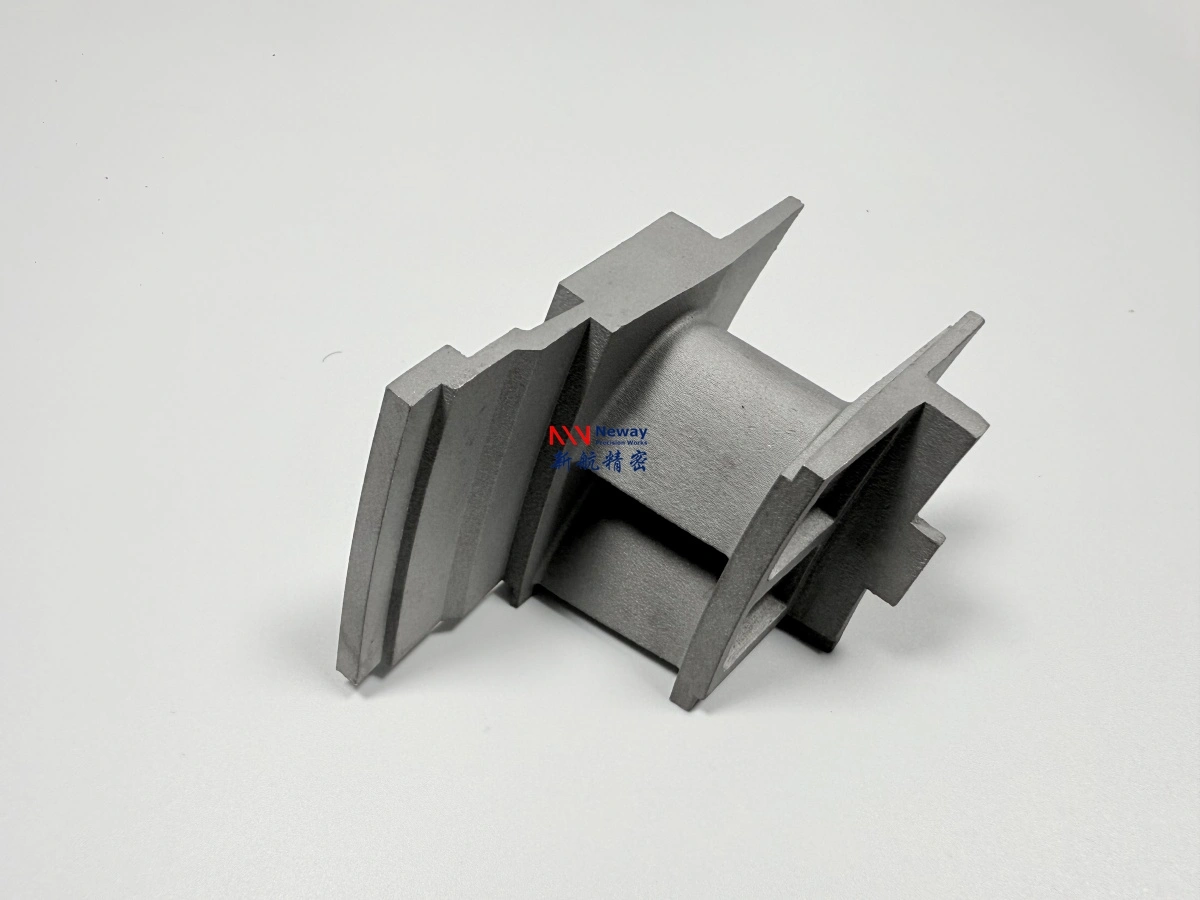
Direct Answer: Custom Aerospace Components Manufacturer
NewayAeroTech manufactures custom aerospace components from drawings, samples, reverse engineering data, 3D scans, CMM reports, or engineering test requirements. Depending on the component design, material grade, tolerance level, quantity, and inspection standard, the manufacturing route may include casting, CNC machining, EDM, deep hole drilling, heat treatment, surface finishing, post-processing, and inspection.
Our custom aerospace component manufacturing support can cover:
Low-volume aerospace parts for prototype and validation programs
Engineering test parts for aircraft engines and UAV turbines
Custom aircraft engine components from drawings or CAD files
Sample-based aerospace components and reverse-engineered parts
3D scan to manufacturing support for obsolete or redesigned parts
Prototype aerospace parts for test rigs, bench tests, and assembly trials
Small-batch aerospace components with inspection and documentation
The goal is to help customers convert technical data into manufacturable, testable, assemble-ready, and verifiable aerospace components.
When Custom Aerospace Parts Are Needed
Custom aerospace parts are often needed when standard components cannot meet a development, testing, or low-volume production requirement. These projects may not require mass production, but they still require reliable material, accurate geometry, stable fit-up, and inspection records.
Typical project scenarios include:
Prototype aircraft engine or UAV turbine development
Low-volume aerospace parts for engineering validation
Design verification parts before production release
Material validation and high-temperature test parts
Test rig and bench test components
Old part replacement when drawings are incomplete
Sample-based manufacturing from worn or legacy components
Custom brackets, housings, rings, supports, ducts, and engine assembly parts
For these projects, the supplier should not only quote from size and weight. The part function, test objective, material requirement, inspection scope, and manufacturing risk must be reviewed together.
Input Data Options for Custom Aerospace Components
Customers can start a custom aerospace component project with different types of input data. Complete 2D drawings and 3D CAD files are ideal, but NewayAeroTech can also review projects based on samples, scan data, CMM data, material specifications, and test requirements.
Input Data | How It Helps | Typical Use |
|---|---|---|
2D drawings | Define dimensions, tolerances, datums, materials, and inspection notes | Best for accurate quotation and direct manufacturing review |
3D CAD files | Provide full geometry for casting, machining, fixture, and inspection planning | Useful for complex aerospace components and prototype parts |
Samples | Show real geometry, assembly interfaces, material condition, and functional surfaces | Useful when drawings are unavailable or incomplete |
3D scan data | Captures complex shapes for CAD reconstruction and manufacturability review | Useful for reverse engineering and legacy aerospace components |
CMM data | Defines critical dimensions, datums, hole locations, and assembly relationships | Useful for precision components and first article validation |
Test requirements | Clarify load, temperature, speed, assembly, and inspection expectations | Useful for engineering test parts and prototype validation |
The more complete the RFQ data is, the faster NewayAeroTech can evaluate material, process route, inspection scope, quotation, and lead time.
Manufacturing Route Selection for Custom Aerospace Parts
Custom aerospace components may require different manufacturing routes depending on geometry, material, quantity, tolerance, test purpose, and inspection requirement. Some parts are best made by CNC machining from qualified stock. Some complex superalloy components require casting followed by machining and post-processing. Some holes, slots, or internal features require EDM or deep hole drilling.
NewayAeroTech supports vacuum investment casting for complex aerospace parts where near-net-shape geometry and high-temperature alloy capability are required. For precision interfaces, assembly datums, bores, mounting features, and test-critical dimensions, superalloy CNC machining supports final part accuracy.
A typical manufacturing route may include:
Review drawings, CAD files, samples, scan data, material notes, and test objectives
Evaluate casting, CNC machining, EDM, drilling, heat treatment, or combined process route
Confirm material grade, acceptable alternatives, and certificate requirements
Produce prototype blanks or machine parts from qualified material
Finish critical features such as bores, datums, mounting faces, slots, holes, and mating surfaces
Apply heat treatment, stress relief, surface finishing, or cleaning when required
Perform dimensional inspection, material verification, NDT, and first article review as needed
Use inspection feedback to support design iteration or small-batch production
CNC Machining, EDM, and Deep Hole Drilling
Many custom aerospace components require tight dimensional control and difficult local features. CNC machining is used for precision surfaces, bores, datums, holes, pockets, slots, and assembly interfaces. EDM is useful for hard-to-machine features in superalloys, while drilling is often required for cooling or airflow structures.
Superalloy deep hole drilling can support aerospace components with long, narrow, or airflow-related holes. These features may appear in combustion parts, hot section parts, test components, or cooling-related structures.
Common machining focus areas include:
Precision bores, shaft holes, and bearing-related interfaces
Mounting faces, datum faces, and assembly references
Bolt holes, threaded holes, dowel holes, and hole-circle patterns
Slots, grooves, pockets, ribs, and lightweight structures
Cooling holes, airflow holes, and thin-wall openings
Surface finish and edge quality for fatigue-sensitive areas
For engineering test parts, the machining plan should match the test objective. A part used for fit-up testing may need different inspection from a part used for high-temperature, vibration, or fatigue testing.
Material Strategy for Low-Volume Aerospace Components
Material selection depends on the component function, temperature, load, corrosion environment, weight target, and test requirement. Custom aerospace components may use nickel-based superalloys, titanium alloys, stainless steels, Inconel alloys, and other heat-resistant materials.
NewayAeroTech supports Inconel alloy vacuum investment casting for nickel-based aerospace and high-temperature components, and titanium alloy vacuum investment casting for selected lightweight and high-strength aerospace programs.
Material Family | Typical Custom Aerospace Use | Selection Consideration |
|---|---|---|
Inconel alloys | Hot section parts, turbine components, high-temperature test parts | Useful for strength and oxidation resistance in elevated-temperature applications |
Titanium alloys | Lightweight brackets, housings, supports, and aircraft structural components | Selected when high strength-to-weight ratio is required |
Stainless steels | Precision brackets, test fixtures, housings, and low-to-medium temperature parts | Practical for corrosion resistance, machinability, and cost-controlled testing |
Nickel-based superalloys | Combustion parts, hot gas path parts, rotating and thermal components | Selected for high-temperature strength, oxidation resistance, and thermal stability |
For engineering test parts, equivalent material selection should be reviewed carefully. If the purpose is material validation, the alloy must match the test requirement. If the purpose is fit-up validation, an alternative material may be acceptable after customer approval.
Typical Custom Aerospace Components
Custom aerospace components are not limited to one engine section. NewayAeroTech can support parts across hot section, combustion, rotating, structural, and test assembly applications.
Typical components include:
Hot section parts such as blades, vanes, NGVs, nozzles, shrouds, and heat shields
Combustion parts such as liners, flame tubes, ducts, fuel nozzle parts, and exhaust components
Rotating parts such as turbine discs, impellers, compressor wheels, rings, and shaft-related parts
Structural parts such as brackets, housings, supports, covers, sleeves, and mounting components
Precision test parts for test rigs, bench testing, prototype validation, and engineering verification
Reverse-engineered aerospace parts from samples, scans, or CMM data
For low-volume manufacturing, the process route should balance cost, lead time, tooling effort, material availability, and inspection scope. A prototype part may not need the same route as a flight-related production part, but it still needs to meet the customer’s test objective.
Risk Control for Custom Development Projects
Custom aerospace development projects often include technical uncertainty. The part may be new, the drawing may be incomplete, the material may still be under review, or the design may change after testing. Risk control helps reduce rework and improve the chance of a successful first article.
Key risk control steps include:
DFM review before manufacturing begins
Material verification or equivalent material review
Machining and casting route confirmation before quotation is finalized
Identification of critical dimensions, datums, and assembly interfaces
First article manufacturing before small-batch production
Dimensional inspection report for customer engineering review
NDT, material report, heat treatment record, or COC when required
For sample-based or 3D scan-based projects, worn geometry, damaged areas, coating loss, and deformed features should not be copied directly. Functional geometry should be rebuilt according to assembly and test requirements.
Post Process and Testing Support
After casting, CNC machining, EDM, or drilling, custom aerospace components may require heat treatment, stress relief, cleaning, deburring, surface finishing, coating preparation, and final inspection. These steps help ensure the part is ready for assembly, testing, or customer evaluation.
NewayAeroTech supports superalloy post process for aerospace components that require controlled finishing and delivery documentation.
Post-processing may include:
Heat treatment or stress relief according to material requirements
Deburring around holes, slots, pockets, thin edges, and mating surfaces
Surface finishing for airflow, fit-up, or fatigue-sensitive features
Cleaning before inspection, coating, or assembly
Surface preparation for coating or thermal testing
Final dimensional and visual inspection
For engineering validation projects, NewayAeroTech can also support inspection and test-related review through testing equipment and quality control planning, depending on the customer’s component type and project requirements.
Inspection and First Article Validation
Inspection confirms whether the manufactured component is suitable for fit-up, testing, validation, or small-batch production. For custom aerospace components, the inspection plan should be confirmed before production because it affects fixture design, machining sequence, reporting, cost, and lead time.
Inspection Item | What to Check | Why It Matters |
|---|---|---|
CMM inspection | Datums, bores, faces, holes, slots, profiles, and assembly interfaces | Confirms dimensional accuracy and fit-up reliability |
Material verification | Alloy grade, chemical composition, certificate, heat number | Supports material compliance and traceability |
NDT | FPI, X-ray, CT, ultrasonic, or other inspection when required | Helps detect cracks, internal defects, and manufacturing risks |
Surface finish | Roughness, edge quality, coating preparation surfaces, contact faces | Supports fit-up, fatigue performance, coating, or test reliability |
First article | Prototype or first manufactured part against agreed requirements | Validates the route before low-volume or small-batch production |
Documentation may include dimensional reports, material reports, NDT reports, heat treatment records, surface roughness reports, first article reports, COC, and customer-specific quality documents.
RFQ Checklist for Custom Aerospace Components
To quote custom aerospace components accurately, customers should provide as much technical and project information as possible. This helps NewayAeroTech evaluate material, process route, inspection requirements, and delivery risk.
A complete RFQ should include:
Component name, application, assembly position, part number, and revision level if available
2D drawings with tolerances, datums, material notes, and inspection requirements
3D CAD files for geometry, fixture, machining, and casting review
Samples, photos, 3D scan data, or CMM reports if reverse engineering is required
Material grade, material standard, acceptable alternatives, and certificate requirements
Manufacturing route preference, such as casting, CNC machining, EDM, drilling, heat treatment, or post-processing
Critical dimensions, surface finish, cooling holes, mounting interfaces, runout, or assembly requirements
Inspection requirements such as CMM, FPI, X-ray, material report, first article report, or COC
Quantity for prototype, engineering test, validation batch, low-volume production, or long-term supply
Delivery schedule, packaging, documentation, and test objectives
If the part is used for an engineering test, customers should also provide the test purpose, operating temperature, load condition, speed requirement, fit-up requirement, and expected validation criteria when available.
Conclusion
Custom aerospace components for low-volume and engineering test projects require flexible manufacturing, practical DFM review, controlled material selection, reliable machining, inspection planning, and clear documentation. These parts may be made from drawings, samples, reverse engineering data, 3D scans, CMM reports, or customer test requirements.
NewayAeroTech supports custom aerospace parts manufacturing for aircraft engines, UAV turbines, prototype propulsion systems, engineering test rigs, low-volume assemblies, and validation programs. Our capabilities include vacuum investment casting, superalloy CNC machining, EDM, deep hole drilling, heat treatment, post-processing, Inconel and titanium alloy manufacturing, material verification, dimensional inspection, NDT, first article validation, and final documentation.
For custom aerospace component quotation, please send drawings, CAD files, samples, scan data, material requirements, test requirements, quantities, inspection standards, and delivery targets. NewayAeroTech can review the most suitable manufacturing route for your low-volume aerospace parts or engineering test component project.
