
Aerospace Exhaust Section Parts Manufacturer for Thermal Shields, and Transition Ducts
NewayAeroTech manufactures aerospace exhaust section parts for aircraft engines, UAV turbine systems, small propulsion systems, and high-temperature downstream engine assemblies. Our manufacturing scope covers exhaust cones, transition ducts, thermal shields, high-temperature exhaust parts, heat-resistant downstream components, and custom exhaust hardware for prototype and low-volume aerospace projects.
Exhaust section components are different from combustion liners, turbine blades, NGVs, and compressor wheels. Their main engineering requirements are hot exhaust flow management, downstream thermal protection, exhaust cone geometry control, thin-wall stability, oxidation resistance, thermal deformation control, surface preparation, and reliable fit-up with adjacent engine structures.
NewayAeroTech supports aerospace and aviation parts manufacturing through superalloy forming, vacuum investment casting, CNC machining, EDM, deep hole drilling, heat treatment, post-processing, surface preparation, material verification, dimensional inspection, FPI, and final documentation.
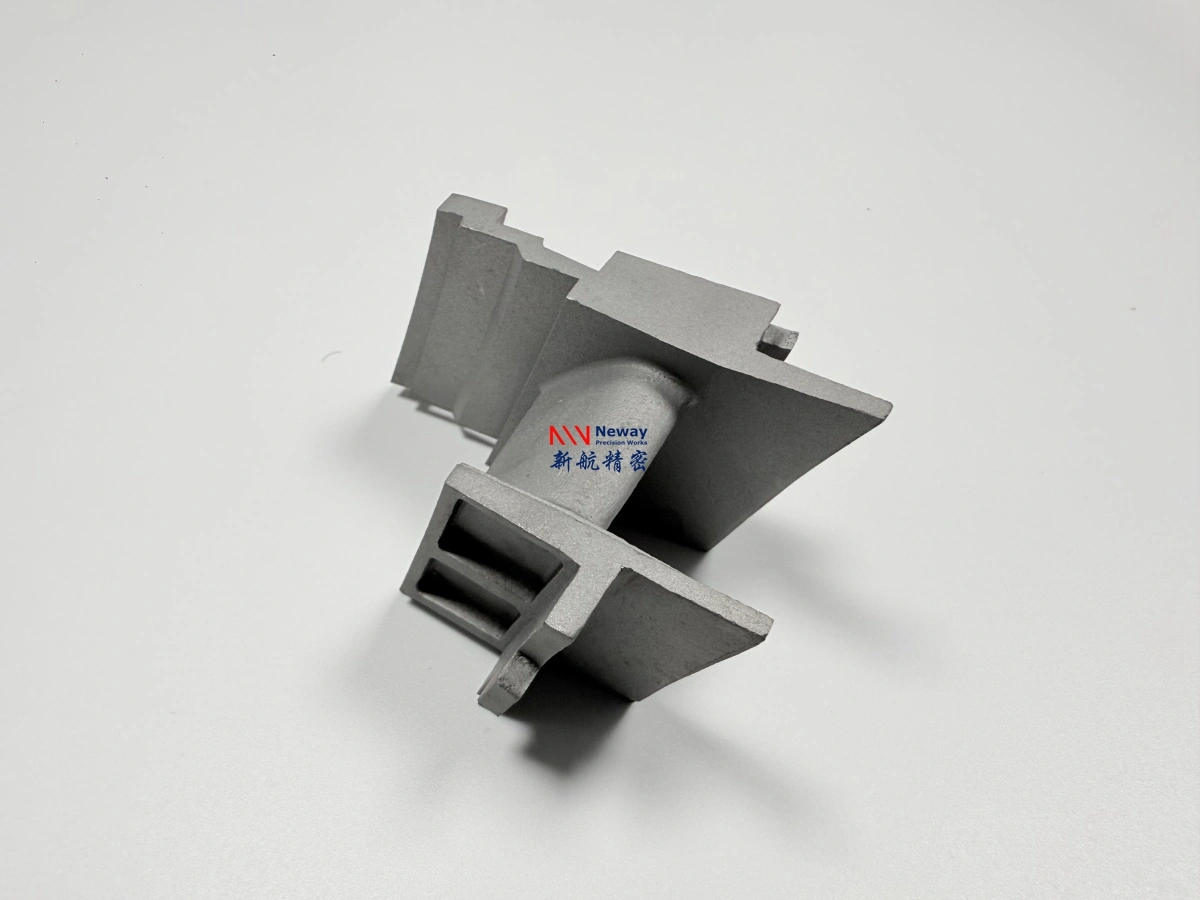
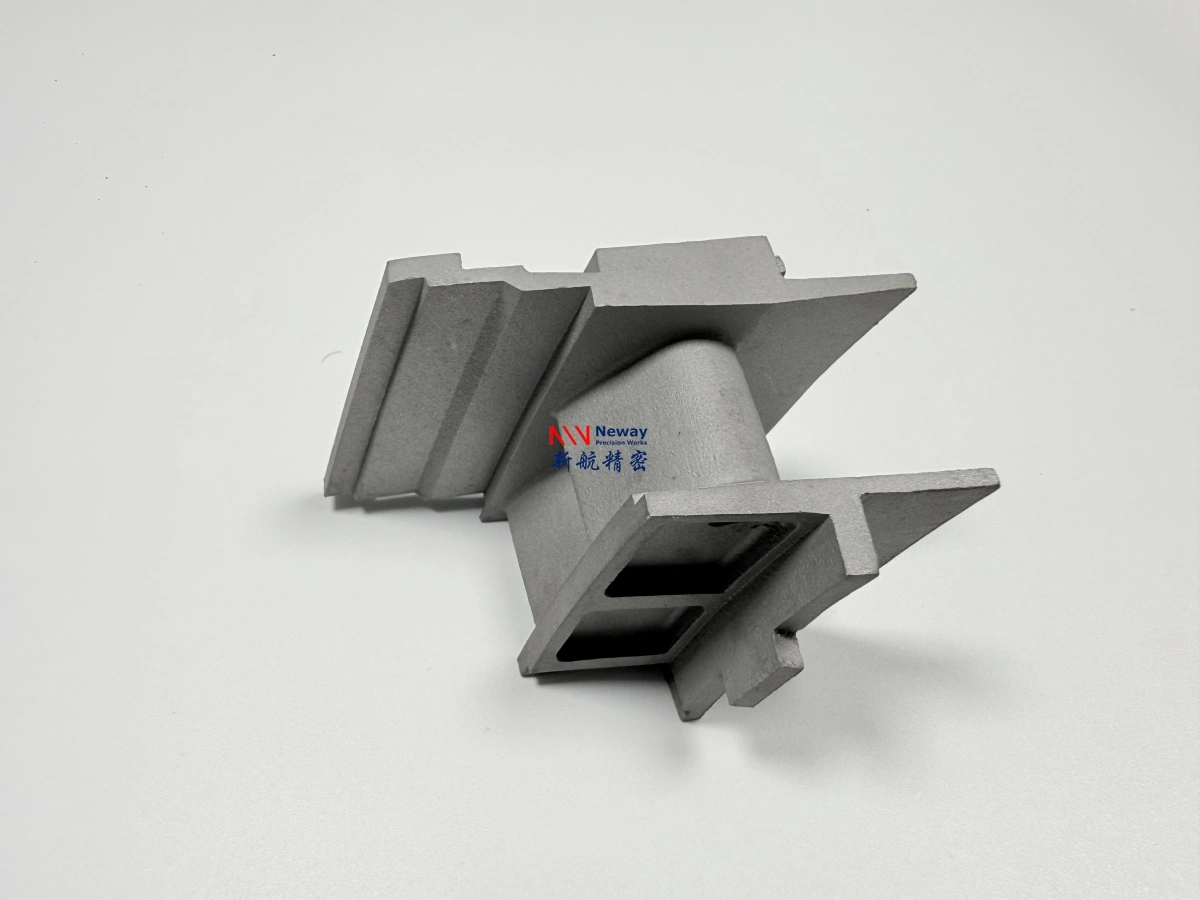
Exhaust Section Components for High-Temperature Engine Systems
Aerospace exhaust section parts are located downstream of the combustion and turbine sections. They guide hot exhaust gas, protect nearby structures from thermal exposure, support exhaust flow stability, and maintain reliable mechanical fit-up under high-temperature operating conditions.
NewayAeroTech supports custom manufacturing for:
Exhaust cones for aircraft engines and UAV turbine systems
Transition ducts and downstream hot gas transfer structures
Thermal shields and local heat protection components
High-temperature exhaust ducts and exhaust-related structures
Heat-resistant downstream engine components
Custom prototype exhaust parts for aerospace propulsion testing
For broader thermal system projects, NewayAeroTech also supports aerospace combustion and exhaust parts manufacturing, including combustion liners, flame tubes, exhaust ducts, heat shields, and transition structures.
Managing Hot Exhaust Flow and Thermal Protection
Exhaust section parts must manage high-temperature gas after combustion and turbine energy extraction. Although they are not exposed to the same flame environment as combustion liners, they still face severe thermal loading, oxidation, exhaust gas erosion, vibration, and thermal expansion.
Key exhaust section functions include:
Guiding downstream exhaust flow through cones, ducts, and transition structures
Protecting nearby engine structures from radiant and convective heat
Maintaining stable exhaust geometry under thermal cycling
Reducing local overheating around mounting and shielded areas
Supporting fit-up between turbine exit, exhaust duct, shield, and housing structures
Providing surface condition suitable for coating, insulation, or final assembly
For aerospace and UAV turbine applications, exhaust section components must balance weight, thermal protection, geometry stability, and manufacturability.
Exhaust Cone and Transition Duct Geometry Control
Exhaust cones and transition ducts often include conical, curved, or irregular thin-wall geometry. Their shape affects exhaust flow direction, fit-up with adjacent parts, thermal expansion behavior, and downstream structural protection.
Important geometry control points include:
Exhaust cone profile accuracy and symmetry
Transition duct contour and inlet-to-outlet alignment
Thin-wall stability during forming, machining, heat treatment, and post-processing
Flange flatness and mounting interface accuracy
Roundness, ovality, and profile repeatability for duct structures
Assembly clearance and thermal expansion allowance
Surface quality in exhaust gas-facing areas
For prototype propulsion systems, geometry control is especially important because the first exhaust cone or transition duct may be used to validate airflow behavior, thermal response, and mechanical fit-up.
Thermal Shields and Heat-Resistant Surface Preparation
Thermal shields protect surrounding engine structures from hot exhaust exposure. Their performance depends not only on material selection, but also on surface condition, edge quality, coating preparation, mounting accuracy, and heat-resistant geometry design.
Thermal shield manufacturing should control:
Shield profile, curvature, and fit-up with adjacent exhaust structures
Mounting holes, slots, tabs, brackets, and local attachment features
Edge quality to reduce crack initiation and coating damage
Surface cleanliness before coating, insulation, or assembly
Surface roughness where coating adhesion is required
Oxide scale removal and contamination control
Thermal expansion gaps and installation clearance
NewayAeroTech supports superalloy post process for high-temperature exhaust and thermal shield components that require cleaning, deburring, surface preparation, heat treatment, coating preparation, and inspection before delivery.
Materials for Aerospace Exhaust Components
Aerospace exhaust components require materials with oxidation resistance, thermal fatigue resistance, dimensional stability, fabricability, and adequate strength at elevated temperature. Material selection depends on exhaust gas temperature, engine size, weight target, coating plan, assembly location, and customer specification.
Common material options include Hastelloy X, Haynes 188, Inconel 625, Inconel 718, and titanium alloys. NewayAeroTech supports Hastelloy alloy vacuum investment casting for high-temperature oxidation-resistant components, Inconel alloy vacuum investment casting for nickel-based aerospace and turbine parts, and titanium alloy vacuum investment casting for selected lightweight aerospace applications where temperature conditions are suitable.
Material | Typical Exhaust Section Use | Selection Logic |
|---|---|---|
Hastelloy X | Exhaust ducts, transition ducts, thermal structures, and hot gas path hardware | Selected for oxidation resistance and fabricability in high-temperature gas environments |
Haynes 188 | Thermal shields, exhaust protection parts, and severe heat-resistant components | Useful for high-temperature oxidation resistance and cobalt-based thermal stability |
Inconel 625 | Exhaust hardware, duct parts, and corrosion-resistant thermal components | Suitable where oxidation resistance, corrosion resistance, and manufacturability are needed |
Inconel 718 | Structural exhaust hardware, mounting parts, brackets, and high-strength interfaces | Reviewed where strength and machining performance are important, depending on temperature |
Titanium alloys | Selected lightweight downstream structures and aerospace support components | Useful for weight reduction when operating temperature is suitable for titanium |
For exhaust section parts, material selection should be confirmed according to temperature, thermal cycle, coating plan, weight target, structural load, and inspection requirements.
Manufacturing Routes for Exhaust and Downstream Parts
Aerospace exhaust section parts may require different manufacturing routes depending on geometry, material, wall thickness, quantity, surface requirement, and prototype stage. Some components are formed from sheet or plate. Some are CNC machined from qualified material. Some complex exhaust hardware or integrated features may require casting before machining and finishing.
NewayAeroTech supports vacuum investment casting for selected high-temperature exhaust components where integrated geometry, near-net-shape features, or complex alloy casting is required. For flanges, mounting surfaces, brackets, datum features, and local interfaces, superalloy CNC machining supports final dimensional accuracy.
A typical exhaust section manufacturing route may include:
Review exhaust cone, transition duct, thermal shield, or downstream component drawings
Confirm material grade, wall thickness, surface condition, coating, and inspection requirements
Select forming, vacuum casting, CNC machining, EDM, drilling, heat treatment, or combined route
Produce the exhaust cone, transition duct, shield, bracket, or thermal component blank
Machine flanges, datum surfaces, mounting features, holes, slots, and interface areas
Process local holes, slots, airflow features, or attachment details where required
Apply heat treatment, stress relief, cleaning, surface preparation, or post-processing
Inspect profile accuracy, wall thickness, distortion, surface cracks, material condition, and fit-up surfaces
For selected airflow, mounting, or cooling-related holes, superalloy deep hole drilling may support hole quality and repeatability in high-temperature alloys.
Inspection for Fit-Up, Wall Thickness, and Distortion
Inspection for aerospace exhaust section parts should confirm whether the component can fit correctly, maintain the required exhaust geometry, resist surface defects, and support downstream thermal protection. Inspection should be planned before production because thin-wall exhaust parts can deform during forming, welding, heat treatment, or finishing.
Inspection Item | What to Check | Why It Matters |
|---|---|---|
Profile accuracy | Exhaust cone shape, transition duct contour, shield curvature, exhaust path geometry | Maintains exhaust flow direction and assembly compatibility |
Wall thickness | Thin-wall cones, ducts, shields, and heat-resistant downstream structures | Reduces weak zones, burn-through risk, and thermal deformation problems |
Dimensional distortion | Roundness, ovality, flange flatness, inlet and outlet alignment, mounting references | Ensures correct fit-up after thermal and manufacturing processes |
Surface cracks | FPI for cracks, open defects, formed areas, welded areas, and high-stress edges | Reduces crack risk before coating, assembly, or testing |
Assembly fit-up | Flanges, brackets, mounting holes, tabs, locating features, and interface surfaces | Confirms the exhaust part can install correctly with adjacent structures |
Coating readiness | Cleanliness, roughness, oxide removal, masking surfaces, edge quality | Supports coating adhesion and high-temperature surface performance |
Additional inspection may include CMM measurement, surface roughness reports, material verification, hardness testing, wall thickness reports, dimensional reports, and customer-specific first article inspection.
Prototype and Low-Volume Exhaust Part Support
Aerospace exhaust section parts are often developed during prototype propulsion programs. Customers may need to test exhaust cone geometry, transition duct flow, thermal shield performance, downstream heat exposure, or coating behavior before moving into small-batch production.
Prototype exhaust part manufacturing can support:
UAV turbine exhaust system validation
Aircraft engine downstream thermal protection testing
Exhaust cone geometry and fit-up verification
Transition duct airflow and thermal response evaluation
Thermal shield installation and surface preparation review
Material and coating trial programs
Low-volume exhaust section part manufacturing after validation
For related propulsion hardware, NewayAeroTech also supports combustion chamber parts manufacturer services for liners, flame tubes, fuel nozzle parts, heat shields, and combustion system components.
Testing and Quality Documentation for Exhaust Components
Exhaust section components may require inspection and documentation for prototype validation, assembly approval, or customer quality review. The documentation scope should be confirmed before quotation so that production and inspection can be planned correctly.
NewayAeroTech can support project-specific quality review through testing equipment and inspection planning according to the component type, material, and customer requirements.
Common documentation may include:
Dimensional inspection report
Wall thickness report
Surface roughness report
Material certificate or chemical composition report
FPI report for surface cracks when required
Heat treatment or stress relief record when applicable
Coating preparation or pre-coating surface inspection record
First article inspection report for prototype or low-volume projects
What to Send for an Exhaust Section Parts Quote
To quote aerospace exhaust section parts accurately, customers should provide technical data related to geometry, material, wall thickness, surface condition, coating, inspection, and delivery requirements.
A complete RFQ should include:
Engine type, exhaust system type, component name, part number, and revision level if available
2D drawings with tolerances, wall thickness, datums, material notes, and surface requirements
3D CAD models for exhaust cones, transition ducts, thermal shields, brackets, or downstream components
Material grade, such as Hastelloy X, Haynes 188, Inconel 625, Inconel 718, titanium alloy, or customer-specified alloy
Manufacturing route preference, such as forming, vacuum casting, CNC machining, EDM, drilling, heat treatment, or post-processing
Surface finish, coating requirement, coating thickness, masking area, and pre-coating surface condition
Fit-up surfaces, mounting holes, flanges, brackets, tabs, and installation clearance requirements
Inspection requirements such as profile report, wall thickness report, CMM, FPI, material report, or surface roughness report
Quantity for prototype, thermal validation, exhaust testing, low-volume production, or long-term supply
Delivery schedule, packaging, documentation, and test objectives
If the project is based on an existing sample, customers should also provide photos, 3D scan data, material information, heat exposure condition, coating condition, deformation areas, and assembly notes.
Conclusion
Aerospace exhaust section parts require controlled geometry, heat-resistant material selection, thermal shield surface preparation, thin-wall stability, oxidation resistance, distortion control, and reliable assembly fit-up. These components include exhaust cones, transition ducts, thermal shields, high-temperature exhaust parts, and heat-resistant downstream engine components.
NewayAeroTech supports custom aerospace exhaust section parts manufacturing through superalloy forming, vacuum investment casting, superalloy CNC machining, EDM, deep hole drilling, heat treatment, post-processing, Hastelloy, Inconel, titanium alloy manufacturing, wall thickness inspection, profile checks, FPI, material verification, coating readiness review, and final documentation.
For exhaust section parts quotation, please send exhaust cone, transition duct, thermal shield, or downstream component drawings, 3D CAD files, material requirements, surface requirements, coating requirements, inspection standards, quantities, and delivery targets. NewayAeroTech can review the most suitable manufacturing route for your high-temperature aerospace exhaust component project.
