What are the typical inspection methods to ensure quality in aircraft structural units?
Importance of Inspection in Aerospace Manufacturing
Aircraft structural components must meet the highest standards of safety and reliability. These parts, often made from advanced superalloys, titanium, or high-strength steels, endure extreme thermal, mechanical, and corrosive conditions. Consequently, comprehensive inspection procedures are integrated throughout the production cycle—from vacuum investment casting to post-processing—to ensure dimensional accuracy, internal soundness, and defect-free surfaces.
The aerospace industry adheres to stringent specifications, such as AMS, ASTM, and NADCAP, which demand multiple quality assurance stages, including non-destructive testing (NDT), material verification, and metallographic evaluation.
Non-Destructive Testing (NDT) Methods
Non-destructive evaluation is essential to detect subsurface and surface defects without compromising the component. Common NDT techniques include:
Radiographic Testing (RT): Used for cast and forged parts, such as turbine blades or vanes produced via superalloy directional casting, it reveals internal porosity and shrinkage cavities.
Ultrasonic Testing (UT): Particularly effective for detecting inclusions or cracks in dense materials such as Inconel 718 or Rene 95.
Fluorescent Penetrant Inspection (FPI): Ideal for complex geometries produced through superalloy precision forging, detecting surface discontinuities and micro-cracks.
Eddy Current Testing (ECT): Applied to conductive materials, especially titanium and nickel alloys, to evaluate surface integrity.
These methods guarantee that each aircraft component meets fatigue life and performance requirements before assembly.
Metallurgical and Dimensional Inspection
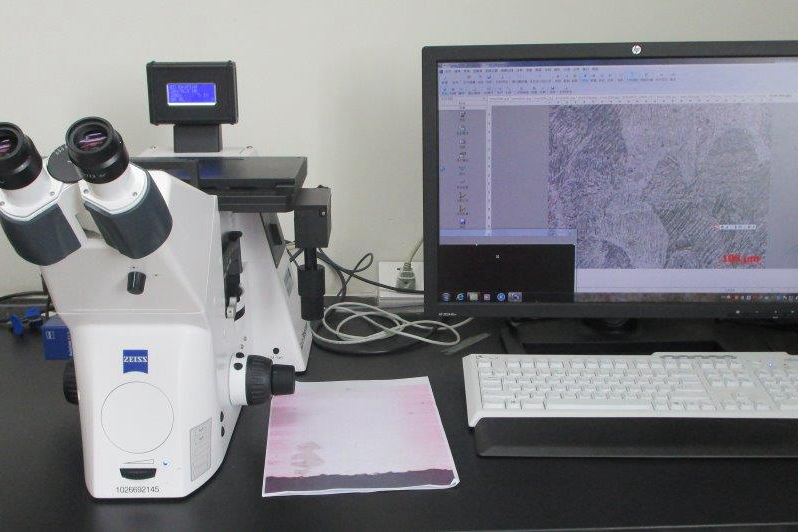
Beyond NDT, detailed metallurgical analysis ensures that processes like superalloy heat treatment and hot isostatic pressing (HIP) achieve the desired microstructural homogeneity. Material testing and analysis verify chemical composition, hardness, and grain size to detect potential deviations from design standards.
Dimensional inspection utilizes coordinate measuring machines (CMMs) and laser scanning to verify precision tolerances for airframe and engine components. This is especially important for single-crystal castings such as CMSX-4 and PWA 1484, where geometric accuracy directly impacts turbine efficiency.
Industrial Relevance and Applications
Inspection protocols are standard across the aerospace and aviation, power generation, military, and defense industries. These sectors require certification-level documentation of each quality step to guarantee flight-worthiness and long-term operational safety.
Conclusion
The combination of non-destructive evaluation, metallurgical testing, and precision measurement ensures that every aircraft structural unit achieves flawless performance. Through advanced inspection systems, manufacturers secure the reliability, safety, and efficiency required for aerospace excellence.