What Post-Processing Techniques Are Most Common for 3D-Printed Superalloy Parts?
Critical Densification: Hot Isostatic Pressing (HIP)
The most crucial and non-negotiable step for 3D-printed superalloy parts, especially for critical applications, is Hot Isostatic Pressing (HIP). The additive manufacturing process can introduce microscopic internal porosity and voids, which act as stress concentrators and dramatically reduce fatigue life and fracture toughness. HIP subjects the part to simultaneous high temperature and isostatic gas pressure, effectively closing these internal defects and achieving near-theoretical density. This is essential for components used in aerospace and aviation and power generation, where material homogeneity is paramount.
Microstructure Optimization: Heat Treatment
As-printed superalloys typically have a non-equilibrium microstructure with significant residual stresses and inhomogeneous phase distribution. A tailored heat treatment cycle is mandatory to dissolve undesirable phases, relieve stresses, and precipitate strengthening phases (like the γ' phase in nickel-based alloys). This process optimizes the alloy's mechanical properties, including tensile strength, creep resistance, and ductility, bringing them to meet or exceed specification standards. The specific cycle varies by alloy, such as those used for Inconel 718 or Haynes 188.
Precision Machining to Final Dimensions
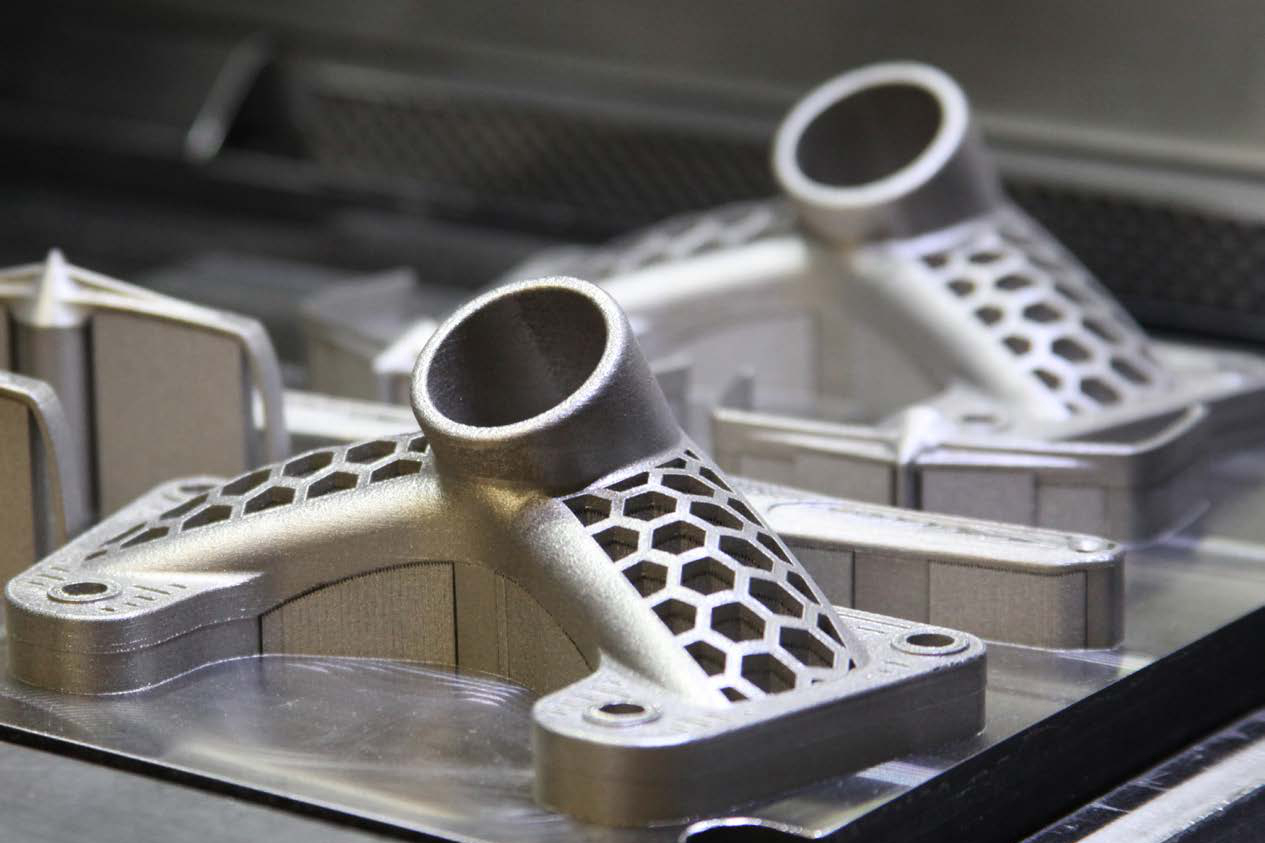
3D-printed parts are "near-net-shape" and require precision machining to achieve final dimensional accuracy and surface finish. Support structures must be removed, and critical interfaces (such as mating surfaces, bolt holes, and sealing grooves) must be machined. Due to the extreme hardness and work-hardening nature of superalloys post-HIP and heat treatment, this demands advanced superalloy CNC machining capabilities. For complex internal channels or deep features, deep hole drilling or EDM may be employed.
Surface Enhancement and Coating
The as-printed surface, while precise, often has a characteristic roughness that can initiate cracks under cyclic loading. Surface enhancement techniques are therefore common. These include abrasive flow machining (AFM) to polish internal passages, vibratory finishing, or precision grinding. For parts operating in extreme thermal environments, such as turbine components, applying a Thermal Barrier Coating (TBC) is a critical final step to insulate the base metal from high gas temperatures.
Validation and Non-Destructive Evaluation (NDE)
Rigorous inspection validates the effectiveness of all prior post-processing steps. This involves comprehensive material testing and analysis. Common techniques include: X-ray Computed Tomography (CT): To volumetrically inspect internal structure and verify the elimination of porosity post-HIP. Dye Penetrant & Fluorescent Penetrant Inspection (DPI/FPI): To detect surface defects. Ultrasonic Testing (UT): For identifying sub-surface flaws. Dimensional Inspection: Using CMM to ensure geometric compliance with design intent after machining.