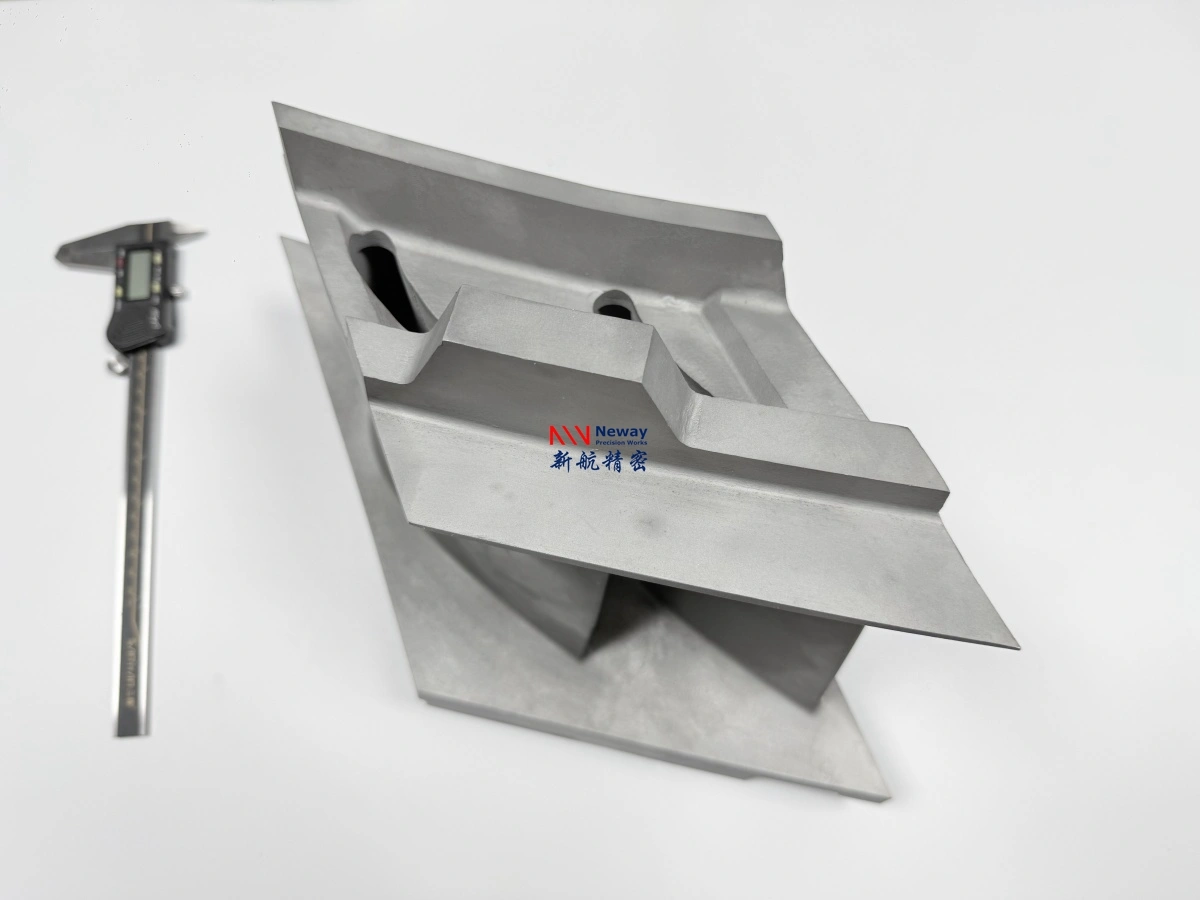
Nimonic Alloy
Nimonic Alloy Materials Introduction
Nimonic alloy is a family of nickel-chromium superalloys developed for sustained strength, oxidation resistance, and creep stability in elevated-temperature service. Grades such as Nimonic 75, 80A, 90, 105, 115, 263, 901, PE11, and PE16 are widely selected for turbine hot-section parts, combustion hardware, exhaust systems, and other components exposed to cyclic thermal loading and long-term stress.
In high-performance manufacturing, Nimonic alloys are commonly processed through vacuum investment casting, followed by heat treatment, machining, and inspection to achieve reliable dimensional accuracy and stable microstructure. Their balanced combination of high-temperature mechanical performance and fabrication adaptability makes them suitable for aerospace, power generation, oil and gas, and other severe-environment applications requiring both durability and process consistency.
Nimonic Alloy Similar Grades Table
The table below lists representative grades within the Nimonic alloy family commonly used for high-temperature industrial applications:
Alloy Family | Grade | Typical Application Focus |
|---|---|---|
Nimonic Alloy | Oxidation-resistant sheet, exhaust and heat-resistant structural parts | |
Nimonic Alloy | Turbine blades, guide vanes, bolts, and forged hot-section parts | |
Nimonic Alloy | High-temperature retaining parts and oxidation-resistant components | |
Nimonic Alloy | Heat-resistant castings and thermal cycling service components | |
Nimonic Alloy | High-stress turbine hardware and hot-strength fasteners | |
Nimonic Alloy | Advanced turbine blades and combustion-zone components | |
Nimonic Alloy | Very high-temperature turbine airfoils and critical rotating parts | |
Nimonic Alloy | Combustors, casings, welded fabrications, and exhaust structures | |
Nimonic Alloy | Discs, shafts, and bolting under elevated cyclic stress | |
Nimonic Alloy | High-temperature turbine and aeroengine structural components | |
Nimonic Alloy | High-strength disc and ring applications with good creep resistance |
Nimonic Alloy Comprehensive Properties Table
Category | Property | Value |
|---|---|---|
Physical Properties | Density | Typically 8.0–8.4 g/cm³, grade dependent |
Melting Range | Typically 1320–1400°C, depending on alloy chemistry | |
Thermal Conductivity | Approximately 11–22 W/(m·K) at room temperature | |
Specific Heat Capacity | Approximately 420–500 J/(kg·K) | |
Thermal Expansion | Typically 12.5–15.5 µm/(m·K), temperature and grade dependent | |
Chemical Composition | Base System | Nickel-chromium matrix with controlled additions of cobalt, titanium, aluminum, molybdenum, and other strengthening elements |
Nickel (Ni) | Primary balance element in all Nimonic grades | |
Chromium (Cr) | Provides oxidation and corrosion resistance | |
Titanium / Aluminum | Support precipitation strengthening in age-hardenable grades | |
Cobalt / Molybdenum | Enhance hot strength, creep resistance, and microstructural stability | |
Mechanical Properties | Tensile Strength | Typically 750–1400 MPa after appropriate processing and heat treatment |
Yield Strength (0.2%) | Typically 300–1000 MPa depending on grade and condition | |
Elongation at Break | Typically 8–30%, dependent on alloy and product form | |
Hardness | Commonly varies from solution-treated moderate hardness to age-hardened high hardness | |
Service Strength Feature | Excellent creep, fatigue, and oxidation resistance at elevated temperature |
Casting Technology of Nimonic Alloy
Commonly applied manufacturing technologies for Nimonic alloy components include vacuum investment casting, equiaxed crystal casting, directional casting, and precision secondary machining. These routes help maintain alloy cleanliness, dimensional repeatability, and stable high-temperature properties required for demanding hot-section and structural applications.
Applicable Process Table
Technology | Precision | Surface Quality | Mechanical Properties | Application Suitability |
|---|---|---|---|---|
Vacuum Investment Casting | Good for complex near-net-shape parts | Good as-cast consistency | Very Good | Combustors, casings, rings, structural hot parts |
Suitable for complex turbine castings | Stable for production parts | Excellent toughness-fatigue balance | Guide vanes, turbine wheels, hot gas path components | |
Controlled grain orientation for critical parts | Good after finishing | Excellent creep capability | High-temperature blades and vanes | |
High precision on critical features | Fine finished surfaces achievable | Retains base material integrity with proper controls | Datums, sealing faces, attachment features, final sizing |
Nimonic Alloy Process Selection Principles
When producing complex, thin-walled, or near-net-shape hot-section components, vacuum investment casting is often the preferred route. It supports intricate geometries while helping reduce oxidation and contamination during melting and pouring, making it suitable for combustion hardware, exhaust structures, and heat-resistant housings.
For turbine parts requiring balanced fatigue resistance, good thermal stability, and production efficiency, equiaxed crystal casting is a strong choice. This route is widely used for Nimonic alloy grades intended for guide vanes, turbine blades, nozzle elements, and other components where a balance of manufacturability and high-temperature performance is required.
When the application places greater emphasis on creep resistance and directional load performance, directional casting should be prioritized. It is particularly suitable for critical airfoil-type parts operating under sustained high temperature and mechanical stress, especially in aerospace and power generation service environments.
For features requiring tight tolerances, controlled sealing surfaces, or assembly-critical interfaces, post-cast machining remains essential. Precision finishing ensures that Nimonic alloy components meet final dimensional, surface, and fit-up requirements after casting and thermal processing.
Nimonic Alloy Key Challenges and Solutions
Nimonic alloy processing is sensitive to microstructural control because these alloys are designed for demanding high-temperature service. Segregation, grain instability, and local shrinkage defects can reduce long-term creep and fatigue performance. Applying controlled melting, optimized solidification parameters, and rigorous process windows helps maintain more stable cast quality.
Porosity is a critical concern for highly stressed cast components. Using Hot Isostatic Pressing (HIP) after casting is an effective way to reduce internal voids, improve density, and enhance fatigue reliability, especially for turbine and combustion-system parts.
Mechanical performance in Nimonic alloys is highly dependent on correct precipitation and stress-relief control. Therefore, tailored heat treatment is essential to develop the intended balance of strength, ductility, creep resistance, and thermal stability for each specific grade.
Machining also presents challenges because Nimonic alloys maintain strength at elevated temperature and can generate high cutting loads, rapid tool wear, and surface integrity risks. Appropriate tooling strategy, cutting parameters, coolant control, and staged finishing processes are necessary to ensure dimensional accuracy without compromising the material structure.
To validate final quality, comprehensive material testing and analysis should be included to assess chemistry, internal soundness, microstructure, and key mechanical properties before release for high-reliability service.
Industry Application Scenarios and Cases
Nimonic alloy is widely used across industries requiring reliable strength under prolonged thermal exposure:
Aerospace and Aviation: Turbine blades, guide vanes, combustor hardware, exhaust parts, and hot structural components benefit from oxidation resistance and sustained elevated-temperature strength.
Power Generation: Gas turbine hot-section parts, nozzle components, and thermal system hardware rely on Nimonic alloys for creep resistance and operating stability.
Oil and Gas: Heat-resistant structural parts, valves, and severe-service components benefit from durability under thermal and corrosive loading.
A representative application can be seen in Nimonic 80A superalloy directional casting turbine guide vane production, where the alloy family supports high-temperature gas-path performance. Another relevant example is Nimonic 263 superalloy casting for high-temperature gas turbine blades, demonstrating the family’s suitability for demanding thermally loaded turbine applications.
Explore Related Blogs