
Stellite Alloy High-Temperature Aerospace Parts Custom Company for Aviation
Introduction to Stellite Alloys in Aerospace Manufacturing
Stellite alloys are renowned in aviation for their exceptional wear resistance, superior strength, and outstanding thermal stability at elevated temperatures. As an industry-leading custom manufacturer, Neway AeroTech specializes in precision aerospace-grade components using advanced processes like vacuum investment casting and superalloy directional casting.
Leveraging cutting-edge technology and in-depth expertise, we deliver customized Stellite components tailored to stringent aviation standards. Our high-quality solutions enhance component durability, optimize performance, and support sustainable, efficient operations under extreme aviation conditions.
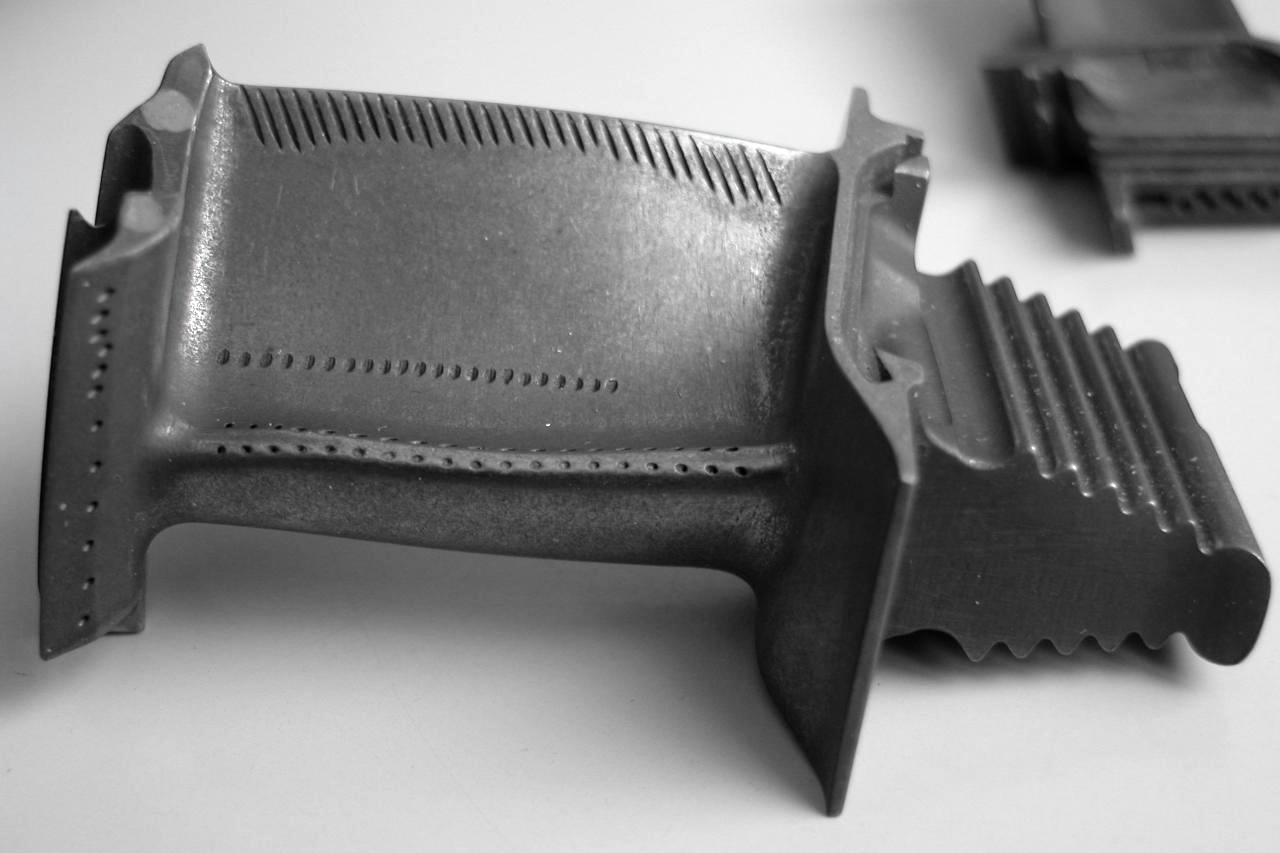
Core Manufacturing Challenges for Stellite Aerospace Parts
Manufacturing aerospace-grade Stellite parts involves overcoming complex technical challenges:
Wear Resistance: Achieving exceptional surface hardness (up to 60 HRC) without compromising ductility.
Thermal Stability: Maintaining mechanical integrity at operational temperatures up to 950°C.
Machinability: Addressing difficulty in machining due to high hardness and abrasive characteristics, requiring specialized tooling.
Oxidation Resistance: Ensuring long-term oxidation and corrosion resistance under harsh aerospace environments.
Detailed Explanation of Manufacturing Processes for Stellite Parts
Vacuum Investment Casting
Precision wax models replicate the final component geometry accurately.
Ceramic molds are created by coating wax patterns in refractory slurry.
Wax removal via autoclave at approximately 180°C.
Casting of molten Stellite alloy under vacuum (<0.01 Pa), minimizing impurities.
Controlled cooling (≤50°C/hour) prevents internal stress and distortion.
Directional Casting
Controlled directional solidification ensures aligned grain structures.
Improved creep resistance and enhanced fatigue strength due to grain alignment.
Optimized cooling rates (20-40°C/hour) minimize internal stress and microstructural defects.
Comparative Analysis of Stellite Manufacturing Methods
Process | Dimensional Accuracy | Surface Roughness | Lead Time | Complexity Capability |
|---|---|---|---|---|
Vacuum Investment Casting | ±0.15 mm | Ra 3.2-6.3 µm | Moderate | High |
Directional Casting | ±0.20 mm | Ra 6.3-12.5 µm | Moderate | Moderate |
CNC Machining | ±0.01 mm | Ra 0.8-3.2 µm | Moderate | Moderate |
SLM 3D Printing | ±0.05 mm | Ra 6.3-12.5 µm | Short | Very High |
Strategic Manufacturing Process Selection for Stellite Aerospace Parts
Vacuum Investment Casting: Preferred for intricate geometries and medium production volumes, providing reliable dimensional accuracy (±0.15 mm).
Directional Casting: Optimal for turbine blades and vanes requiring superior creep resistance and directional grain structure at ±0.20 mm accuracy.
CNC Machining: Ideal for precision finishing of critical surfaces, achieving superior accuracy (±0.01 mm) and excellent surface finish (Ra 0.8-3.2 µm).
SLM 3D Printing: Suitable for complex internal structures, rapid prototyping, and precise control (±0.05 mm accuracy) of aerospace components.
Stellite Material Analysis Matrix for Aviation Applications
Material | Hardness (HRC) | Tensile Strength (MPa) | Max Service Temp (°C) | Wear Resistance | Aviation Application |
|---|---|---|---|---|---|
45-50 | 900 | 950 | Excellent | Turbine blade erosion shields | |
47-53 | 850 | 850 | Outstanding | Valve seats and guides | |
30-40 | 700 | 820 | Excellent | Bearings and bushings | |
50-56 | 950 | 900 | Exceptional | Combustion liners | |
53-58 | 920 | 870 | Outstanding | Fuel nozzle assemblies | |
56-60 | 970 | 950 | Exceptional | High-performance turbine seals |
Optimal Stellite Alloy Selection for Aerospace Components
Stellite 6: Chosen for turbine erosion shields due to balanced hardness (45-50 HRC) and resistance to high-temperature oxidation at 950°C.
Stellite 12: Ideal for critical valve components, offering superior wear resistance (47-53 HRC) and reliable strength at temperatures around 850°C.
Stellite 21: Selected for bearing and bushing applications requiring a combination of wear resistance (30-40 HRC) and durability at 820°C.
Stellite 31: Optimal for combustion liners, delivering exceptional tensile strength (950 MPa) and hardness (50-56 HRC) at elevated temperatures up to 900°C.
Stellite 3: Preferred for fuel nozzle assemblies, offering outstanding hardness (53-58 HRC), erosion resistance, and reliability at temperatures up to 870°C.
Stellite 1: Best suited for turbine seals demanding maximum hardness (56-60 HRC) and wear resistance under severe thermal cycling at 950°C.
Essential Post-processing Techniques for Stellite Aerospace Components
Hot Isostatic Pressing (HIP): Enhances mechanical properties by eliminating internal porosity under pressures of approximately 150 MPa and temperatures up to 1200°C.
Thermal Barrier Coating (TBC): Significantly reduces surface temperatures (~200°C reduction), vital for high-temperature components exposed to combustion gases.
Electrical Discharge Machining (EDM): Provides precise tolerances (±0.005 mm) for intricate internal channels and critical features.
Heat Treatment: Optimizes Stellite alloy microstructure, improving hardness, fatigue strength, and corrosion resistance at operational temperatures.
Industry Case Analysis: Stellite Aerospace Combustion Liners
Neway AeroTech delivered advanced Stellite 31 combustion liners through vacuum investment casting and directional solidification processes, enhanced by precise heat treatment and HIP technology. This comprehensive solution achieved superior dimensional accuracy (±0.15 mm), exceptional wear resistance, and thermal stability at 900°C.
Our deep technical knowledge and rigorous quality controls ensured compliance with aerospace standards, significantly improving component durability and performance under continuous high-temperature conditions.
FAQs on Stellite Aerospace Parts Manufacturing
What lead times can you achieve for custom Stellite aerospace component production?
Can you support small-volume orders and prototyping for aviation applications?
Which aerospace industry certifications does your Stellite manufacturing comply with?
What post-processing methods do you recommend for maximizing Stellite part performance?
Do you provide technical assistance for selecting optimal Stellite alloys for specific aerospace applications?
