
Energy Gas Turbine Combustion Chamber Parts Custom Hastelloy Superalloy Components Supplier
Introduction to Hastelloy Components for Gas Turbine Combustion Chambers
Hastelloy superalloys are renowned for their exceptional resistance to corrosion and superior strength at elevated temperatures, making them ideal for combustion chamber components in gas turbines. As a leading custom superalloy component manufacturer, Neway AeroTech utilizes advanced processes such as vacuum investment casting and directional solidification casting to deliver precise Hastelloy parts tailored specifically for the energy industry.
Our manufacturing excellence ensures components perform reliably under the rigorous operational demands of gas turbine combustion environments.
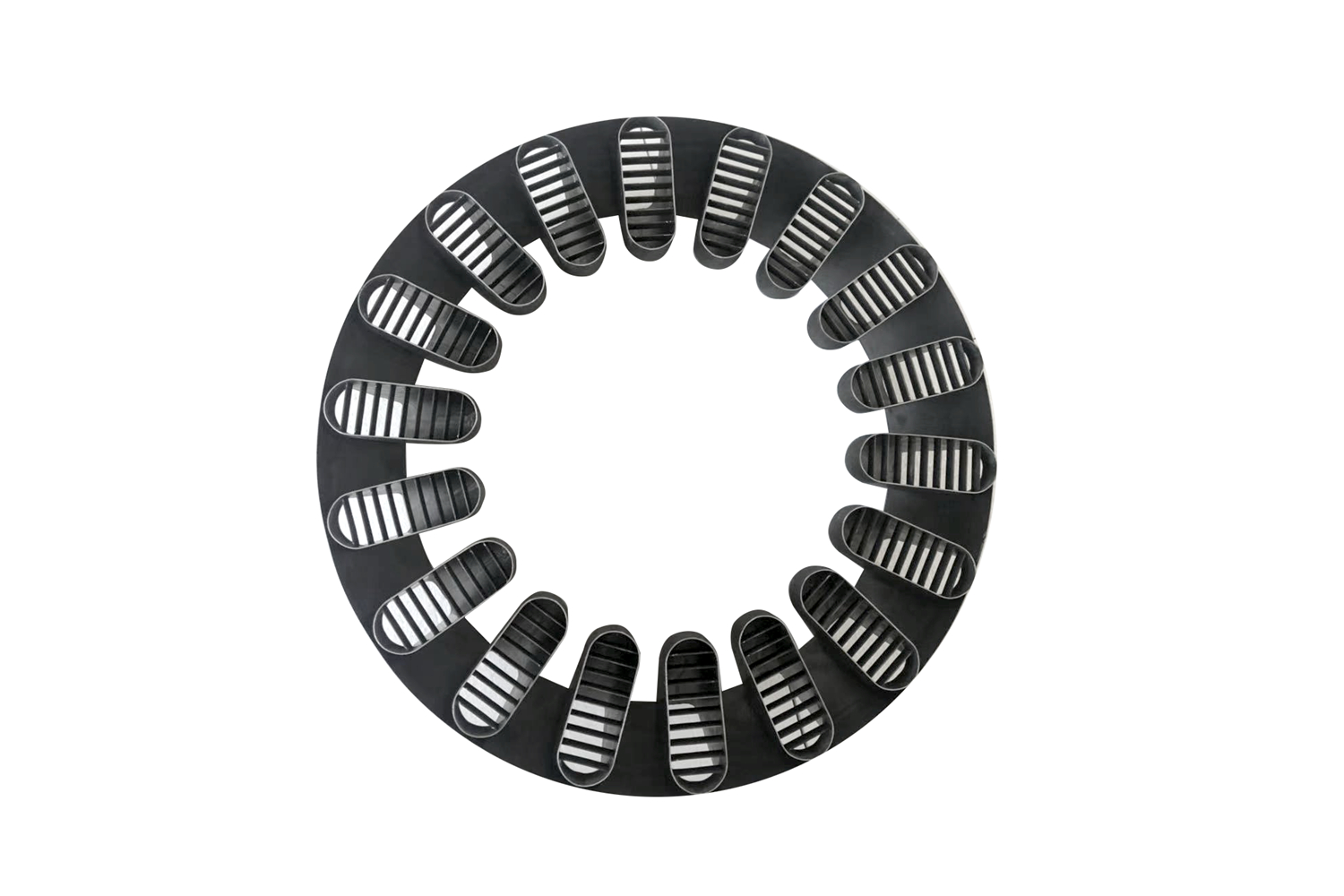
Core Manufacturing Challenges of Hastelloy Combustion Components
Critical challenges include:
Thermal Durability: Sustaining mechanical properties at temperatures exceeding 950°C.
Corrosion Resistance: Preventing degradation in sulfuric, chloride-rich, and oxidation-prone environments.
Precision Complexity: Achieving intricate geometries with strict tolerances (±0.10 mm).
Machinability: Overcoming rapid work-hardening and low thermal conductivity issues inherent in Hastelloy alloys.
Detailed Explanation of Manufacturing Processes
Vacuum Investment Casting
Precise wax pattern production accurately representing complex geometries.
Ceramic mold formation followed by wax removal at approximately 180°C.
Casting performed under stringent vacuum conditions (<0.01 Pa) ensuring alloy purity.
Gradual cooling (25–35°C/hour) to maintain dimensional precision and reduce internal stress.
Directional Solidification Casting
Controlled directional solidification under thermal gradients (20–50°C/cm) to align grain structure.
Enhanced mechanical properties, especially creep resistance and fatigue life.
Slow, controlled cooling (20–35°C/hour) minimizes porosity and internal defects.
Comparison of Mainstream Manufacturing Processes
Process | Dimensional Accuracy | Surface Finish | Efficiency | Complexity Capability |
|---|---|---|---|---|
Vacuum Investment Casting | ±0.15 mm | Ra 3.2–6.3 µm | Moderate | High |
Directional Solidification | ±0.20 mm | Ra 6.3–12.5 µm | Moderate | Moderate |
CNC Machining | ±0.01 mm | Ra 0.8–3.2 µm | Moderate | Moderate |
SLM 3D Printing | ±0.05 mm | Ra 6.3–12.5 µm | High | Very High |
Manufacturing Process Selection Strategy for Hastelloy Parts
Vacuum Investment Casting: Optimal for complex components requiring precise internal features with dimensional accuracy around ±0.15 mm.
Directional Solidification Casting: Ideal for applications needing enhanced creep strength, delivering dimensional accuracy of ±0.20 mm.
CNC Machining: Suitable for fine finishing and detailed features requiring precision of ±0.01 mm.
SLM 3D Printing: Recommended for rapid prototyping and intricate internal cooling channel designs, maintaining accuracy within ±0.05 mm.
Material Analysis Matrix for Hastelloy Alloys
Material | Tensile Strength (MPa) | Yield Strength (MPa) | Max Operating Temp (°C) | Corrosion Resistance | Typical Applications |
|---|---|---|---|---|---|
780 | 385 | 1175 | Exceptional | Combustion liners, transition ducts | |
790 | 365 | 1038 | Outstanding | Exhaust components, heat exchangers | |
760 | 350 | 1000 | Superior | Turbine seals, fasteners | |
690 | 310 | 1100 | Exceptional | High-temperature ducting | |
750 | 340 | 1090 | Superior | Combustion chamber walls | |
655 | 283 | 1093 | Outstanding | Corrosion-resistant liners |
Material Selection Strategy
Hastelloy X: Chosen for combustion liners due to outstanding oxidation resistance and tensile strength (780 MPa) at temperatures up to 1175°C.
Hastelloy C-276: Preferred for exhaust components because of superior corrosion resistance and strength (790 MPa tensile) at 1038°C.
Hastelloy B-2: Ideal for turbine seals and fasteners, delivering excellent durability and strength (760 MPa) at 1000°C.
Hastelloy C-22: Recommended for high-temperature ducting due to exceptional corrosion resistance, suitable at 1100°C.
Hastelloy S: Selected for combustion chamber walls offering robust mechanical performance (750 MPa tensile) and excellent oxidation resistance at 1090°C.
Hastelloy C-2000: Optimal for corrosion-resistant liners due to exceptional chemical stability at elevated temperatures (1093°C).
Key Post-processing Technologies
Hot Isostatic Pressing (HIP): Enhances mechanical integrity by eliminating internal porosity, performed at around 1200°C and 150 MPa.
Thermal Barrier Coating (TBC): Reduces component surface temperatures by approximately 200°C, significantly prolonging component life.
Electrical Discharge Machining (EDM): Provides precise shaping for intricate geometries with accuracies up to ±0.005 mm.
Heat Treatment: Optimizes microstructures, increasing mechanical performance and corrosion resistance.
Industry Application and Case Analysis
Neway AeroTech successfully delivered custom Hastelloy X combustion liners for a major international energy turbine OEM. Using vacuum investment casting combined with HIP and advanced thermal barrier coatings, components achieved exceptional dimensional accuracy (±0.15 mm), superior corrosion resistance, and high mechanical strength at sustained operation above 1100°C.
Our specialized manufacturing capabilities, rigorous quality assurance, and extensive Hastelloy alloy expertise ensure reliable, durable, and high-performing solutions for critical gas turbine components.
FAQs
What is your typical delivery time for custom Hastelloy turbine combustion chamber parts?
Can you support small-batch production and rapid prototyping for Hastelloy components?
Which industry certifications and quality standards do your Hastelloy parts comply with?
What post-processing methods enhance Hastelloy component performance in extreme environments?
Do you offer technical assistance in alloy selection and combustion chamber component design?
