
Chemical Processing Monel Valve Components Vacuum Investment Casting
Introduction to Monel Valve Components for Chemical Industry
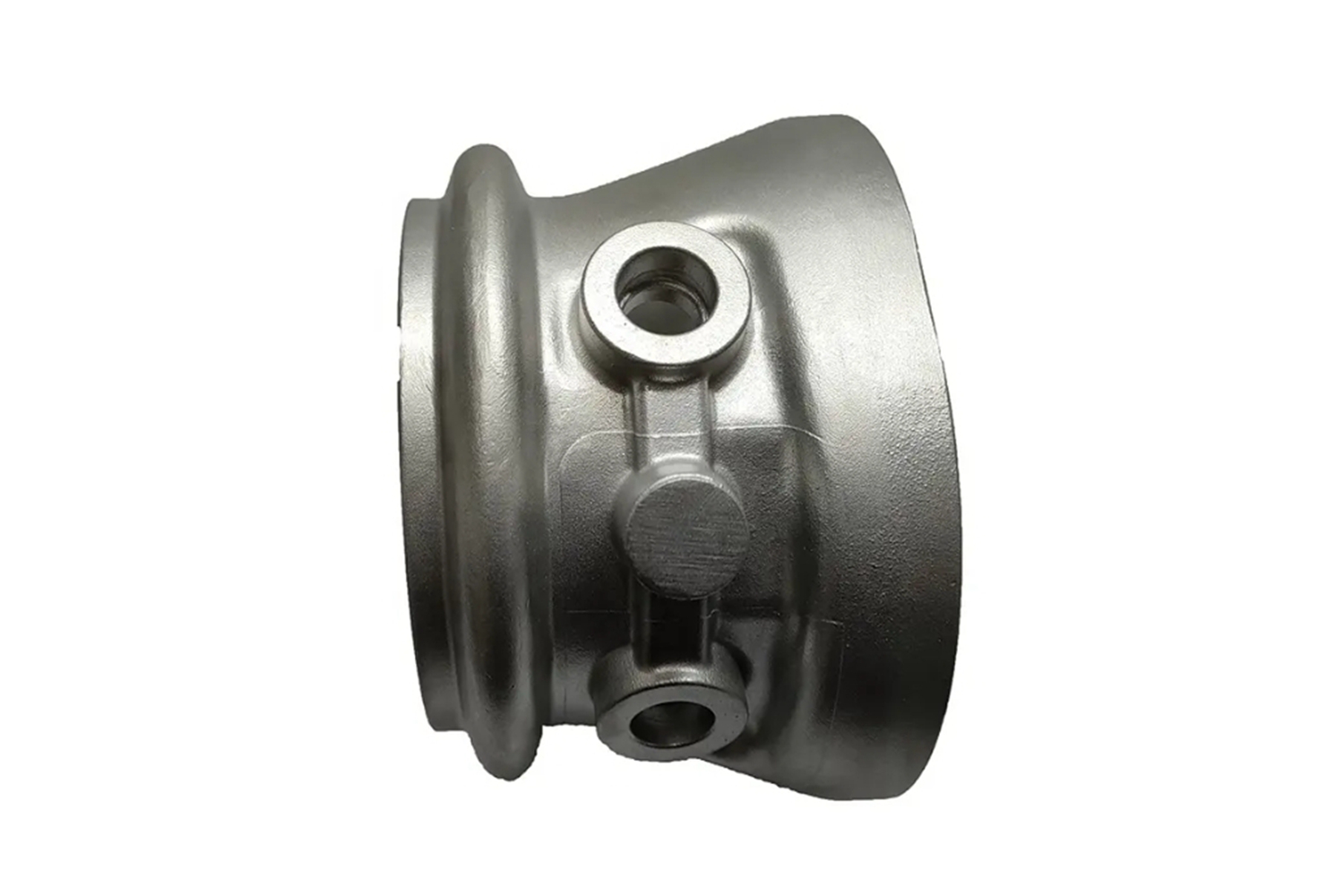
Chemical processing valves demand materials offering exceptional corrosion resistance, strength, and reliability under harsh operating conditions. Neway AeroTech specializes in manufacturing Monel valve components using advanced vacuum investment casting technology. Utilizing premium Monel alloys, including Monel 400 and Monel K500, we deliver valve components specifically engineered for critical chemical industry applications.
Our precision casting solutions offer superior performance, durability, and consistency in chemically aggressive environments.
Core Challenges in Monel Valve Component Casting
Vacuum investment casting of Monel valve components addresses several technical challenges:
Corrosion Resistance: Ensuring alloy purity and microstructural integrity to maintain corrosion resistance in acidic and alkaline solutions.
Dimensional Precision: Achieving consistent dimensional tolerances (±0.15 mm) required for reliable valve sealing.
Surface Integrity: Attaining uniform surface roughness (Ra 3.2–6.3 µm) to enhance sealing performance.
Material Purity: Reducing impurities below 0.01% using precise vacuum melting (<0.1 Pa vacuum pressure).
Detailed Monel Vacuum Investment Casting Process
Wax Pattern Manufacturing
Precision wax patterns replicate exact valve component dimensions within ±0.1 mm accuracy.
Ceramic Shell Mold Formation
Ceramic shells (6–12 mm thick) built through repeated slurry coating, drying stages maintain mold strength for molten Monel (~1350°C).
Vacuum Melting and Casting
Monel alloys undergo vacuum induction melting (pressure <0.1 Pa), preventing oxidation and gas absorption.
Precise vacuum pouring produces near-net shapes, minimizing material waste.
Shell Removal and Finishing
Ceramic shells removed mechanically or chemically.
CNC precision finishing achieves final dimensional accuracy (±0.15 mm) and desired surface finishes (Ra 3.2–6.3 µm).
Comparison of Valve Component Manufacturing Methods
Manufacturing Process | Precision | Surface Finish | Complexity Handling | Production Efficiency |
|---|---|---|---|---|
Vacuum Investment Casting | ±0.15 mm | Ra 3.2–6.3 µm | High | Moderate–High |
CNC Machining | ±0.005 mm | Ra 0.8–1.6 µm | Moderate | Moderate |
Forging | ±0.2 mm | Ra 6.3–12.5 µm | Moderate | High |
Additive Manufacturing (SLM) | ±0.10 mm | Ra 6.3–12.5 µm | High | Moderate |
Manufacturing Process Selection Strategy
Vacuum Investment Casting: Optimal for intricate valve geometries requiring excellent corrosion resistance and dimensional accuracy (±0.15 mm).
CNC Machining: Recommended for critical sealing surfaces requiring superior precision (±0.005 mm) and ultra-fine surface finishes.
Forging: Suitable for high-strength valve bodies in higher-volume production scenarios with acceptable tolerance (±0.2 mm).
Selective Laser Melting (SLM): Ideal for prototyping complex internal channel valve designs quickly.
Monel Alloy Material Performance Matrix
Alloy | Tensile Strength | Yield Strength | Corrosion Resistance | Max Operating Temp | Chemical Industry Application |
|---|---|---|---|---|---|
550 MPa | 240 MPa | Excellent (Acidic, Alkaline) | 480°C | General-purpose valves | |
1100 MPa | 790 MPa | Superior (Sea-water, Acidic) | 500°C | High-strength valve stems/seats | |
550 MPa | 240 MPa | Excellent (Chemical media) | 480°C | Precise chemical control valves | |
520 MPa | 210 MPa | Excellent (Corrosive fluids) | 480°C | Valve seats and trim components | |
500 MPa | 170 MPa | Excellent (Highly corrosive) | 450°C | Low-stress valve internals | |
480 MPa | 165 MPa | Excellent (Corrosive acids) | 430°C | Valve liners and small components |
Monel Alloy Selection Strategy
Monel 400: Ideal for standard valves requiring general corrosion resistance and durability in diverse chemical processes.
Monel K500: Selected for critical valve stems and seats, demanding superior strength (1100 MPa) and exceptional resistance to seawater corrosion.
Monel R405: Optimal for precise control valves needing excellent machinability and stable corrosion performance.
Monel 450: Chosen for robust valve seats and trims exposed to highly corrosive environments.
Monel 404: Suited for low-stress internal valve components with stringent corrosion-resistance requirements.
Monel 401: Preferred for small-sized valve liners operating in strongly acidic solutions.
Key Post-processing Technologies
Heat Treatment: Improves mechanical properties and corrosion resistance.
Hot Isostatic Pressing (HIP): Eliminates porosity, ensures structural integrity.
Precision CNC Machining: Achieves required dimensional tolerances (±0.005 mm) and sealing surface finishes.
Surface Coating and Passivation: Enhances corrosion resistance and prolongs valve lifespan.
Industry Case Study: Monel Valve Components for Corrosive Chemical Applications
Neway AeroTech recently delivered Monel K500 valve components to a global chemical processing client. Through vacuum investment casting, precise CNC finishing, and rigorous HIP processing, we provided valve stems and seats with superior strength (1100 MPa), exceptional corrosion resistance, and outstanding dimensional accuracy (±0.15 mm). This ensured reliable valve operation under highly corrosive, high-pressure chemical conditions.
Our proven performance underscores our industry-leading capability as a Monel valve component manufacturer.
FAQs
What are typical lead times for Monel valve components produced by vacuum investment casting?
Can you support prototype or low-volume production runs for custom valve parts?
Which chemical processing industry certifications do your valve components comply with?
How do you guarantee consistent quality and corrosion resistance for Monel valves?
Do you provide material selection guidance specific to chemical industry applications?
