Boosting Performance of Cast Alloys Through Heat Treatment
Cast-alloy performance is not improved by a furnace setpoint alone. The supplier must translate the buyer-approved cycle into a controlled load: correct casting identity, starting condition, furnace capability, part orientation, temperature monitoring, cooling method, lot definition, inspection, and records. A technically sound cycle can still fail when transferred to unsuitable equipment or an uncontrolled load arrangement.
For RFQ review, treat heat treatment as a special manufacturing operation with defined inputs and outputs. The buyer supplies the alloy, casting structure, applicable process instruction, required delivery condition, and acceptance evidence. The heat treater demonstrates that its equipment and production controls can execute that route for the actual part envelope and section range.
Transfer the Approved Cycle Without Losing Requirements
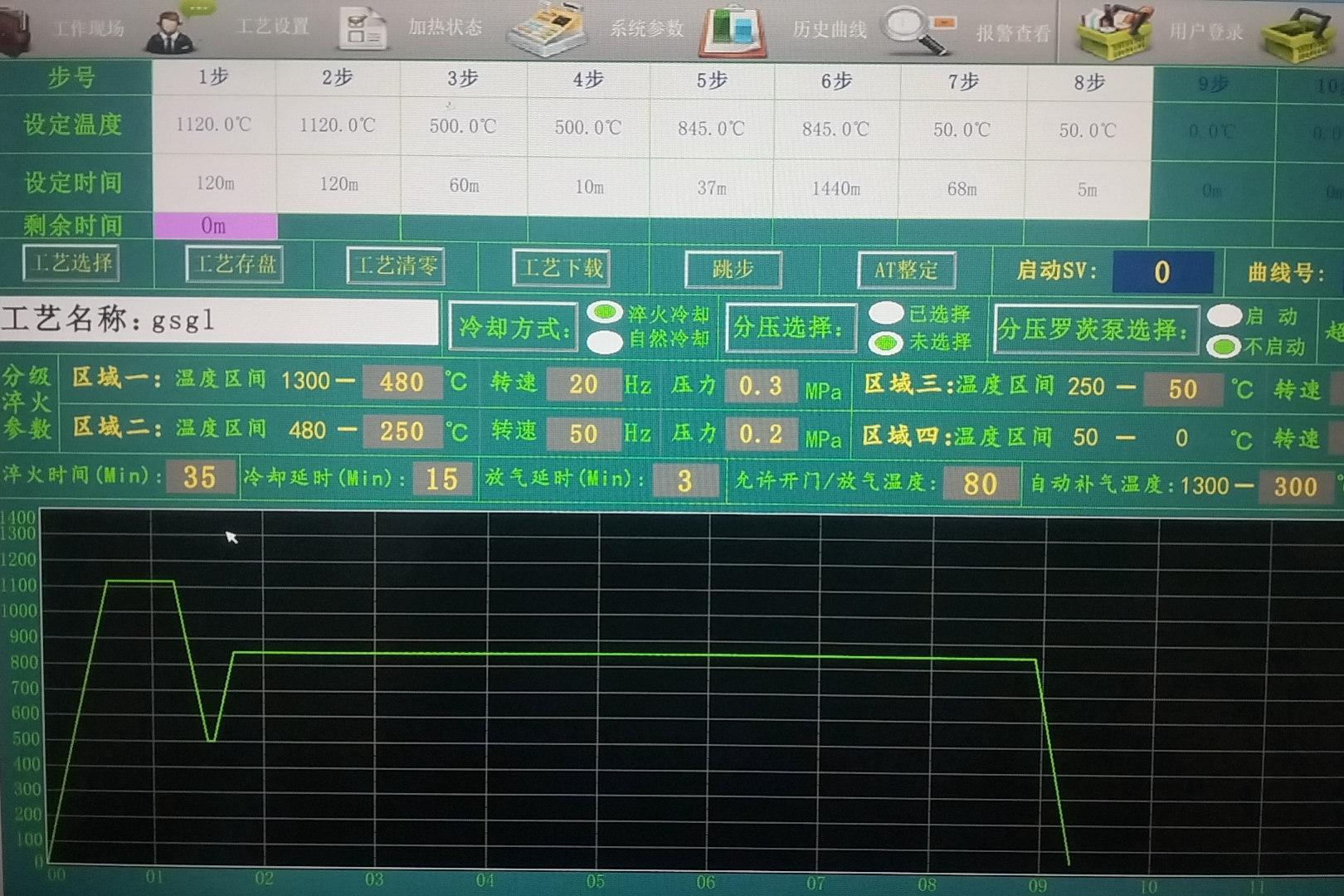
The purchase package should identify cycle revision, time-temperature steps, ramp or transfer controls where applicable, cooling method, atmosphere or vacuum requirement, monitoring, and required records. If the instruction references another standard, provide the applicable revision and resolve conflicting notes before quotation.
Define the casting input condition: as cast, HIP processed, rough machined, repaired, solution treated, aged, coated, or another controlled state. A supplier cannot determine the correct next step from alloy name alone. Prior thermal exposure should be visible because cumulative time and temperature can affect microstructure and dimensional behavior.
The heat treater should return a route review listing any assumption, equipment limitation, proposed fixture, monitoring approach, and subcontracted activity. Open questions should be closed before the first load, not interpreted by an operator after parts arrive.
Match Furnace Type and Working Zone to the Casting
Review furnace type against alloy, atmosphere, temperature range, part size, load mass, and cooling method. Vacuum, inert-gas, air, salt-bath, or other equipment types are not interchangeable. The approved instruction and material sensitivity determine the acceptable environment.
Confirm the casting fits inside the qualified working zone with required spacing from walls, elements, fans, baffles, and other parts. Overall chamber dimensions are not enough. A long casing or large ring may physically fit but extend outside the controlled area or block circulation.
Section size affects response. A thick hub, thin airfoil, flange, and internal passage may not reach the same temperature simultaneously. The process review should determine whether load or part thermocouples, additional soak logic, or a restricted load pattern is required by the governing instruction.
Create a Repeatable Load and Fixture Drawing
Document part orientation, support points, spacing, nesting, thermocouple placement where required, fixture material, and maximum load quantity. A written load drawing reduces variation between the first article and production. It also gives dimensional engineering a record of how the casting was supported.
Fixtures should allow thermal expansion without imposing avoidable stress, while preventing sagging or unstable movement. Protect machined datums, thin edges, seal surfaces, and coating-ready areas from contact damage or contamination. For mixed parts, define whether they can share a load based on alloy, condition, section, and cycle.
Load feature | Control question | Evidence |
Large ring or disk | How is flatness supported through heating and cooling? | Fixture drawing, orientation, post-cycle dimensions |
Long housing | Where are supports placed and how is bow prevented? | Support spacing, datum checks, handling plan |
Thin vane or blade segment | How are edges protected without restricting expansion? | Compatible fixture, contact map, profile inspection |
Heavy and thin sections together | How is thermal uniformity demonstrated? | Monitoring plan, soak basis, section review |
Multiple part numbers | Are material condition and thermal response compatible? | Load-family approval, identity and lot map |
Control Measurement and Temperature Evidence
The production record should identify furnace, load, date, operator or responsible system, part numbers, heat and lot, cycle revision, actual chart or data, alarms, cooling event, and deviations. The buyer should request the records required by its process instruction without asking for unrelated plant data.
Temperature sensors, recording channels, control instruments, and furnace uniformity controls should be maintained according to the applicable supplier and purchase requirements. The component buyer does not need unsupported claims; it needs evidence that the production load used equipment in the correct status.
When a load thermocouple fails, a chart deviates, power is interrupted, or transfer exceeds a controlled limit, the lot should be held for review. A final hardness result should not automatically erase a process deviation because it may not reveal every microstructural or dimensional effect.
Define Lot Boundaries and Traceability
A heat-treatment lot should be defined by compatible alloy, starting condition, cycle, furnace load, and other required grouping rules. Maintain heat identity and part serial or lot identity through baskets, fixtures, transfer, quench, inspection, and packaging. Loose parts should not rely on memory or an unverified tray location.
Test coupons must remain associated with the correct production load. Define whether they are cast-on, separately cast, removed from prolongations, or otherwise approved. If coupons have different section size or thermal response, record the limitation and obtain buyer approval where needed.
For multiple external sources, assign one party to reconcile material, HIP, heat-treatment, machining, and test records. A complete final package should show that the coupon, part, and furnace data refer to the same controlled lot.
Plan Cooling, Quenching, and Handling Before the Load Starts
Cooling method can influence phase condition, residual stress, distortion, oxidation, and handling risk. The approved cycle should define furnace cool, gas cool, air cool, liquid quench, or another controlled transition. Confirm tank or gas capacity, agitation where applicable, transfer route, part orientation, and safe handling for the actual load mass.
Part geometry can trap liquid, gas, or debris. Closed or narrow passages need drain and drying consideration. Fixtures and baskets should not shield flow or cause parts to strike each other during transfer. The RFQ should identify cleanliness and post-quench drying requirements.
Measure critical dimensions after cooling to the specified condition. Handling a hot, flexible casting or removing it from support too early can create movement after an otherwise acceptable furnace cycle.
Connect Post-Treatment Inspection to the Claimed Performance
Material testing and analysis may include hardness, tensile tests, creep tests, metallography, grain-size or phase evaluation, and other requirement-driven evidence. Select tests based on the alloy and performance objective. One convenient test should not be used to infer all properties.
Component inspection can include dimensional checks, penetrant testing, radiography, orientation inspection, passage verification, or coating-substrate review as applicable. Heat treatment can move dimensions or change surface condition even when material tests pass. The release package should represent the shipped component, not only a coupon.
If machining follows, define the delivered hardness or condition, scale removal, stock, and datum status. If coating follows, define substrate condition and cumulative thermal exposure. Each downstream supplier should receive the condition it expects and the record needed to preserve traceability.
Qualify the Production-Intent First Load
Use the first load to verify technical transfer, furnace capability, load drawing, fixture, monitoring, cooling, traceability, dimensional response, material tests, and record format. Include production-intent parts or approved representative samples with the same alloy, section range, and route.
Review actual data against the controlled requirement and resolve deviations before repeat production. Do not qualify a load using one fixture and then change orientation, quantity, spacing, or cooling arrangement without evaluating the effect. Define which changes require notification or a new first load.
Change controls should cover furnace, working zone, control or recording system, fixture revision, load quantity, part family, thermocouple plan, cycle revision, cooling equipment, test laboratory, and subcontractor. This keeps claimed performance connected to the demonstrated process.
Hold Deviations Before Reheat or Release
When production data depart from the approved route, isolate the exact load and preserve the original chart, sensor status, alarm record, part identification, and cooling history. The review should identify which requirement was missed and which material or dimensional characteristics could be affected. Parts should not be mixed into a later conforming lot while disposition is pending.
A repeated cycle is not a neutral correction. Additional exposure may change precipitates, grain-boundary phases, dimensions, prior repair condition, or coating compatibility. Any reheat should have designated approval, a controlled cycle, and defined repeat tests or inspections. If the original coupon no longer represents cumulative exposure, the review must address replacement or additional sampling.
Release documentation should state the accepted route and any approved deviation without implying that the heat treater controls component design performance. The casting supplier, heat treater, laboratory, and buyer should each own the decisions assigned in the purchase package. Clear responsibility prevents a material-test result from being used to close an unresolved dimensional, NDE, or process-record issue.
Heat-Treatment Supplier RFQ Checklist
Send the drawing and model, alloy and casting structure, heat and lot identity, starting condition, cycle revision, quantity and section range, furnace environment, load and fixture restrictions, monitoring, cooling method, test coupons, required material and component inspections, records, packaging, and first-load hold points.
Request separate pricing for fixture design, development load, production loads, monitoring consumables, cooling or quench work, cleaning, dimensional inspection, NDE, laboratory tests, reports, deviation review, and packaging. This makes equipment and evidence scope comparable across suppliers.
Related FAQs
What Are the Main Types of Heat Treatment Processes Used in Superalloy Casting?
How Long Does the Heat-Treatment Process Take for Typical Superalloy Parts?
What Inspection Methods Are Commonly Used After Heat Treatment?
Challenges in Stress Relieving Superalloys: Temperature Control, Distortion, and Microstructure
How Does Heat Treatment Impact Mechanical Properties of Superalloy Parts?
How Does Heat Treatment Differ for Single-Crystal and Equiaxed-Crystal Castings?