
Turbine Discs and Rotating Parts Manufacturer for Aerospace Engine Applications
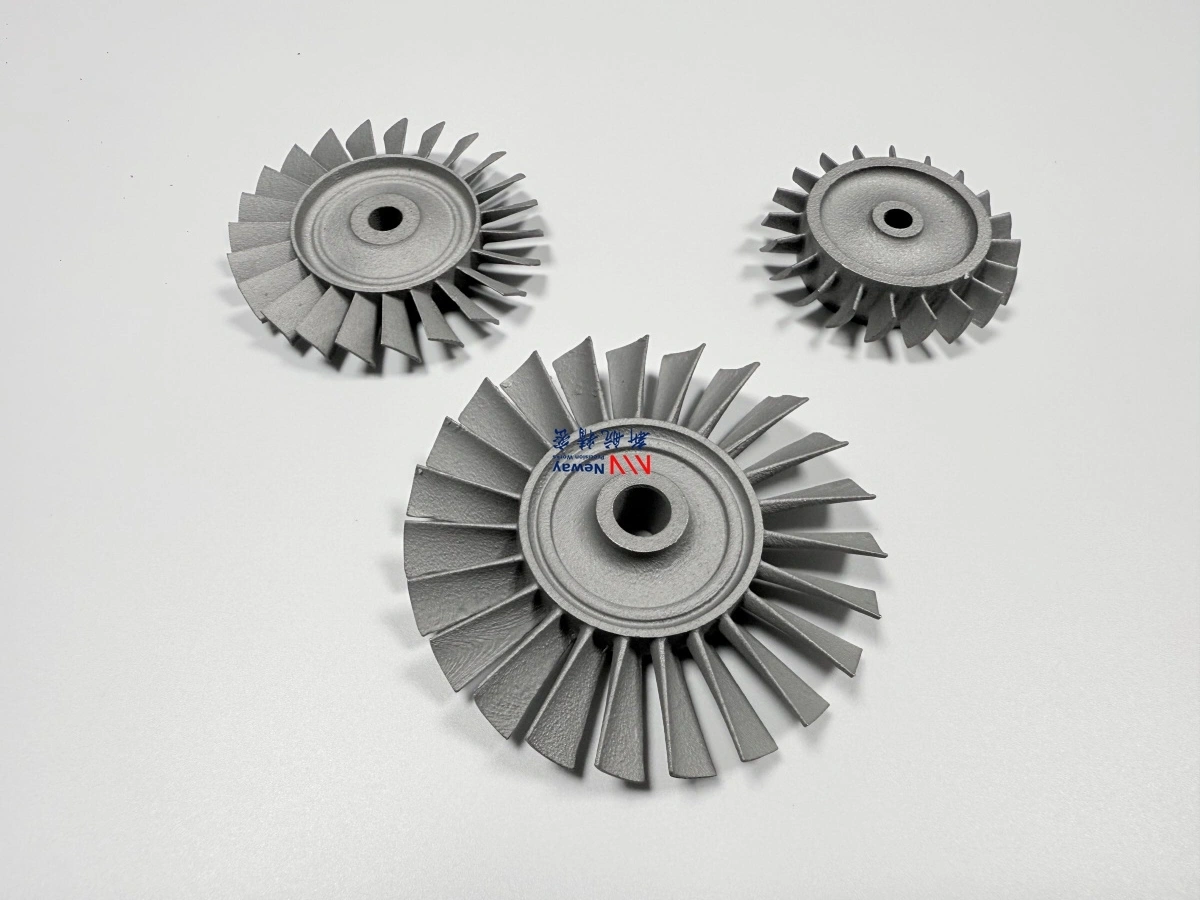
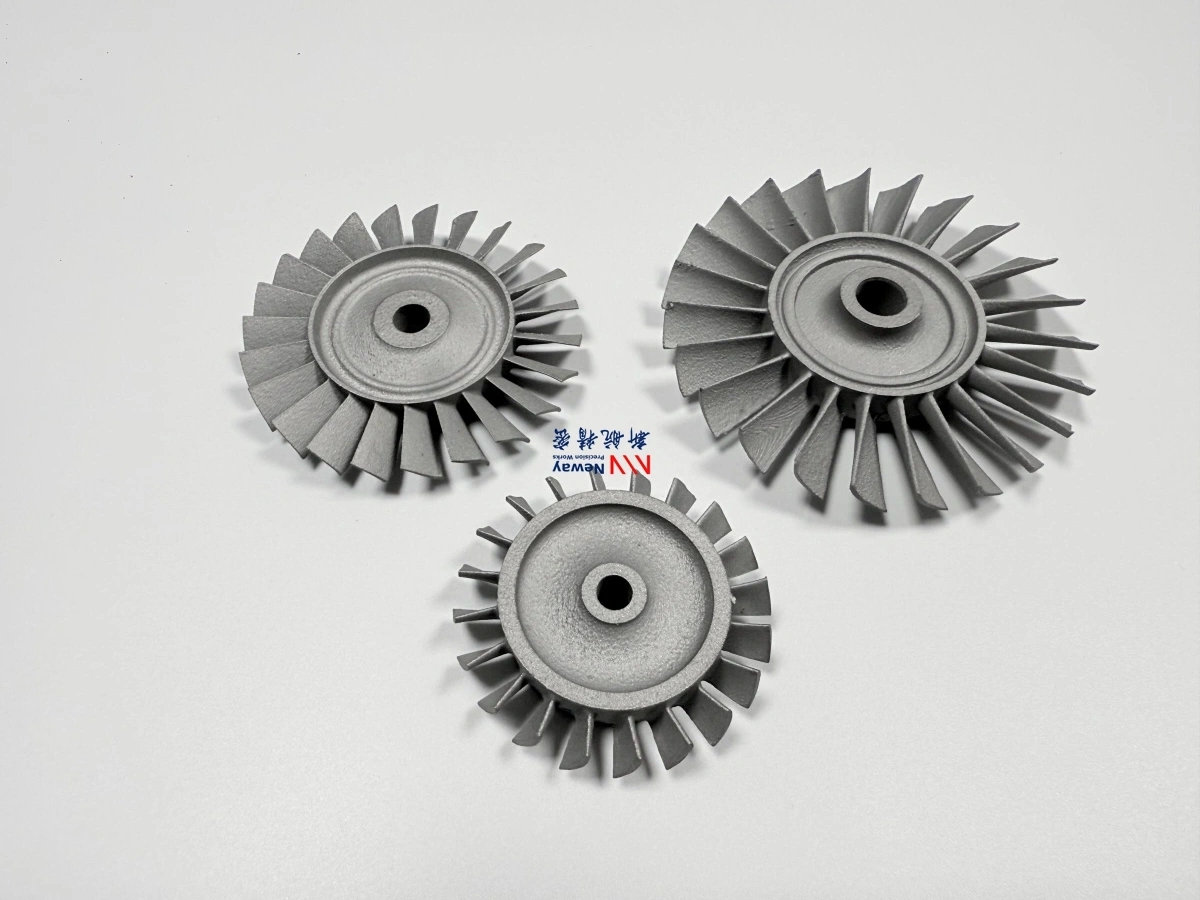
NewayAeroTech manufactures turbine discs, impellers, compressor wheels, rotating rings, shaft-related parts, and high-temperature rotating aerospace engine components for prototype, validation, small-batch, and custom manufacturing projects.
Unlike aircraft engine blades, nozzle guide vanes, or combustion chamber parts, rotating components are not mainly defined by hot gas flow shape. Their most important requirements are high material strength, fatigue life, concentricity, runout control, dynamic balance, surface integrity, heat treatment stability, and precise assembly datums.
NewayAeroTech supports aerospace and aviation components manufacturing through powder metallurgy route review, superalloy precision forging, CNC machining, heat treatment, post-processing, material verification, dimensional inspection, and balancing support when required.
Direct Answer: Turbine Discs and Rotating Parts Manufacturer
NewayAeroTech manufactures turbine discs, impellers, compressor wheels, rotating rings, shaft-related parts, and high-strength aerospace engine rotating components. Depending on the component design, operating speed, material requirement, and inspection standard, the manufacturing route may include powder metallurgy, superalloy precision forging, CNC machining, heat treatment, surface finishing, post-processing, dimensional inspection, and dynamic balancing review.
Our rotating aerospace component manufacturing support can cover:
Custom turbine discs for aerospace engine applications
Aircraft engine rotating parts and turbine wheel components
Impellers and compressor wheels
Rotating rings, spacers, sleeves, and shaft-related components
High-strength turbine disc and impeller machining
Prototype and small-batch rotating component manufacturing
The goal is to deliver rotating parts with controlled material strength, accurate rotating datums, stable concentricity, qualified runout, suitable surface finish, and traceable inspection documentation.
Rotating Part Requirements for Aerospace Engines
Aerospace engine rotating parts operate under centrifugal force, vibration, torque, temperature, and repeated duty cycles. Small errors in geometry, material condition, surface quality, or balance can increase vibration, fatigue risk, assembly stress, or service failure risk.
Key requirements include:
High strength under rotational load
Fatigue resistance during repeated engine cycles
Stable microstructure after heat treatment
Accurate concentricity between bores, outer profiles, and datum faces
Controlled circular runout and face runout
Dynamic balance according to speed and assembly requirements
Surface integrity in grooves, bores, blade slots, and stress-sensitive regions
Precise mating surfaces for assembly with shafts, blades, rings, or adjacent components
For this reason, turbine discs and rotating parts should be manufactured as safety-critical components, not as ordinary machined rings or wheels.
Typical Rotating Components for Aerospace Engine Applications
Aircraft engines, UAV turbine systems, and aerospace propulsion test programs use different types of rotating components. Each component has its own load path, datum structure, surface requirement, and inspection focus.
Typical rotating parts include:
Turbine discs and turbine wheels
Impellers and compressor wheels
Rotating rings, spacers, retainers, and sleeves
Shaft-related components with precision bores or coupling interfaces
Compressor component parts requiring profile and balance control
High-temperature rotating assemblies for aerospace engine testing
For prototype and small-batch projects, customers may need flexible manufacturing support from drawings, 3D CAD files, tolerance drawings, operating speed information, or sample components.
Manufacturing Route for Turbine Discs and Rotating Parts
The manufacturing route for rotating aerospace parts depends on material grade, component size, stress level, operating temperature, speed, quantity, and inspection requirement. For safety-critical parts, the blank route and final CNC machining route should be planned together.
For selected turbine disc applications, powder metallurgy turbine disc manufacturing may be reviewed when high material consistency, advanced alloy control, and fatigue performance are required. For high-strength rotating blanks, superalloy precision forging can support discs, rings, shafts, and impeller-related components before final machining.
A typical manufacturing route may include:
Review part drawings, CAD files, GD&T, operating speed, and load condition
Confirm material grade, blank route, heat treatment condition, and inspection standard
Prepare the blank by powder metallurgy, precision forging, casting, or qualified stock route
Apply heat treatment or stress relief according to material requirements
Machine central bores, datum faces, bolt holes, grooves, slots, and mating surfaces
Control concentricity, runout, roughness, and surface transitions during finishing
Perform CMM inspection, material verification, roughness checks, and balancing review when required
Prepare final reports and documentation for customer review
Powder Metallurgy Turbine Discs
Powder metallurgy is used for selected turbine disc applications where material uniformity, high strength, fatigue performance, and advanced alloy control are important. Compared with ordinary stock removal from billet, powder metallurgy can support high-performance disc programs where the material structure must be carefully controlled.
Powder metallurgy turbine disc projects usually require careful review of:
Material grade and powder metallurgy specification
Consolidation route and heat treatment condition
Disc geometry and machining allowance
Bore, rim, web, and attachment feature requirements
Fatigue-sensitive areas and surface integrity
Inspection requirements for material, dimensions, and surface condition
For aerospace engine applications, powder metallurgy route selection should be confirmed early because it affects material availability, lead time, cost, qualification requirements, and final inspection planning.
Superalloy Precision Forging for Rotating Blanks
Precision forging is another important route for rotating aerospace components. Forged blanks can support high strength, controlled grain flow, improved material utilization, and suitable starting geometry for CNC machining.
Superalloy precision forging can be considered for:
Turbine discs and rotating rings
Shaft-related components
Compressor wheel blanks
High-strength rings, spacers, and rotating sleeves
Components requiring strength and fatigue-related performance
Forging route planning should consider final machining datums, heat treatment movement, grain flow, inspection access, and surface finishing requirements. For rotating parts, blank quality directly affects final machining stability and long-term part reliability.
CNC Machining for Aerospace Rotating Components
Precision CNC machining defines the final function of turbine discs and rotating parts. Even when the blank is produced correctly, the part may fail assembly or operation if the bore, datum faces, runout, hole systems, blade slots, grooves, or mating surfaces are not controlled.
NewayAeroTech provides superalloy CNC machining for nickel-based superalloys, titanium alloys, and heat-resistant alloys used in aerospace rotating components.
Critical CNC-machined features include:
Central bores and shaft interfaces
Bolt holes and hole-circle patterns
Datum faces, end faces, and reference shoulders
Grooves, slots, blade attachment areas, and retaining features
Impeller or compressor wheel profiles
Mating surfaces for rings, shafts, bearings, blades, or adjacent assemblies
Surface transitions in fatigue-sensitive regions
For rotating parts, machining should be planned around the true rotational datum. A part may meet individual dimensions but still fail if the relationships between bore, face, outer profile, hole pattern, and balance surfaces are not controlled.
Material Selection for Turbine Discs and Rotating Parts
Material selection for aerospace engine rotating parts depends on operating speed, load, temperature, weight target, fatigue life, corrosion environment, and customer specification. Common choices include nickel-based superalloys, titanium alloys, and high-strength heat-resistant alloys.
NewayAeroTech supports Inconel alloy vacuum investment casting for nickel-based aerospace and turbine components, Nimonic alloy vacuum investment casting for selected nickel-based high-temperature applications, and titanium alloy vacuum investment casting for lightweight and high-strength component programs where titanium is suitable.
Material Family | Typical Rotating Part Use | Selection Consideration |
|---|---|---|
Nickel-based superalloys | Turbine discs, high-temperature rotating rings, and engine hot-section rotating parts | Selected for high-temperature strength, fatigue resistance, and thermal stability |
Titanium alloys | Selected compressor, structural rotating, and weight-sensitive aerospace components | Useful when high strength-to-weight ratio is required and temperature is suitable |
Heat-resistant alloys | Custom rings, shafts, impellers, and high-strength engine components | Chosen according to temperature, load, corrosion, and machining requirements |
For rotating safety-critical parts, material selection should follow the drawing, engineering specification, qualification plan, or sample analysis. Equivalent material review should be handled carefully because fatigue performance and heat treatment response may change.
Heat Treatment and Post Process for Rotating Components
Heat treatment and post-processing are critical for turbine discs and rotating aerospace parts because they affect strength, hardness, residual stress, microstructure, dimensional stability, and fatigue behavior.
NewayAeroTech supports superalloy post process for rotating components that require heat treatment, stress relief, surface finishing, cleaning, and inspection before delivery.
Post-processing may include:
Solution treatment, aging, or stress relief according to alloy requirements
Dimensional stabilization after forging, rough machining, or heat treatment
Deburring around holes, grooves, slots, and blade attachment features
Surface finishing for fatigue-sensitive regions
Cleaning before inspection, balancing, or assembly review
Preparation for dynamic balancing or customer-specific validation
Surface transitions, groove bottoms, bore edges, and hole intersections should be handled carefully because these areas may influence fatigue life under rotational loading.
Runout, Concentricity, and Balance Control
Runout, concentricity, and balance are core requirements for turbine discs and rotating parts. These controls help reduce vibration, bearing load, uneven stress, and fatigue risk during operation.
Important control points include:
Concentricity between central bore and outer rotating profile
Face runout and circular runout of functional surfaces
Hole-circle position relative to the rotating datum
Groove and blade slot position relative to the disc centerline
Surface roughness on mating and stress-sensitive areas
Dynamic balance requirement, test speed, and residual imbalance limit
Balance requirements should be provided during the RFQ stage. If the customer requires dynamic balancing, the balance grade, operating speed, correction method, and report requirement should be clearly defined before manufacturing.
Inspection Focus for Aerospace Rotating Parts
Inspection for aerospace rotating parts must verify dimensional accuracy, material condition, surface integrity, and rotational quality. Inspection requirements should be confirmed before production because they affect machining sequence, fixtures, reporting, and lead time.
Inspection Item | What to Check | Why It Matters |
|---|---|---|
Runout | End faces, shoulders, outer diameter, mating surfaces | Reduces vibration and assembly instability |
Concentricity | Bore-to-OD, bore-to-hole-circle, bore-to-profile relationships | Ensures the part rotates around the correct datum |
CMM inspection | Bores, holes, slots, faces, datums, profiles, and mating features | Confirms dimensional accuracy and assembly fit |
Material verification | Alloy grade, chemical composition, material certificate, heat number | Supports material compliance and traceability |
Surface roughness | Bores, grooves, slots, mating faces, impeller profiles, stress-sensitive areas | Supports fatigue performance and fit-up reliability |
Balance requirement | Static or dynamic balance, residual imbalance, balance report if required | Supports safe and stable operation at speed |
Additional inspection may include hardness testing, heat treatment records, FPI, ultrasonic inspection, metallographic review, dimensional reports, and customer-specific first article inspection.
Prototype and Small-Batch Rotating Part Manufacturing
Aerospace engine development projects often require prototype or small-batch rotating parts before moving into larger production. This is common for UAV turbine systems, small aero engines, compressor validation, turbine disc testing, and high-temperature rotating assembly development.
Prototype rotating parts can help customers verify:
Material selection and blank route feasibility
CNC machining strategy and datum control
Concentricity and runout capability
Surface roughness and fatigue-sensitive features
Heat treatment response and dimensional stability
Balance requirement and inspection method
For small-batch manufacturing, NewayAeroTech can support repeatable process planning, inspection documentation, and delivery coordination according to customer validation needs.
RFQ Checklist for Turbine Discs and Rotating Parts
To quote turbine discs and aerospace rotating parts accurately, customers should provide technical data related to geometry, material, tolerance, speed, load, balance, inspection, and delivery requirements.
A complete RFQ should include:
Component name, engine type, assembly position, part number, and revision level if available
2D tolerance drawings with GD&T, datums, runout, concentricity, and roughness requirements
3D CAD file for machining, fixture, and profile review
Required material grade, material standard, and acceptable alternatives
Blank route requirement, such as powder metallurgy, forging, casting, or machined stock
Operating speed, load, temperature, and duty cycle information if available
Heat treatment, stress relief, surface finish, or post-processing requirements
Balance grade, test speed, correction method, and balance report requirement if applicable
Inspection requirements such as CMM, runout report, concentricity report, material report, roughness report, or heat treatment record
Quantity for prototype, test batch, small-batch manufacturing, or long-term supply
Delivery schedule, packaging, and documentation requirements
If the part is based on an old sample, customers should provide photos, 3D scan data, CMM reports, material information, balance marks, wear condition, and functional assembly notes.
Conclusion
Turbine discs and rotating parts for aerospace engine applications require strict control of high-strength material, fatigue life, concentricity, runout, dynamic balance, surface integrity, heat treatment stability, and precision CNC machining. These parts include turbine discs, impellers, compressor wheels, rotating rings, shaft-related components, and high-temperature rotating assemblies.
NewayAeroTech supports custom aerospace rotating part manufacturing through powder metallurgy turbine disc route review, superalloy precision forging, superalloy CNC machining, heat treatment, post-processing, titanium and nickel alloy manufacturing, material verification, CMM inspection, runout checks, concentricity reports, surface roughness inspection, and balancing support when required.
For turbine disc or rotating part quotation, please send 2D tolerance drawings, 3D CAD files, material requirements, blank route requirements, speed and load information, balance requirements, inspection standards, quantities, and delivery targets. NewayAeroTech can review the most suitable manufacturing route for your aerospace engine rotating component project.
