
Precision-Drilled Superalloy Tubular Parts Deep Drilling Manufacturer
Precision-drilled superalloy tubular parts are used in aerospace, gas turbine, energy, chemical processing, oil and gas, marine, and high-temperature industrial systems where internal channels, long bores, flow passages, and pressure-related geometry must be controlled accurately. These parts often require deep drilling, CNC machining, EDM, heat treatment, material verification, and dimensional inspection within one controlled manufacturing route.
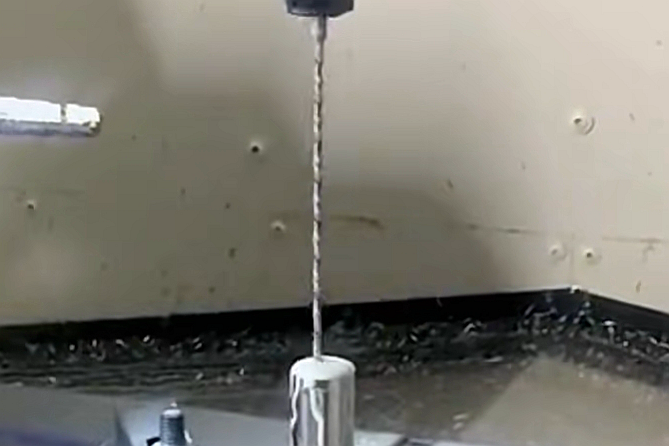
Unlike standard tubing, custom superalloy tubular components may include long axial holes, stepped bores, cross holes, flange features, threaded interfaces, sealing surfaces, internal channels, and tight concentricity requirements. When materials such as Inconel, Hastelloy, Nimonic, Rene alloys, Monel, or Stellite are used, drilling becomes more difficult because these alloys are hard, heat resistant, and prone to tool wear.
NewayAeroTech supports Superalloy Deep Hole Drilling for precision tubular parts that require controlled bore accuracy, long-depth drilling, post-drilling machining, and inspection documentation for demanding industrial applications.
What Are Precision-Drilled Superalloy Tubular Parts?
Precision-drilled superalloy tubular parts are custom components with controlled internal hole geometry. They may be made from cast blanks, forged bars, solid billets, tubes, or near-net-shape alloy parts, then processed by deep drilling and CNC machining to achieve the final internal and external dimensions.
Typical tubular part features include:
Long axial through holes or blind holes
Stepped internal bores
Cross-drilled holes and side ports
Flanges, shoulders, grooves, and threaded connections
Precision sealing faces and mounting surfaces
Internal channels for flow, cooling, pressure, or instrumentation
Concentricity, straightness, and bore surface finish requirements
These components may look simple externally, but the internal geometry can be the most critical part of the design. Deep drilling quality directly affects flow performance, pressure stability, assembly accuracy, and service reliability.
Why Superalloys Are Used for Tubular Components
Superalloys are selected when the tubular part must operate under high temperature, corrosion, pressure, oxidation, vibration, or severe chemical exposure. Ordinary steels or stainless steels may not provide enough strength or corrosion resistance for these environments.
Superalloys are commonly used when parts require high-temperature strength, oxidation resistance, creep resistance, and chemical stability. For tubular components, the material must also maintain dimensional stability around long bores and thin wall sections.
Material selection may include:
Inconel alloy for high-temperature strength and oxidation resistance
Hastelloy alloy for severe corrosion and chemical processing environments
Monel alloy for selected marine, brine, and chemical fluid applications
Nimonic alloy for nickel-based high-temperature applications
Stellite alloy for cobalt-based wear and hot corrosion resistance
The correct alloy should be selected according to operating temperature, pressure, fluid medium, corrosion risk, mechanical load, inspection requirement, and customer material standard.
Why Deep Drilling Is Challenging in Superalloy Parts
Deep drilling in superalloys is more difficult than drilling ordinary carbon steel or aluminum alloys. Nickel-based and cobalt-based alloys have high strength, poor thermal conductivity, strong work-hardening behavior, and high tool wear tendency. These factors make long-hole drilling slower and more sensitive to process control.
Common challenges include:
Hole drift during long-depth drilling
Poor chip evacuation from deep internal bores
Tool wear and cutting edge breakdown
Heat buildup inside the hole
Work hardening near the bore surface
Bore surface roughness control
Maintaining straightness, concentricity, and wall thickness consistency
For high-value tubular parts, deep drilling should be planned together with material condition, blank geometry, pre-machining datum, coolant strategy, tool selection, and final inspection method.
Deep Drilling Route for Superalloy Tubular Parts
A practical deep drilling route starts before the drill enters the material. Engineers must review part geometry, drilling depth, diameter, L/D ratio, tolerance, wall thickness, material grade, and post-drilling machining requirements.
A typical process route may include:
Review 3D model, 2D drawing, material standard, and bore requirements
Confirm blank condition, datum surfaces, and drilling direction
Pre-machine external reference surfaces for stable clamping and alignment
Perform pilot drilling or center preparation where required
Use deep drilling process to create long axial bores or internal channels
Apply secondary drilling, boring, reaming, or honing when tighter bore control is required
Machine outer features, threads, flanges, grooves, sealing faces, and mounting surfaces
Use EDM for side holes, slots, or local tool-access-limited features if needed
Inspect bore diameter, straightness, concentricity, surface finish, and final dimensions
Prepare material certificates, inspection reports, and delivery documentation
This route helps reduce risk because drilling accuracy depends on earlier datum preparation and later inspection. For long tubular parts, unstable clamping or poor datum control can cause hole deviation that cannot be corrected after drilling.
CNC Machining After Deep Drilling
Deep drilling creates the internal bore, but CNC machining is usually required to finish the external and functional features. These may include end faces, threads, flanges, sealing grooves, mounting holes, outside diameters, and datum surfaces.
Superalloy CNC Machining is important for tubular parts because the final component must often match mating pipes, housings, valves, turbine assemblies, or pressure systems. CNC machining also helps ensure that the bore is correctly aligned with external reference features.
Typical CNC-machined areas include:
Outer diameter and stepped profiles
End faces and sealing surfaces
Threaded connections and port features
Flanges, grooves, and shoulders
Datum surfaces for final inspection
Assembly interfaces that control alignment and sealing
For precision tubular components, CNC machining and deep drilling should be planned together so that the bore axis, external datum, and final assembly references remain consistent.
EDM for Cross Holes, Slots, and Local Features
Some tubular components include cross holes, side ports, narrow slots, internal openings, or local features that are difficult to process with conventional drilling or milling tools. In these cases, EDM can be added to the process route.
Superalloy Electrical Discharge Machining EDM is useful for nickel-based and cobalt-based superalloy components because it can machine hard materials without high cutting force. This is helpful when the feature is near a thin wall, deep bore, or difficult access area.
EDM may be used for:
Cross holes intersecting a deep drilled bore
Narrow slots or flow windows
Sharp internal corners
Local openings in thick-wall tubular parts
Features where conventional tools would cause distortion or excessive wear
After EDM, edge quality, recast layer, burrs, debris, and intersection cleanliness should be inspected, especially if the part is used for flow, pressure, or high-temperature service.
Casting Options for Complex Superalloy Tubular Parts
Some superalloy tubular parts start from bar, tube, or forged stock. Others may be more suitable for casting if the geometry includes flanges, bosses, curved bodies, external ribs, non-uniform wall thickness, or complex integrated structures.
Vacuum Investment Castings can create near-net-shape alloy blanks before drilling and machining. This can reduce material waste and machining time for complex tubular parts. For special high-temperature or corrosion-resistant alloys, Special Alloy Casting may also be reviewed when geometry, material, and inspection requirements are demanding.
When casting is used before deep drilling, the casting route must provide enough machining allowance and internal soundness. Porosity, shrinkage, or inclusions near the drilling path can affect bore quality and may cause rejection during final inspection.
Heat Treatment and Dimensional Stability
Heat treatment may be required for superalloy tubular parts depending on material grade and service condition. The process can affect hardness, strength, residual stress, microstructure, and dimensional stability.
Superalloy Heat Treatment should be planned with the drilling and machining sequence. In some projects, heat treatment is performed before final machining to stabilize the material. In other cases, stress relief may be required after rough machining or before finishing.
For long tubular components, heat treatment can introduce distortion if the part has thin walls, non-uniform sections, or high residual stress. Therefore, dimensional checks before and after heat treatment may be necessary for precision drilled parts.
Inspection for Precision-Drilled Superalloy Tubular Parts
Inspection is critical because internal bore quality is not always visible from the outside. A part may look correct externally but have hole drift, rough internal surfaces, intersection defects, insufficient wall thickness, or blocked passages.
NewayAeroTech supports Superalloy Material Testing and Analysis for projects where material verification, defect review, dimensional inspection, and documentation are required.
Inspection Item | What to Check | Why It Matters |
|---|---|---|
Material verification | Alloy grade, chemical composition, material certificate | Confirms the part uses the required high-temperature or corrosion-resistant alloy |
Bore diameter | Internal hole size, stepped bore dimensions, tolerance | Ensures flow, fit, and functional performance |
Straightness | Hole drift, bore axis deviation, long-hole alignment | Prevents assembly, flow, or pressure path problems |
Concentricity | Bore alignment with OD, datum surfaces, or mounting features | Supports sealing, rotation, and assembly accuracy |
Surface condition | Bore roughness, tool marks, EDM edges, burrs, intersections | Reduces flow restriction, crack initiation, and contamination risk |
NDT | FPI, X-ray, CT, or other inspection when required | Checks cracks, internal defects, or hidden geometry issues |
Applications of Precision-Drilled Superalloy Tubular Parts
Precision-drilled superalloy tubular parts are used where flow, pressure, heat, corrosion, or structural reliability must be controlled. The combination of deep drilling and difficult alloy machining makes these parts suitable for demanding engineering systems.
Typical applications include:
Aerospace engine tubes, sleeves, and flow components
Gas turbine fuel, cooling, and hot-section tubular components
Oil and gas pressure and downhole components
Chemical processing flow parts and corrosion-resistant tubes
Marine and seawater corrosion-resistant tubular assemblies
High-temperature test rig and instrumentation components
Custom replacement parts requiring long bores or internal channels
For Aerospace and Aviation applications, bore accuracy and material traceability are often critical. For Oil and Gas or Chemical Processing applications, corrosion resistance, pressure integrity, and internal passage quality may be the main priorities.
RFQ Checklist for Superalloy Deep-Drilled Tubular Parts
To quote precision-drilled superalloy tubular parts accurately, customers should provide both drawing data and service condition details. Deep drilling cost and risk depend strongly on hole depth, diameter, tolerance, material, wall thickness, and inspection requirements.
A complete RFQ should include:
Part drawing and 3D model
Required alloy grade and material standard
Bore diameter, drilling depth, L/D ratio, and tolerance
Through-hole, blind-hole, stepped-hole, or cross-hole requirements
Concentricity, straightness, roundness, and surface roughness requirements
External machining features such as threads, flanges, grooves, and sealing faces
Heat treatment, HIP, coating, cleaning, or passivation requirements
Operating temperature, pressure, fluid medium, corrosion condition, and load
Inspection requirements such as CMM, bore scope, FPI, X-ray, CT, material testing, or pressure test
Quantity, delivery schedule, and documentation requirements
If the project is based on a failed or worn tubular part, customers should provide photos, service history, failure location, fluid information, and expected improvement target. This helps the supplier evaluate whether the original material, bore geometry, surface finish, or manufacturing route should be adjusted.
Conclusion
Precision-drilled superalloy tubular parts require deep drilling expertise, difficult alloy machining, material verification, and inspection control. These components are used in aerospace, gas turbine, oil and gas, chemical processing, marine, and high-temperature systems where internal bore quality directly affects function and reliability.
For custom tubular components, the best manufacturing route may combine deep drilling, CNC machining, EDM, heat treatment, casting, and NDT depending on the material and geometry. Deep drilling should be planned from the beginning of the project because bore diameter, depth, straightness, surface finish, and concentricity can strongly affect cost and feasibility.
NewayAeroTech supports precision deep drilling and manufacturing of custom superalloy tubular parts. Please provide the drawing, 3D model, alloy standard, bore geometry, tolerance requirements, service condition, quantity, inspection requirements, and delivery schedule for engineering review.
