
Mature Supply Chain for Custom Gas Turbine Repair Parts Manufacturing
A mature supply chain is essential for custom gas turbine repair parts manufacturing because power generation turbine replacement projects often involve high-temperature alloys, complex casting routes, precision machining, heat treatment, coating preparation, non-destructive testing, dimensional inspection, and traceable documentation. If these steps are handled by disconnected suppliers, project cost, lead time, and quality risk can increase quickly.
NewayAeroTech supports custom gas turbine repair parts through an integrated supply chain covering superalloy material sourcing, casting, forging, CNC machining, EDM, heat treatment, post-processing, inspection, and documentation. This helps power plants, MRO companies, turbine repair service providers, and spare parts buyers reduce coordination workload and improve delivery control.
For power generation turbine repair parts, the supply chain must support not only individual parts, but also multi-component repair packages such as hot gas path parts, combustion section parts, rotating components, sealing and wear parts, and reverse-engineered custom replacement parts.
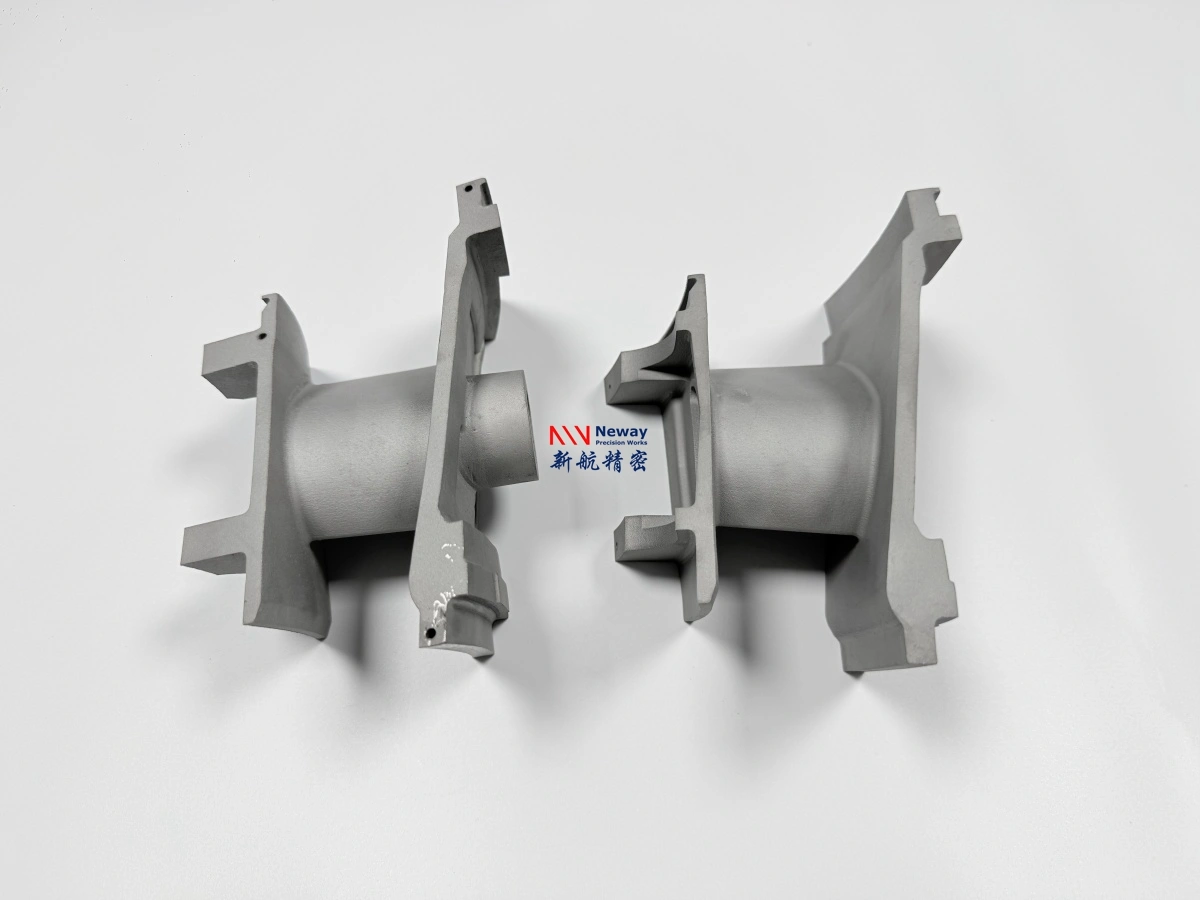
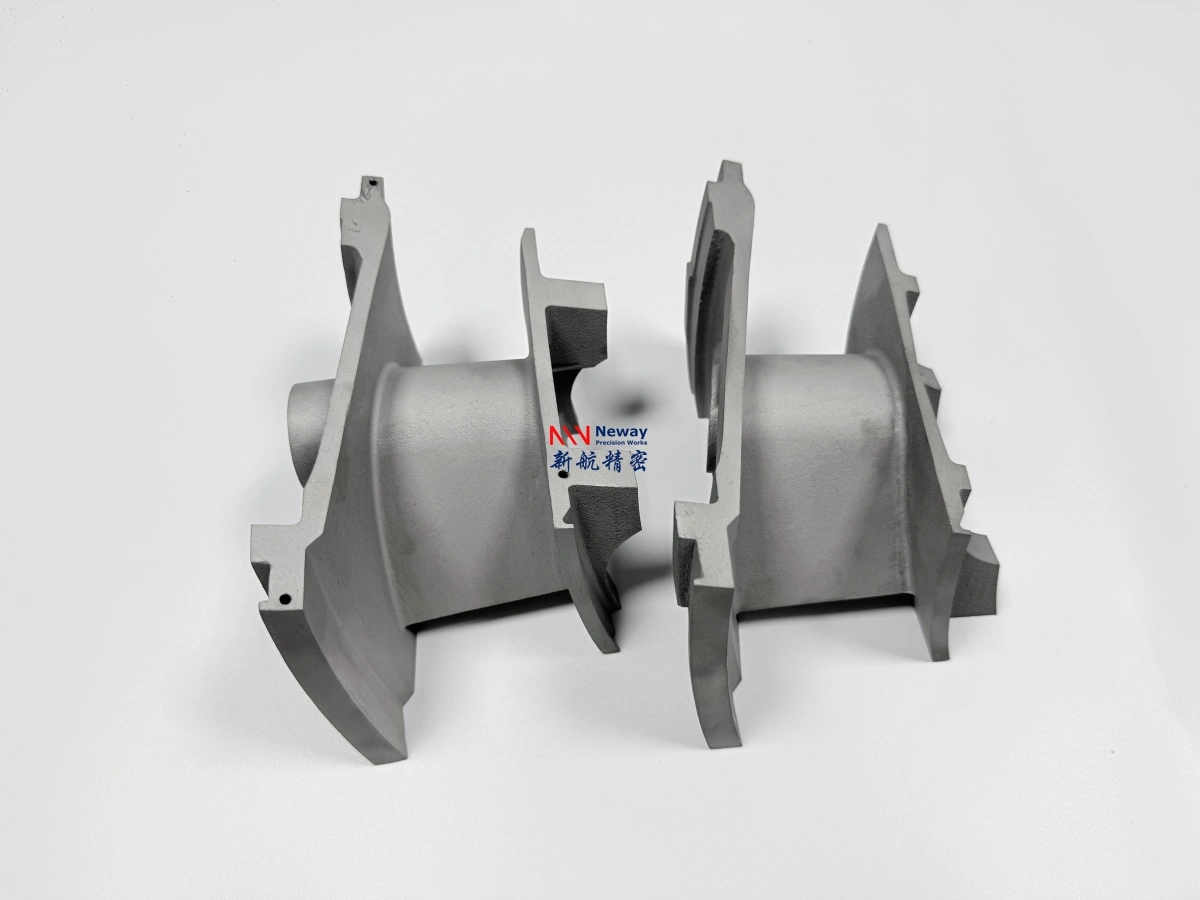
Direct Answer: Mature Supply Chain for Gas Turbine Repair Parts
A mature gas turbine repair parts supply chain helps deliver custom replacement components from material selection to final inspection. It connects alloy procurement, casting, forging, machining, heat treatment, surface preparation, inspection, and quality documentation into one coordinated manufacturing route.
NewayAeroTech can support supply chain coordination for:
Superalloy material selection and equivalent alloy review
Vacuum investment casting and special alloy casting
Precision forging and rotating part blank preparation
CNC machining for finished turbine repair parts
EDM and deep hole drilling for cooling holes, slots, and local features
Heat treatment, stress relief, HIP review, and coating preparation
CMM, FPI, X-ray, CT, material verification, and final inspection
Material reports, heat treatment records, dimensional reports, NDT reports, and COC
This supply chain structure is especially useful for power plant overhaul, spare part replacement, obsolete part development, urgent repair programs, and long-term maintenance spare parts planning.
Why Supply Chain Maturity Matters for Turbine Repair Projects
Gas turbine repair parts are not simple procurement items. A single replacement component may require several manufacturing and inspection steps before it can be accepted for power plant maintenance. If the material supplier, casting supplier, machining supplier, heat treatment supplier, coating preparation supplier, and inspection team are not coordinated, quality risks can appear at each process boundary.
A mature supply chain matters because it helps control:
Material availability for high-temperature alloys
Manufacturing route selection before production begins
Machining allowance and coating allowance between processes
Heat treatment sequence and dimensional stability
Cooling hole, sealing face, airfoil, and datum control
Inspection timing before and after key processes
Documentation consistency for customer quality review
Delivery planning for outage maintenance schedules
For turbine repair projects, supply chain maturity can reduce rework, avoid process gaps, shorten development cycles, and improve confidence in final part delivery.
Supply Chain Scope for Custom Turbine Replacement Parts
NewayAeroTech’s supply chain covers multiple manufacturing stages needed for custom turbine replacement parts. The exact scope depends on the component type, material grade, geometry, operating condition, and inspection requirement.
Supply Chain Stage | Main Scope | Customer Value |
|---|---|---|
Material support | Inconel, Rene, CMSX, Stellite, Hastelloy, Nimonic, titanium alloys | Supports alloy selection and material traceability |
Casting and forming | Vacuum casting, special alloy casting, forging, selected forming routes | Creates suitable blanks for complex turbine components |
Precision machining | CNC machining, EDM, deep hole drilling, local feature processing | Controls final dimensions, datums, holes, and interfaces |
Post-processing | Heat treatment, stress relief, HIP review, surface preparation, cleaning | Improves material condition and delivery readiness |
Inspection | CMM, FPI, X-ray, CT, material verification, surface checks | Supports part acceptance and quality risk control |
Documentation | Material reports, heat treatment records, dimensional reports, NDT reports, COC | Provides traceability for maintenance and supplier qualification |
This integrated scope helps customers reduce multi-supplier coordination and receive parts with a clearer manufacturing history.
Material Support for Gas Turbine Spare Parts
Material availability and alloy selection are key parts of the gas turbine repair parts supply chain. Power generation turbine components may require nickel-based superalloys, cobalt-based alloys, single crystal alloys, corrosion-resistant alloys, or titanium alloys depending on the part function and service environment.
NewayAeroTech supports multiple alloy families for custom turbine replacement parts, including Inconel alloy vacuum investment casting, CMSX Series vacuum investment casting, Rene Alloys vacuum investment casting, Stellite alloy vacuum investment casting, Hastelloy alloy vacuum investment casting, and Nimonic alloy vacuum investment casting.
Typical material applications include:
Inconel alloys for nickel-based turbine blades, vanes, nozzles, shrouds, and hot section parts
CMSX series alloys for selected single crystal turbine blade applications
Rene alloys for advanced high-temperature turbine components
Stellite and cobalt-based alloys for wear-resistant and hot corrosion-resistant parts
Hastelloy alloys for combustion and corrosion-resistant high-temperature components
Nimonic alloys for selected nickel-based high-temperature turbine applications
For replacement projects, material selection should follow the original drawing, customer standard, sample analysis, or verified service condition. Equivalent material selection should be reviewed carefully before quotation.
Process Coordination from Casting to Final Inspection
Custom turbine repair parts often require multiple processes that must be planned together. Casting geometry affects machining allowance. Machining affects coating preparation. Heat treatment may affect final dimensions. Inspection requirements may affect fixture design and process sequence.
A mature process coordination route may include:
RFQ review, drawing review, sample review, or 3D scan data review
Material selection and manufacturing route planning
Casting, forging, powder metallurgy, forming, or blank preparation
Heat treatment or stress relief according to material requirements
CNC machining, EDM, drilling, and local feature processing
Surface finishing, cleaning, coating preparation, and post-processing
CMM, FPI, X-ray, material verification, and final inspection
Documentation preparation and finished part delivery
NewayAeroTech provides superalloy CNC machining for final dimensional control and superalloy post process for heat treatment, cleaning, surface preparation, and delivery readiness.
Reducing Multi-Supplier Coordination Cost
Many turbine repair projects require customers to coordinate several suppliers if the supply chain is fragmented. One supplier may cast the part, another may machine it, another may heat treat it, another may prepare the surface, and another may inspect it. This creates extra communication, scheduling, logistics, and responsibility gaps.
A mature supply chain helps reduce:
Engineering communication delays between different process suppliers
Unclear responsibility when defects appear between process stages
Repeated packaging, shipping, and handling between vendors
Risk of machining allowance mismatch after casting
Risk of coating allowance or surface preparation being planned too late
Inspection delays caused by unclear acceptance criteria
Documentation inconsistency between material, process, and final inspection records
For buyers and project managers, integrated supply chain support means fewer process interfaces to manage and a clearer route from RFQ to finished part delivery.
Support for Multiple Gas Turbine Repair Part Categories
Power plant maintenance projects often require more than one component type. A single overhaul may involve hot gas path components, combustion section parts, sealing parts, wear parts, rotating components, and reverse-engineered obsolete replacement parts.
NewayAeroTech can support custom turbine replacement parts such as:
Turbine blades, buckets, vanes, nozzle guide vanes, and stator vanes
Gas turbine nozzles, nozzle segments, shrouds, and seal segments
Combustion liners, transition pieces, transition ducts, fuel nozzles, flow sleeves, and caps
Seal rings, shroud blocks, blade ring segments, wear-resistant segments, and sealing faces
Turbine discs, impellers, compressor components, rotating rings, and shaft-related parts
Custom repair parts made from drawings, samples, 3D scan data, CMM data, or material analysis
This multi-category support helps customers purchase related repair components through one supply chain instead of separately managing unrelated suppliers for each part type.
Quality Documentation in a Mature Supply Chain
Quality documentation is part of the supply chain, not only the final paperwork. For gas turbine repair parts, customers may require records proving that the correct material, process, heat treatment, inspection, and final condition were controlled.
Common documentation may include:
Material certificate or chemical composition report
Heat treatment record and hardness report when required
CMM dimensional inspection report
FPI report for surface crack detection
X-ray or CT report for cast components when required
Surface roughness and coating preparation report
Cooling hole, throat area, airfoil profile, arc profile, or segment fit report when applicable
NDT report, dimensional report, material report, COC, or customer-specific quality package
When documentation is planned from the beginning, the supplier can align production, inspection, and reporting requirements more efficiently. This helps prevent missing data at the final delivery stage.
Suitable Project Types for Integrated Supply Chain Support
A mature supply chain is especially valuable when the project involves multiple parts, multiple processes, tight schedules, or incomplete technical data. NewayAeroTech can support both urgent and long-term power generation turbine repair projects.
Project Type | Typical Need | Supply Chain Value |
|---|---|---|
Power plant overhaul | Multiple replacement parts with fixed outage schedule | Coordinated process planning, inspection, and delivery timing |
Spare part replacement | Small-batch repair parts for maintenance inventory | Repeatable manufacturing route and stable quality records |
Obsolete part development | Old parts, limited drawings, reverse engineering, material verification | Connects sample review, CAD reconstruction, manufacturing, and first article inspection |
Urgent repair program | Fast response for damaged or unavailable turbine parts | Reduces supplier coordination time and shortens engineering feedback loop |
Long-term spare supply | Recurring parts for annual maintenance or planned inventory | Supports stable process documentation and batch consistency |
Supply Chain Risk Control for Custom Repair Parts
Supply chain risk control is important because turbine repair parts may fail at different stages if requirements are not defined early. Material, casting, machining, heat treatment, coating preparation, and inspection are connected. A mistake in one stage can affect the next stage.
Key risk control actions include:
Confirm material grade and material certificate requirements before production
Review casting or forging route according to part function and service condition
Define machining datums, functional surfaces, and inspection features early
Plan coating allowance and masking requirements before final machining
Confirm heat treatment sequence and distortion risk for precision parts
Separate worn dimensions from original design geometry when reverse engineering old parts
Use first article inspection before batch production when the part is newly developed
Prepare inspection and documentation requirements before quotation is finalized
This approach helps reduce late-stage quality problems and improves delivery predictability.
RFQ Checklist for Supply Chain Evaluation
To evaluate the supply chain route for custom gas turbine repair parts, NewayAeroTech recommends that customers provide a clear RFQ package with technical, inspection, and scheduling information.
A complete RFQ should include:
Repair part list, turbine model, component names, part numbers, and revision levels
2D drawings and 3D CAD models if available
Old samples, worn parts, photos, 3D scan data, or CMM reports if reverse engineering is required
Required material grades, acceptable alternatives, material standards, and certificate requirements
Manufacturing route requirements, such as casting, forging, CNC machining, EDM, drilling, heat treatment, or coating preparation
Critical features such as airfoil profile, throat area, cooling holes, sealing faces, arc profile, runout, or balance requirements
Inspection requirements such as CMM, FPI, X-ray, CT, material report, heat treatment report, NDT report, or COC
Quantity for prototype, first article, repair batch, overhaul package, or long-term spare supply
Project schedule, outage timing, delivery target, packaging, and documentation requirements
If the RFQ includes multiple part types, customers should provide the full repair package list together. This allows NewayAeroTech to evaluate material purchasing, process sequencing, inspection planning, and delivery grouping more efficiently.
Conclusion
A mature supply chain for custom gas turbine repair parts manufacturing helps customers reduce multi-supplier coordination cost, shorten development and delivery cycles, reduce process-break quality risks, and support integrated procurement for multiple turbine repair part categories.
NewayAeroTech supports power plant turbine parts supply from material selection to final inspection. Our supply chain covers Inconel, Rene, CMSX, Stellite, Hastelloy, Nimonic, titanium alloys, casting, forging, CNC machining, EDM, heat treatment, post-processing, coating preparation, CMM, FPI, X-ray, material reports, heat treatment records, dimensional reports, NDT reports, and COC.
For supply chain evaluation, please send your repair part list, drawings, 3D models, samples, material requirements, inspection standards, quantities, project schedule, and delivery target. NewayAeroTech can review the most suitable supply chain route for your custom gas turbine repair parts manufacturing project.
