
Inconel 738 Equiaxed Crystal casting Gas Turbine Wheel
Inconel 738 equiaxed crystal casting is used for gas turbine wheel components when high-temperature strength, oxidation resistance, casting stability, and dimensional reliability are required. Gas turbine wheels operate in demanding environments where centrifugal load, thermal cycling, hot gas exposure, and vibration can affect service life. For these applications, material selection and casting quality must be controlled from the beginning of the manufacturing route.
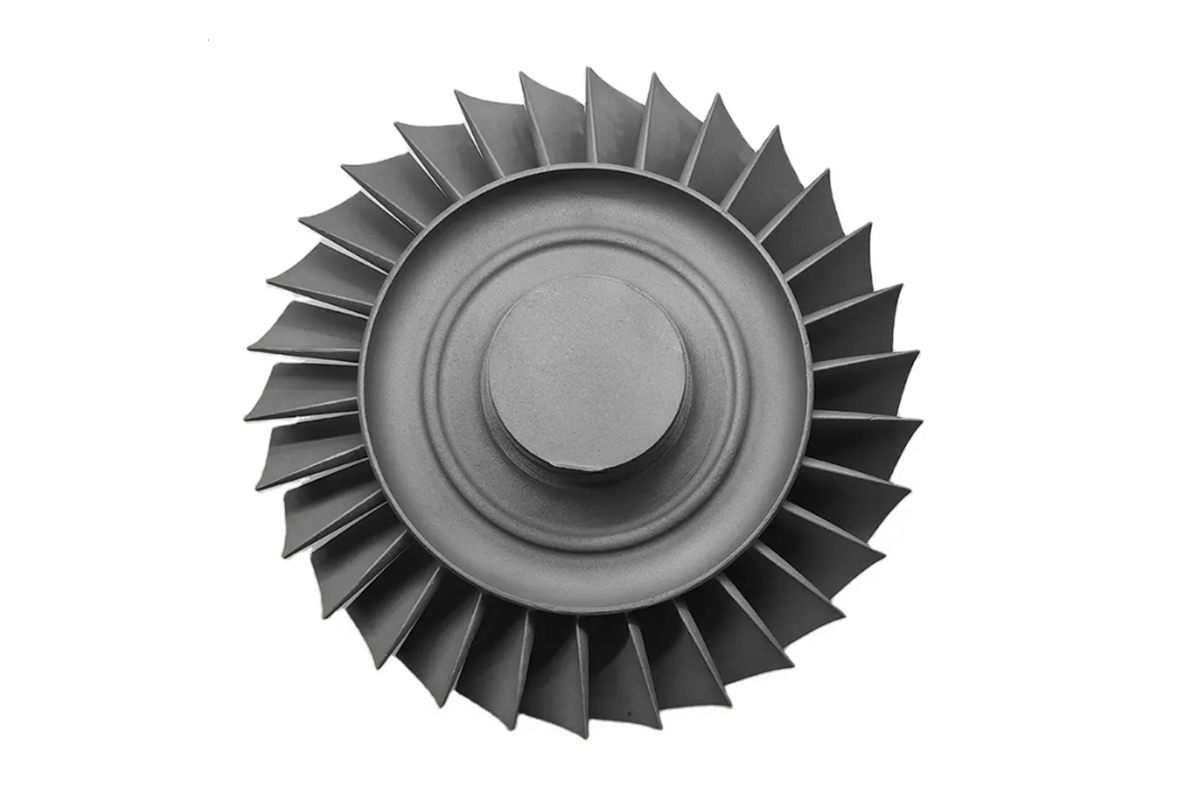
Inconel 738, also known as IN738, is a nickel-based casting superalloy commonly used for high-temperature turbine components. When a gas turbine wheel is designed as a cast superalloy component, equiaxed crystal casting can provide a practical route for producing complex geometry while balancing cost, manufacturability, and high-temperature performance.
At NewayAeroTech, Inconel 738 gas turbine wheel manufacturing can be evaluated through a complete route that includes alloy review, Equiaxed Crystal Casting, heat treatment, CNC machining, surface finishing, and final inspection.
Why Inconel 738 Is Used for Gas Turbine Wheels
Gas turbine wheels require materials that can maintain mechanical strength and dimensional stability under elevated temperature. The material must also resist oxidation, hot corrosion, and thermal fatigue during engine operation.
Inconel 738 is suitable for many cast turbine wheel applications because it provides:
High-temperature strength for turbine operating conditions
Good oxidation and hot corrosion resistance
Suitability for vacuum investment casting
Stable performance for cast hot-section components
Better hot-section capability than many general-purpose stainless steels
For custom turbine wheel projects, Inconel alloy selection should be reviewed together with wheel size, operating temperature, rotational speed, blade geometry, hub design, heat treatment requirements, and inspection standards.
What Is Equiaxed Crystal Casting?
Equiaxed crystal casting produces a casting structure where grains grow without a preferred single crystal orientation. This route is different from directional solidification or single crystal casting, which are often used for more specialized turbine blade applications.
For many static and certain rotating cast components, equiaxed casting provides a practical balance of manufacturability, cost, and performance. In a gas turbine wheel project, the suitability of equiaxed crystal casting depends on the wheel design, stress level, operating temperature, rotational speed, service life target, and customer specification.
Compared with more advanced crystal control routes, equiaxed casting may be more suitable when:
The part design allows an equiaxed grain structure
The customer requires a practical cast superalloy manufacturing route
The component geometry is complex but does not require single crystal performance
Production quantity, tooling cost, and lead time must be balanced
Final machining and inspection can confirm critical features before delivery
Gas Turbine Wheel Function and Manufacturing Challenges
A gas turbine wheel is a critical rotating component that transfers hot gas energy into mechanical rotation. Depending on the engine design, the wheel may integrate blades, hub geometry, shaft interfaces, cooling-related features, balancing requirements, and high-precision mounting surfaces.
Manufacturing challenges for Inconel 738 gas turbine wheels include:
Maintaining casting soundness in thick hub and thin blade transition areas
Controlling shrinkage, porosity, cracks, and inclusions
Managing thermal stress during casting and heat treatment
Maintaining blade profile and wheel symmetry
Achieving accurate shaft bore, mounting face, and datum surfaces after machining
Controlling dynamic balance for rotating service
Verifying material chemistry, internal quality, and final dimensions before delivery
Because the part is rotational and service-critical, the manufacturing route must be more rigorous than a simple casting order. The supplier must understand the relationship between casting quality, machining accuracy, heat treatment, balance, and inspection.
Vacuum Investment Casting Route for IN738 Turbine Wheels
Vacuum investment casting is commonly used for complex superalloy turbine parts because it can form near-net-shape geometry with reduced machining waste. For an Inconel 738 gas turbine wheel, casting can form the main wheel body, blade geometry, hub structure, and local transitions before precision machining.
Vacuum Investment Castings are useful for nickel-based superalloy components because the process helps control oxidation and supports high-temperature alloy casting quality. For turbine wheels, casting planning should consider gating, feeding, shrinkage control, wall thickness transition, shell stability, and machining allowance.
Important casting control points include:
Wax pattern accuracy for blade and wheel geometry
Ceramic shell strength and dimensional stability
Metal flow and feeding design for hub and blade transition areas
Control of porosity, shrinkage, cracks, and inclusions
Allowance for CNC machining of shaft bore and mounting interfaces
Inspection planning for internal defects and critical sections
For complex high-temperature alloys, Special Alloy Casting may be reviewed when the component requires careful alloy control, casting simulation, special process planning, or customer-specific acceptance standards.
Heat Treatment for Inconel 738 Cast Turbine Wheels
Heat treatment is an important step for Inconel 738 cast components. The correct heat treatment route can support microstructure control, precipitation strengthening, stress reduction, and high-temperature performance stability.
Superalloy Heat Treatment should be planned according to the customer’s material standard, drawing requirement, and service condition. For turbine wheels, the heat treatment process must also consider dimensional stability and distortion risk, especially around blade sections, hub transitions, and shaft interface areas.
Before heat treatment, material grade verification and casting inspection are recommended. After heat treatment, the part may require dimensional checks, surface inspection, hardness review, or further NDT depending on the project specification.
CNC Machining After Equiaxed Crystal Casting
Equiaxed crystal casting creates the near-net-shape turbine wheel blank, but CNC machining is required for precision functional features. A turbine wheel usually requires accurate shaft bore, end faces, mounting surfaces, balance correction features, datum surfaces, and assembly interfaces.
Superalloy CNC Machining is important because Inconel 738 is difficult to machine. It requires suitable tooling, stable fixturing, controlled cutting parameters, and careful inspection. Poor machining control can cause dimensional error, surface damage, vibration marks, or reduced assembly accuracy.
Typical CNC-machined areas may include:
Shaft bore and internal mounting features
Front and rear reference faces
Hub interface surfaces
Balance correction areas
Datum surfaces for inspection and assembly
Local blade or platform features when required by drawing
Machining allowance must be planned during the casting stage. If allowance is too small, final dimensions may not be recoverable. If allowance is too large, machining cost and tool wear increase.
EDM and Local Feature Processing
Some gas turbine wheel features may be difficult to machine by conventional cutting tools, especially if they are narrow, deep, sharp, or located near complex blade geometry. In these cases, EDM can be used for local feature processing.
Superalloy Electrical Discharge Machining EDM can support local slots, holes, sharp boundaries, or tool-access-limited features in nickel-based superalloy components. EDM is useful because it can process hard and heat-resistant alloys without relying on high mechanical cutting force.
If EDM is used on a turbine wheel, the process should control edge quality, recast layer, local surface condition, and dimensional accuracy. For rotating components, any local feature must also be evaluated for stress concentration and balance impact.
Inspection for Inconel 738 Gas Turbine Wheel Castings
Inspection is critical because gas turbine wheels are rotating components exposed to high stress and temperature. The inspection plan should verify material chemistry, casting soundness, heat treatment condition, machined dimensions, surface quality, and balance-related requirements.
NewayAeroTech supports Superalloy Material Testing and Analysis for alloy verification, defect analysis, dimensional inspection, and process documentation.
Inspection Item | What to Check | Why It Matters |
|---|---|---|
Material verification | Inconel 738 grade, chemical composition, material records | Confirms alloy compliance before final acceptance |
Casting inspection | Porosity, shrinkage, cracks, inclusions, deformation | Reduces failure risk in high-temperature rotating service |
Dimensional inspection | Shaft bore, hub geometry, faces, blade profile, datum features | Ensures assembly accuracy and wheel geometry consistency |
Surface inspection | Surface cracks, machining marks, EDM edge quality, handling damage | Helps prevent crack initiation and local stress concentration |
Balance control | Static or dynamic balance according to drawing or application requirement | Supports safe and stable rotating performance |
HIP Consideration for Cast Turbine Wheels
For high-performance cast turbine wheels, internal density may be a key concern. If the customer specification requires improved internal soundness or reduced porosity, hot isostatic pressing may be reviewed as an additional process.
Superalloy Hot Isostatic Pressing HIP can help reduce internal porosity and improve casting reliability for selected superalloy components. Whether HIP is required depends on the drawing, service condition, defect acceptance criteria, inspection standard, and cost target.
HIP should be planned early because it may affect process sequence, heat treatment planning, dimensional control, and final inspection requirements.
Inconel 738 vs Other Superalloys for Turbine Wheels
Inconel 738 is one option among many high-temperature alloy systems. The final material choice depends on operating temperature, rotational stress, casting method, service life, corrosion condition, cost, and customer specification.
Other material families may also be reviewed. Rene Alloys may be considered for advanced turbine hot-section components. Nimonic alloy materials can be evaluated for nickel-based high-temperature applications. Stellite alloy may be considered when cobalt-based wear or hot corrosion resistance is required.
The best material should be selected according to the actual engine environment, not only by alloy name. For rotating turbine wheels, stress level, speed, temperature, inspection requirement, and service safety factor must be reviewed carefully.
RFQ Checklist for Inconel 738 Gas Turbine Wheel Casting
To quote an Inconel 738 equiaxed crystal cast gas turbine wheel accurately, customers should provide both drawing data and operating requirements. This allows the supplier to evaluate casting feasibility, machining route, inspection cost, balance requirement, and manufacturing risk.
A complete RFQ should include:
Engine or turbine model
Part name, part number, and revision level
3D CAD model and 2D drawing with tolerances and datum references
Required alloy grade, such as Inconel 738 / IN738
Crystal structure requirement, such as equiaxed casting
Operating temperature, rotational speed, load, and expected service life
Heat treatment, HIP, coating, or surface finishing requirements
Critical dimensions, shaft bore tolerance, blade profile, and balance requirement
Inspection requirements such as chemical analysis, FPI, X-ray, CT, CMM, and balance report
Quantity for prototype, trial batch, or production demand
If the project is based on a worn or reverse-engineered turbine wheel, the customer should provide the old part, photos, 3D scan data, service condition, failure history, and required engineering changes. For rotating turbine parts, reverse engineering should always include functional and safety review, not only geometry copying.
Conclusion
Inconel 738 equiaxed crystal casting can be a practical manufacturing route for gas turbine wheels when the design requires a cast nickel-based superalloy with high-temperature strength, oxidation resistance, and complex near-net-shape geometry. The process must control casting soundness, heat treatment stability, CNC machining accuracy, local feature processing, inspection, and balance requirements.
For gas turbine wheel applications, material and process selection should be reviewed carefully because the part is exposed to high temperature, rotational stress, vibration, and thermal cycling. IN738 can provide strong hot-section capability, but successful production depends on a complete engineering and quality control route.
NewayAeroTech supports Inconel 738 equiaxed crystal casting, CNC machining, EDM, heat treatment, HIP review, and inspection for custom gas turbine wheel projects. Please provide the turbine model, drawing, 3D file, alloy standard, operating condition, quantity, balance requirement, and inspection requirements for engineering evaluation.
