
Advanced Superalloy Manufacturing Technologies for Gas Turbine Repair Parts
Advanced superalloy manufacturing technologies allow gas turbine repair parts to be produced as reliable finished components, not only rough castings or simple machined shapes. Power generation gas turbine replacement parts often work under high temperature, oxidation, thermal fatigue, creep, vibration, and severe assembly requirements. Their manufacturing route must match the part function, material grade, operating temperature, load condition, cooling design, and inspection standard.
NewayAeroTech supports power generation turbine parts manufacturing through advanced casting, precision forming, CNC machining, EDM, deep hole drilling, heat treatment, HIP review, coating preparation, surface finishing, and inspection. These technologies help customers manufacture turbine blades, vanes, nozzles, shrouds, seal segments, combustion parts, transition pieces, turbine discs, impellers, and custom gas turbine repair parts.
The value of advanced manufacturing is not simply having more processes. The key is selecting the correct route for each component and controlling how casting, machining, post-processing, and inspection work together.
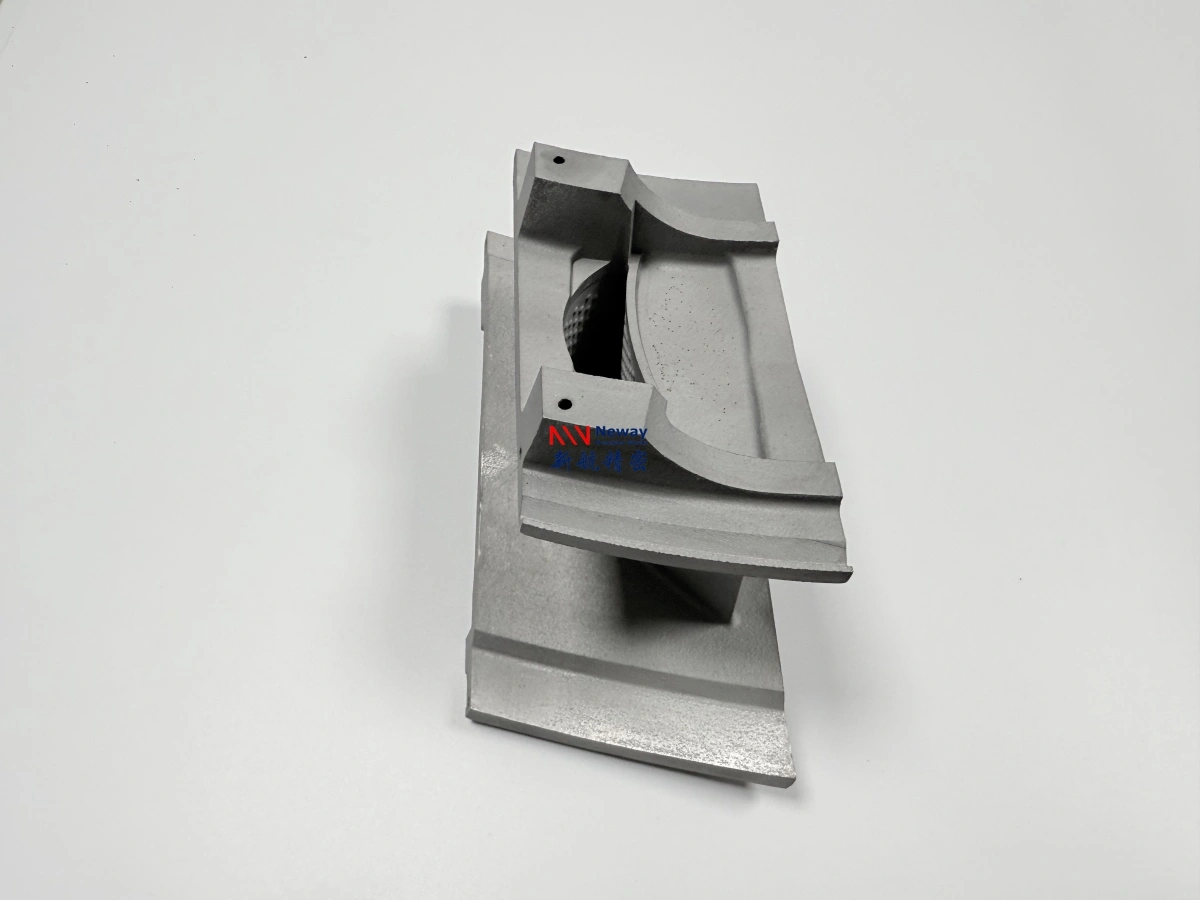
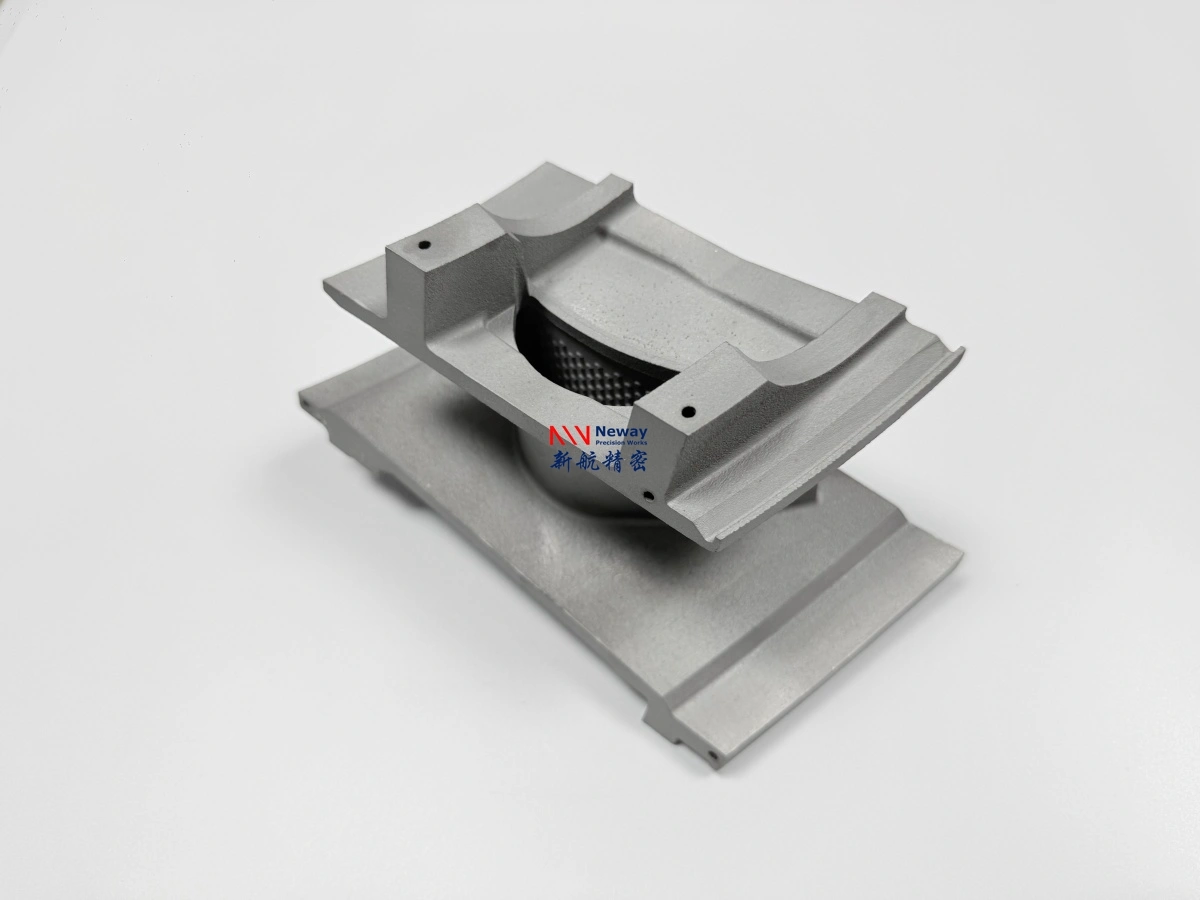
Direct Answer: Advanced Technologies for Gas Turbine Repair Parts
Advanced superalloy manufacturing technologies make it possible to produce gas turbine repair parts with controlled material performance, complex geometry, precision interfaces, cooling features, coating-ready surfaces, and traceable inspection documentation.
NewayAeroTech can support gas turbine repair parts using technologies such as:
Vacuum investment casting for complex superalloy hot section blanks
Single crystal casting for advanced high-temperature turbine blades
Directional casting for creep-resistant turbine blades and selected vane components
Equiaxed crystal casting for nozzles, vanes, shrouds, and static hot section parts
Powder metallurgy for selected turbine disc applications
Precision forging for high-strength rotating components
CNC machining for roots, platforms, sealing faces, bores, slots, and mounting features
EDM and deep hole drilling for cooling holes, grooves, slots, and thin-wall superalloy features
Heat treatment, HIP review, coating preparation, and final inspection
For customers, the main benefit is a more reliable route from raw material or blank to finished turbine replacement component.
Casting Technologies for Superalloy Turbine Parts
Casting is one of the most important technologies for gas turbine repair parts because many components have complex curved surfaces, airfoil shapes, platforms, ribs, cooling structures, thin walls, and near-net-shape requirements. Full CNC machining from solid stock is often too expensive or impractical for these geometries.
NewayAeroTech uses different casting routes according to component function and performance requirements. The correct casting route depends on whether the part is rotating or static, its temperature exposure, grain structure requirement, alloy type, and original design specification.
Casting Technology | Typical Application | Manufacturing Value |
|---|---|---|
Vacuum investment casting | Blades, vanes, nozzles, shrouds, seal segments, and complex hot section parts | Produces near-net-shape superalloy blanks with reduced machining waste |
Single crystal casting | Advanced high-temperature turbine blades | Supports severe service conditions where grain boundary elimination is required |
Directional casting | Creep-resistant turbine blades and selected guide vane components | Controls grain growth along the main loading direction |
Equiaxed crystal casting | Nozzles, vanes, shrouds, seal segments, and static hot section components | Provides a practical casting route for many non-rotating turbine parts |
Vacuum investment casting is often used as the base process for complex superalloy repair parts. Single crystal casting, directional casting, and equiaxed crystal casting are selected according to the original component design and service requirement.
Vacuum Investment Casting for Complex Hot Section Blanks
Vacuum investment casting is suitable for gas turbine parts that require complex near-net-shape geometry. It can form airfoils, platforms, ribs, curved gas path surfaces, sealing structures, and local features that would be difficult to machine completely from billet.
This technology is commonly used for:
Turbine vanes and nozzle guide vanes
Gas turbine nozzles and nozzle segments
Shrouds, seal segments, and hot gas path blocks
Selected turbine blades and superalloy hot section parts
Custom replacement components made from drawings or old samples
For gas turbine repair parts, casting quality must control shrinkage, porosity, cracks, inclusions, wall thickness, machining allowance, and downstream inspection requirements. The casting route should also consider CNC machining, EDM, coating preparation, and final delivery requirements from the beginning.
Single Crystal, Directional, and Equiaxed Casting Selection
Different turbine parts need different crystal structures. A supplier should not select the casting route only by cost or convenience. The original design and operating condition determine whether single crystal, directional, or equiaxed casting is suitable.
Single crystal casting is used for advanced turbine blades where high-temperature creep performance and grain boundary elimination are required. Directional casting is used when controlled grain growth can improve high-temperature performance along the main stress direction. Equiaxed crystal casting is suitable for many static hot section components, including vanes, nozzles, shrouds, and seal segments.
Key selection factors include:
Whether the component is rotating or static
Operating temperature and thermal gradient
Main loading direction and creep requirement
Original drawing or material standard
Customer inspection and acceptance requirements
Quantity, tooling cost, and delivery schedule
For replacement parts, the casting structure should follow the original design requirement whenever possible. Changing from single crystal or directional casting to a simpler casting route without engineering review may create service and approval risk.
Rotating Part Technologies: Powder Metallurgy and Precision Forging
Rotating turbine components require different manufacturing technologies from static hot section parts. Turbine discs, impellers, compressor components, rotating rings, and shaft-related parts must control strength, fatigue life, concentricity, runout, surface finish, and dynamic balance.
For selected turbine disc projects, powder metallurgy turbine disc technology can support high material consistency and advanced alloy control. For high-strength rotating blanks, superalloy precision forging can support disc, ring, shaft, and impeller manufacturing before final CNC machining.
These technologies are useful when customers need:
High-strength rotating turbine components
Reliable fatigue performance
Controlled material structure
Stable heat treatment response
Precision CNC finishing after blank preparation
Runout, concentricity, and balancing support
Rotating parts should not be treated as ordinary cast or machined components. Their manufacturing route must consider safety-critical operation under speed, load, and vibration.
Precision CNC Machining for Finished Turbine Components
CNC machining is essential for converting cast, forged, powder metallurgy, or stock blanks into finished turbine repair parts. Many turbine components require precise assembly surfaces, functional datums, sealing faces, root geometry, platforms, bores, holes, slots, and mating features.
NewayAeroTech provides superalloy CNC machining for nickel-based, cobalt-based, titanium, and heat-resistant alloy turbine components.
CNC machining is commonly used for:
Blade roots, platforms, and tip-related features
Vane platforms, mounting faces, and sealing surfaces
Nozzle segment faces, positioning holes, and flow-path boundaries
Shroud arc profiles, seal faces, mounting grooves, and segment interfaces
Turbine disc bores, end faces, hole systems, and shaft interfaces
Combustion component flanges, datum surfaces, brackets, and local features
For gas turbine parts, machining strategy should be planned around functional datums. A dimension may pass inspection locally, but the part can still fail assembly if datum relationships, sealing surfaces, or fit-up features are not coordinated correctly.
EDM and Deep Hole Drilling for Cooling Features
Cooling holes, slots, grooves, thin-wall openings, and local airflow features are common in gas turbine repair parts. These features are often difficult to machine because superalloys are hard, heat resistant, and difficult to cut with conventional tools.
EDM is suitable for slots, small holes, sharp local features, and tool-access-limited areas. Superalloy deep hole drilling can support cooling holes and airflow features where hole straightness, position, diameter, and surface condition must be controlled.
EDM and deep hole drilling are useful for:
Cooling holes in blades, nozzles, liners, and transition pieces
Film cooling and airflow features
Slots, grooves, and local sealing features
Thin-wall high-temperature alloy structures
Small features in hard nickel-based or cobalt-based alloys
Local geometries where cutting tool access is limited
Key controls include hole position, hole diameter, hole angle, edge quality, burr removal, recast layer control after EDM, blockage prevention, and compatibility with coating thickness.
Post-Processing: Heat Treatment, HIP, and Coating Preparation
Post-processing is critical because superalloy performance depends not only on shape but also on material condition and surface quality. Heat treatment, HIP review, stress relief, coating preparation, cleaning, polishing, and surface finishing all affect final part reliability.
NewayAeroTech supports superalloy post process for turbine repair parts that require finished delivery and traceable process control.
Post-processing may include:
Solution and aging heat treatment according to alloy requirements
Stress relief after casting, CNC machining, EDM, or forming
HIP review for selected cast components with density requirements
Cleaning of cooling holes, slots, and airflow passages
Deburring, polishing, and edge finishing
Surface preparation before oxidation-resistant coating or thermal barrier coating
Masking planning for coating-controlled surfaces
If coating is required, coating allowance should be planned before final machining. Otherwise, holes, sealing faces, clearance surfaces, or assembly features may meet pre-coating dimensions but fail after coating thickness is added.
Inspection Support for Advanced Superalloy Manufacturing
Advanced manufacturing must be supported by suitable inspection. Gas turbine repair parts often require both dimensional inspection and non-destructive testing. Inspection requirements should be confirmed before production because they affect process sequence, fixture design, cost, and lead time.
Common inspection support includes:
CMM inspection for dimensions, datums, profiles, and assembly interfaces
FPI for surface cracks and open defects
X-ray or CT inspection for internal casting defects when required
Material verification and chemical composition analysis
Heat treatment record and hardness check
Surface roughness and coating preparation inspection
Cooling hole, throat area, airfoil profile, arc profile, and segment fit reports when applicable
For finished turbine repair parts, documentation may include dimensional reports, material reports, NDT reports, heat treatment records, FAI reports, COC, and customer-specific quality records.
How to Choose the Right Manufacturing Route
The right manufacturing route depends on the part location, material, geometry, operating temperature, load condition, quantity, and inspection requirement. A turbine blade, combustion liner, shroud block, turbine disc, and nozzle segment may all be gas turbine repair parts, but they should not share the same manufacturing strategy.
Part Type | Typical Route | Main Control Focus |
|---|---|---|
Turbine blades | Single crystal, directional, or investment casting + CNC + EDM | Crystal structure, airfoil, root, cooling holes, material condition |
Vanes and NGVs | Investment casting, equiaxed or directional casting + CNC | Airfoil profile, throat area, platforms, sealing surfaces |
Nozzles and shrouds | Special alloy casting or investment casting + CNC + EDM | Flow-path geometry, arc profile, sealing faces, segment fit |
Combustion parts | Forming, welding, selected casting, CNC, drilling, post-process | Thin-wall geometry, cooling holes, coating preparation, weld quality |
Turbine discs | Powder metallurgy or precision forging + heat treatment + CNC | Strength, fatigue life, concentricity, runout, balance |
Impellers and compressor parts | Precision forging, qualified stock, or casting + CNC finishing | Profile accuracy, rotating datum, surface finish, balancing |
Choosing the correct route early helps reduce scrap risk, shorten engineering review time, and improve final acceptance reliability.
Supplier Value for Gas Turbine Repair Parts Manufacturing
A qualified superalloy turbine parts manufacturer should understand how different technologies work together. Casting quality affects machining allowance. Machining affects coating preparation. EDM affects edge quality. Heat treatment affects dimensional stability. Inspection requirements affect process planning. These steps cannot be treated separately.
NewayAeroTech supports gas turbine repair parts manufacturing by providing:
Manufacturing route review based on part function and service condition
Superalloy casting technologies for hot section parts
Powder metallurgy and forging route review for rotating components
CNC machining, EDM, and deep hole drilling for finished part geometry
Heat treatment, post-processing, coating preparation, and surface finishing
CMM, FPI, X-ray, material verification, and final documentation support
Prototype, first article, small-batch, and batch repair parts manufacturing
This integrated approach helps customers reduce supplier coordination risk and develop turbine repair parts as complete finished components.
RFQ Checklist for Manufacturing Route Evaluation
To evaluate the most suitable manufacturing route for gas turbine repair parts, customers should provide detailed technical and service information during the RFQ stage.
A complete RFQ should include:
Turbine model, component name, stage number, part number, and revision level
2D drawing and 3D CAD model if available
Old sample, worn part, photos, 3D scan data, or CMM report if reverse engineering is required
Required material grade, material standard, and acceptable alternatives
Operating temperature, load condition, speed, and service environment if available
Casting structure requirement, such as single crystal, directional, or equiaxed casting
Cooling holes, sealing faces, airfoil, throat area, arc profile, or rotating datum requirements
Heat treatment, HIP, coating, surface finish, or post-processing requirements
Inspection requirements such as CMM, FPI, X-ray, CT, material report, heat treatment record, or COC
Quantity for prototype, first article, repair batch, or long-term spare parts program
The more complete the RFQ package is, the more accurately NewayAeroTech can recommend the correct manufacturing technology and quotation route.
Conclusion
Advanced superalloy manufacturing technologies are essential for reliable gas turbine repair parts. Vacuum investment casting, single crystal casting, directional casting, equiaxed casting, powder metallurgy, precision forging, CNC machining, EDM, deep hole drilling, heat treatment, HIP review, coating preparation, and inspection all solve different manufacturing challenges.
NewayAeroTech supports gas turbine replacement components from manufacturing route evaluation to finished part delivery. Our technologies help customers produce hot gas path parts, combustion section parts, rotating components, sealing and wear parts, and custom repair parts made from drawings, samples, or 3D scan data.
For manufacturing route evaluation, please send part drawings, 3D models, samples, scan data, material requirements, operating conditions, inspection standards, quantities, and delivery targets. Our engineering team can review the most suitable advanced superalloy manufacturing technologies for your gas turbine repair parts project.
