What Testing Methods Ensure Heat Recovery Segment Quality?
Importance of Testing in the Heat Recovery Segment Manufacturing
In the production of heat recovery segments used in turbines and high-efficiency energy systems, quality assurance is essential to guarantee operational stability under extreme thermal and mechanical stresses. Precision-controlled manufacturing processes such as vacuum investment casting and superalloy equiaxed crystal casting are fundamental in achieving uniform grain structures and optimal mechanical strength. These processes enable the accurate reproduction of intricate geometries, which are critical for energy conversion efficiency.
In many cases, components designed for power generation or aerospace and aviation require consistent dimensional accuracy and resistance to oxidation at high temperatures. For such applications, alloys like Inconel 718 or Hastelloy X are frequently used due to their outstanding thermal stability and fatigue resistance.
Non-Destructive and Metallurgical Testing Techniques
After casting, parts undergo rigorous non-destructive evaluations to ensure structural soundness. Material testing and analysis include X-ray inspection, ultrasonic testing, and eddy current analysis to detect micro-porosity, inclusions, or cracks invisible to the naked eye. For highly stressed components, the quality of superalloy deep hole drilling is verified by dimensional scanning and contour analysis to confirm the precision of internal geometry.
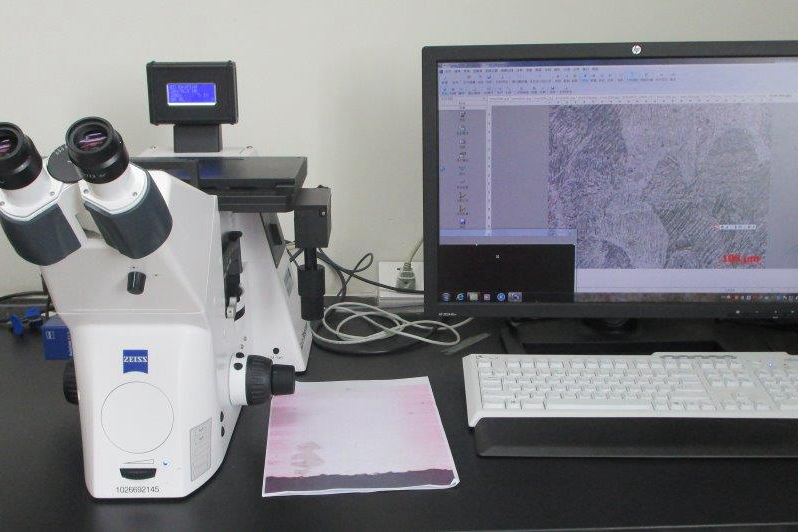
Microscopic metallographic examination helps validate grain boundary distribution, carbide formation, and phase consistency. In the case of directional or single-crystal components, crystallographic orientation verification ensures the correct alignment of solidification fronts.
Post-Processing and Mechanical Verification
Following casting, advanced post-processes such as hot isostatic pressing (HIP) and heat treatment eliminate internal voids and refine the microstructure to achieve homogeneity. These steps are vital in preventing creep or fatigue failures during long-term thermal cycling. Surface integrity is then examined using non-contact scanning and thermal fatigue simulation tests.
When final machining or superalloy CNC machining is applied, dimensional and surface roughness verification ensures that tolerance stack-up remains within design specifications.
Industry Standards and Application-Specific Testing
In industries such as energy, oil and gas, and nuclear, component validation must comply with stringent standards, including ASTM, ISO, and ASME. These require traceability of alloy composition, batch-level documentation, and records of failure analysis. By integrating advanced materials, such as Rene 80 or Nimonic 263, and coupling them with precision testing, manufacturers can ensure consistent performance even under fluctuating thermal gradients.