How does Electron Beam Melting compare to Selective Laser Melting for superalloy printing?
Process Fundamentals and Energy Source
Electron Beam Melting (EBM) and Selective Laser Melting (SLM) are two leading metal additive manufacturing technologies for high-performance superalloys such as Inconel, Hastelloy, and advanced nickel-based materials used in aerospace and aviation. EBM uses an electron beam in a high-vacuum environment, whereas SLM employs a high-power laser in an inert gas atmosphere. The fundamental difference in heat source and operating conditions results in distinct microstructures, surface finishes, mechanical properties, and application suitability.
Thermal Conditions and Microstructure
EBM operates at elevated powder-bed temperatures, reducing thermal gradients and internal stresses. This promotes columnar grain growth and improved ductility, especially for alloys prone to cracking such as Inconel 718 or advanced single-crystal-derived powders. SLM, by contrast, uses a cooler bed environment, enabling finer microstructures with higher strength but introducing greater residual stresses. Post-processing such as heat treatment or HIP is often required to stabilize SLM-printed superalloys.
Accuracy, Surface Quality, and Feature Resolution
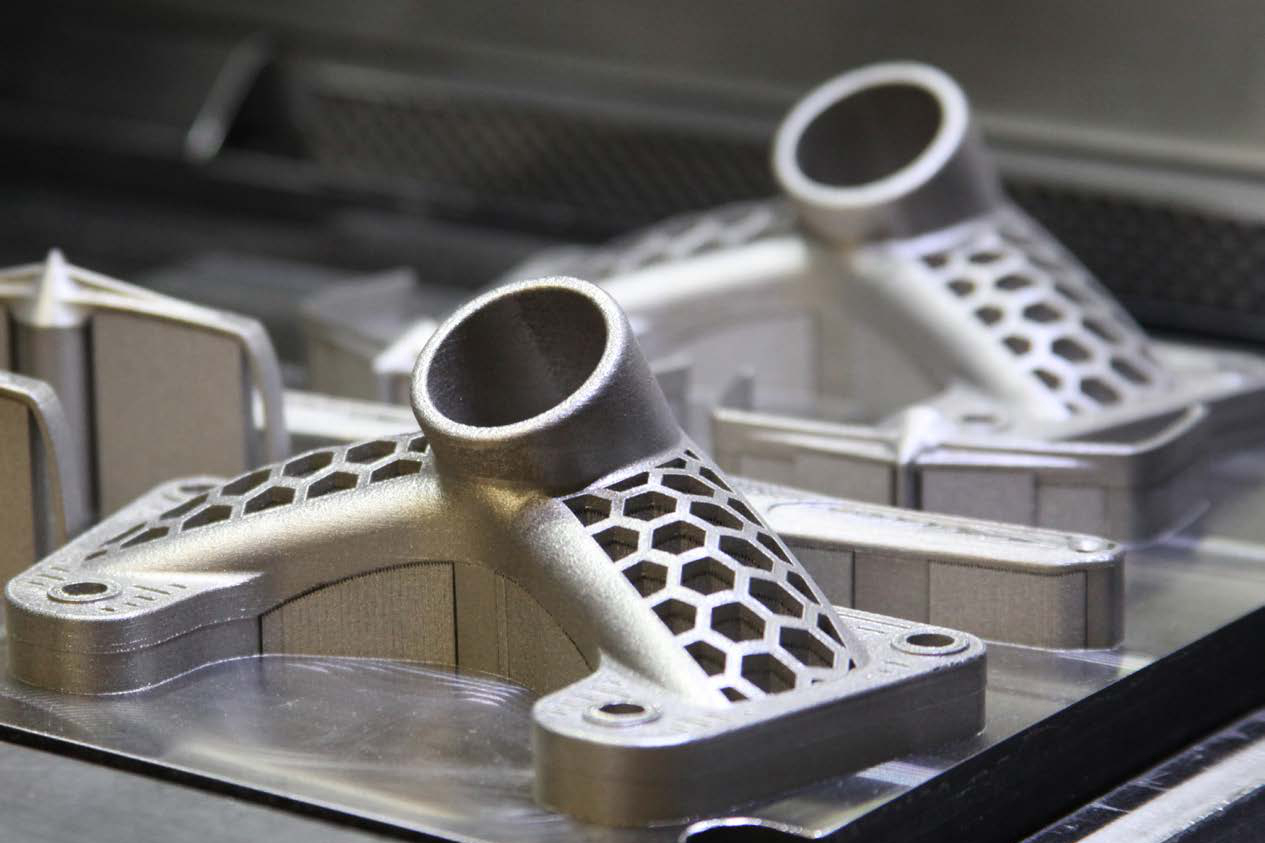
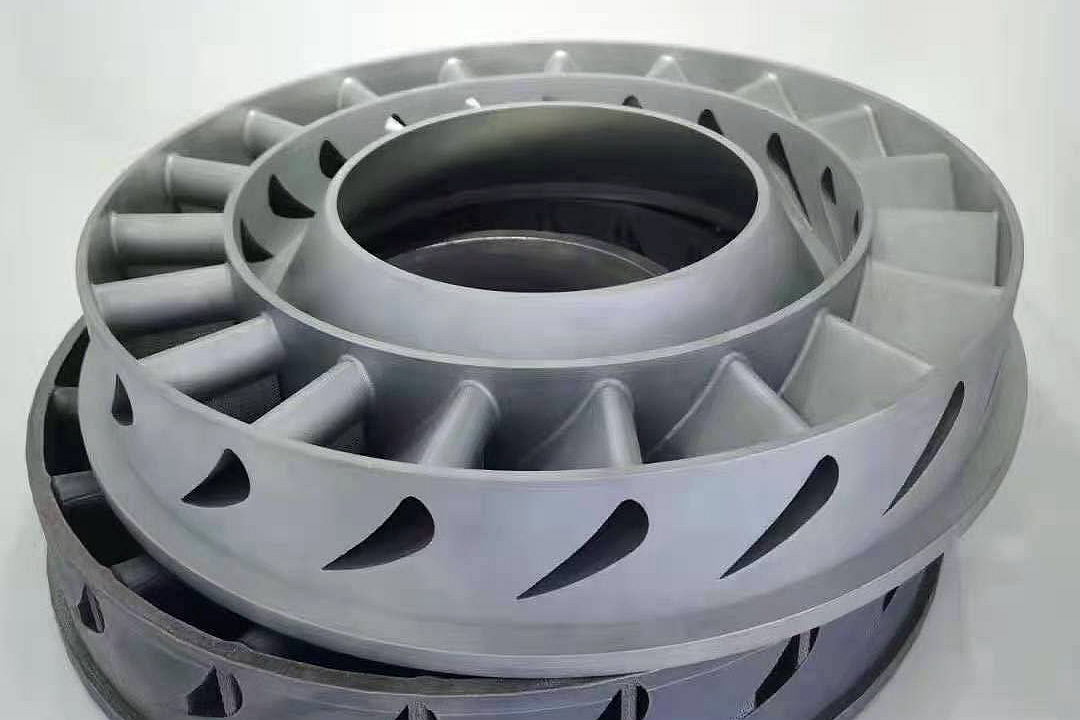
SLM outperforms EBM in precision and surface finish due to its smaller laser spot size and thinner layer thickness. Thin-walled structures, micro-channels, and turbine blade cooling features—common in superalloy 3D printing—are more efficiently produced with SLM. EBM layers are thicker, and its surface roughness is higher, requiring more extensive post-machining via CNC machining for precision-critical components.
Material Performance and Operational Environment
The vacuum environment in EBM prevents oxidation, making it suitable for oxygen-sensitive superalloys and titanium-based systems. The elevated build temperature reduces cracking risk, improving functional reliability for demanding turbine and combustion applications. SLM supports a wider powder variety and offers superior mechanical strength due to its rapid solidification, but its inert atmosphere may still allow trace oxidation—particularly challenging for reactive high-temperature alloys.
Application Suitability
EBM excels in applications requiring high toughness, low residual stresses, and structural integrity under thermal cycling. SLM is preferred where high precision, thinner walls, and fine surface quality are essential. Both processes benefit from downstream validation using advanced material testing and analysis to confirm microstructural stability and density.