What Post-Processing Is Required for 316L Parts After SLM Printing?
Stress Relief and Heat Treatment
SLM-printed 316L components require stress relief annealing at 400-500°C to mitigate the significant residual stresses accumulated during the rapid melting and solidification process. This treatment prevents distortion and potential cracking in the as-built state. For applications requiring maximum corrosion resistance and ductility, a higher temperature solution annealing at 1050-1150°C followed by rapid quenching may be applied. This process dissolves chromium carbides that may have precipitated at grain boundaries during printing, restoring the alloy's full corrosion resistance properties essential for chemical processing applications.
Support Removal and Surface Treatment
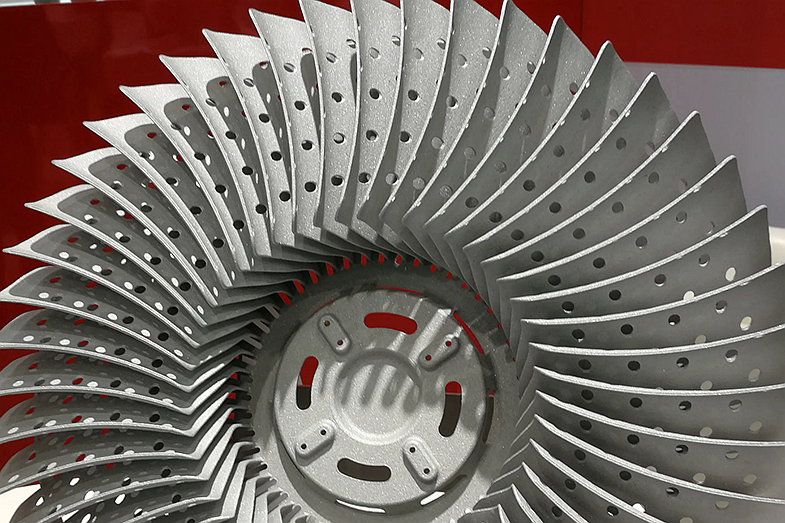
The removal of support structures is a critical first step, typically performed using cutting tools, pliers, or for precise applications, wire EDM. The as-printed surface of 316L contains partially melted powder particles and high surface roughness that can compromise performance. Abrasive blasting with glass beads or aluminum oxide is commonly employed to clean surfaces and improve uniformity. For components requiring superior surface finish, such as those for medical or food processing applications, additional processes like vibratory finishing, polishing, or electropolishing may be necessary to achieve the required smoothness and enhance corrosion resistance.
Hot Isostatic Pressing for Critical Applications
For components subjected to high pressure, cyclic loading, or critical service environments, Hot Isostatic Pressing (HIP) can be beneficial. While 316L typically achieves high density through optimized SLM parameters alone, HIP ensures the elimination of any residual internal porosity, further enhancing fatigue life and mechanical properties. This is particularly valuable for components in the oil and gas industry where reliability under pressure is paramount.
Precision Machining and Quality Validation
Functional surfaces, mating interfaces, and threaded connections require precision CNC machining to achieve final dimensional tolerances. This machining is optimally performed after heat treatment to ensure dimensional stability. Final validation includes comprehensive material testing and analysis, including dimensional inspection, mechanical testing to verify yield and tensile strength, and corrosion testing to ensure the material meets the required standards for its intended application in marine environments or other corrosive service conditions.