How Thermal Cycling Affects Turbine Blade Performance and How is it Simulated?
Degradation Mechanisms from Thermal Cycling
Thermal cycling induces severe performance degradation in turbine blades through three primary mechanisms. First, Thermo-Mechanical Fatigue (TMF) arises from constrained thermal expansion, generating cyclic stress that leads to crack initiation at stress concentrators like cooling holes. Second, repeated heating and cooling accelerates oxidation and hot corrosion, degrading the base superalloy (e.g., Inconel 738) and causing surface pitting that acts as fatigue nuclei. Third, the spallation of Thermal Barrier Coatings (TBCs) occurs due to thermal expansion mismatch between the ceramic topcoat, bond coat, and substrate. Coating loss exposes the underlying material to extreme temperatures, drastically reducing its creep life and can lead to catastrophic overheating.
Simulation Methodology: FEA and Advanced Modeling
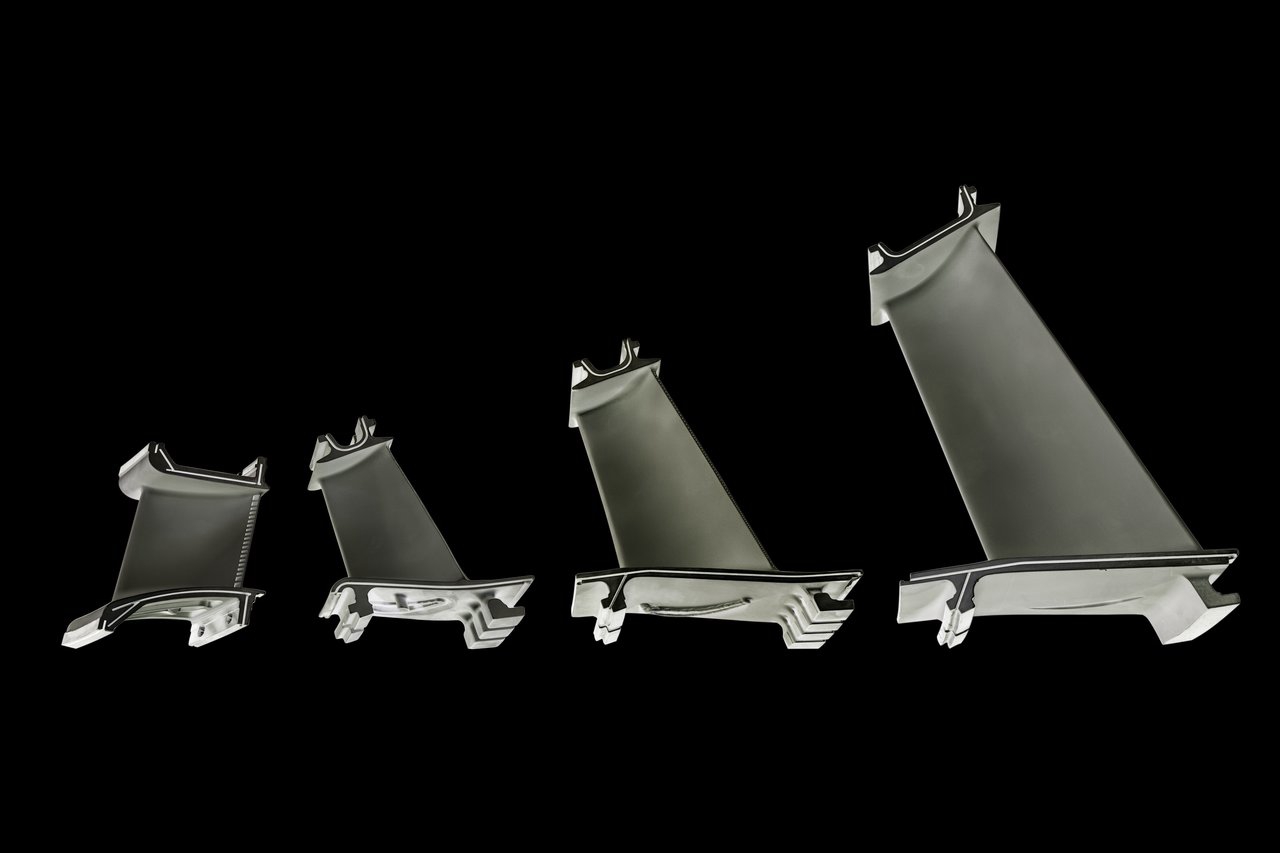
Simulation is critical for predicting blade life under thermal cycling. The process begins with Transient Thermal and Structural Finite Element Analysis (FEA). Engineers model the entire engine cycle—startup, takeoff, cruise, shutdown—to map temperature gradients and associated stress fields across the complex blade geometry, including internal cooling channels. Conjugate heat transfer analysis is used to simulate airflow and cooling effectiveness. These thermal-stress results are then fed into damage accumulation models for creep, fatigue (particularly TMF), and oxidation. For coated blades, specialized models simulate the growth of the thermally grown oxide (TGO) layer and predict TBC spallation risk.
Material and Coating Response Modeling
Accurate simulation requires precise input of material behavior under cyclic conditions. This involves modeling the anisotropic properties of single-crystal alloys, whose creep strength is orientation-dependent. For equiaxed or directionally solidified blades from processes like superalloy directional casting, the behavior of grain boundaries is a key factor. Furthermore, the performance of the thermal barrier coating (TBC) system is modeled separately, focusing on bond coat oxidation kinetics and the stress evolution within the ceramic layer. These models are calibrated and validated against extensive empirical data from material testing and analysis.
Validation Through Rig Testing and Post-Service Analysis
Simulations are ultimately validated against physical tests. Components undergo burner rig testing, where they are subjected to controlled thermal cycles with representative heating and cooling rates, simulating engine conditions. Advanced instrumentation measures surface temperatures and strain. After testing, components are examined using metallography and SEM to compare predicted crack locations and coating degradation with actual damage. This data闭环 refines the simulation models. For legacy components, post-service analysis provides invaluable real-world data to improve life prediction algorithms for critical applications in aerospace and power generation.
Engineering Mitigation Strategies
Based on simulation and test outcomes, performance is enhanced through design and processing. Optimizing cooling channel design reduces thermal gradients. Utilizing Hot Isostatic Pressing (HIP) on cast blades eliminates internal porosity that could initiate TMF cracks. Applying advanced, strain-tolerant TBC systems increases cycling capability. Finally, selecting the appropriate alloy generation—balancing cost and performance—for the specific stage's thermal profile is crucial, ensuring the blade meets its designed life cycle under cyclic duty.