How Do the Properties of Single-Crystal Alloys Enhance Turbine Blade Performance?
Elimination of Grain Boundaries: The Fundamental Advantage
The core enhancement stems from the elimination of all transverse grain boundaries. In conventional polycrystalline or even directionally solidified alloys, grain boundaries are intrinsic weak points at high temperatures. They are preferential sites for crack initiation under creep and fatigue loads, and paths for accelerated oxidation and corrosion. By growing the entire blade as one continuous crystal lattice through single-crystal casting, this primary failure mechanism is removed. This allows the blade to fully utilize the intrinsic strength of the alloy's matrix and strengthening γ' precipitates without intergranular degradation.
Superior High-Temperature Mechanical Properties
The absence of grain boundaries directly translates to exceptional performance in the critical areas for turbine operation:
Creep Resistance: Creep deformation—the slow, permanent strain under constant high stress and temperature—is drastically reduced. Without grain boundaries to slide and cavitate, deformation occurs only through more difficult intragranular mechanisms. This allows blades to maintain precise aerodynamic shape and clearances over extended service intervals in power generation turbines.
Thermal Fatigue Resistance: During engine cycles, blades experience severe thermal gradients. Single-crystal alloys exhibit superior resistance to thermal fatigue cracking because the crack-initiating grain boundaries are absent, leading to longer component life and improved reliability for aerospace and aviation engines.
Enabled Alloy Composition and Thermodynamic Stability
The single-crystal structure permits the use of higher concentrations of strengthening elements like Rhenium (Re), Ruthenium (Ru), and Tantalum (Ta) that would promote harmful phase formation at grain boundaries in polycrystalline alloys. This results in:
Higher Temperature Capability: Alloys like CMSX-4 or René N5 retain strength closer to their melting point. This directly enables higher turbine inlet temperatures, which is the principal driver for engine efficiency and thrust.
Improved Microstructural Stability: Combined with optimized heat treatment, the single-crystal structure is more resistant to the formation of detrimental topologically close-packed (TCP) phases during long-term exposure, preserving properties over the blade's lifespan.
Synergy with Advanced Cooling and Cooling and Coating Technologies
The performance benefits are multiplied when combined with other advanced technologies:
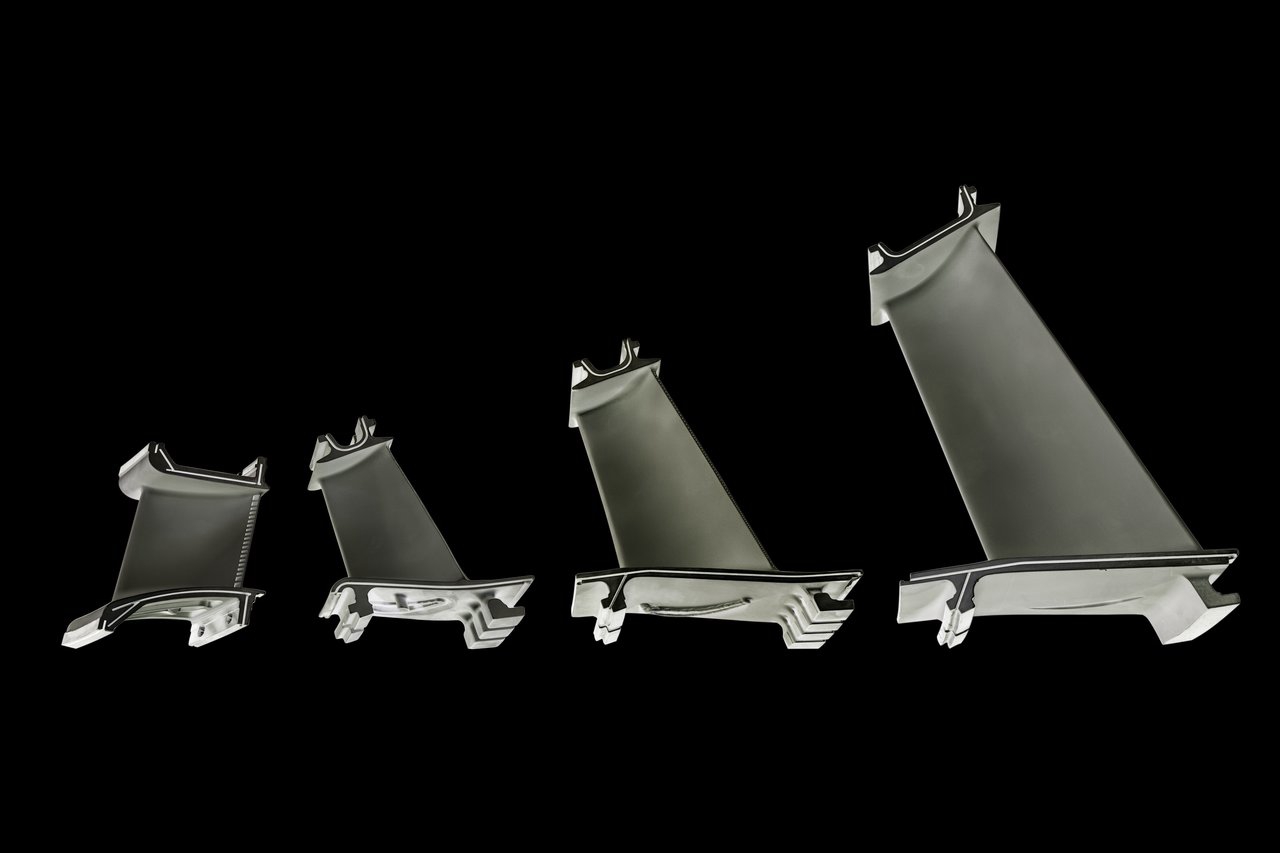
Complex Internal Cooling: The superior creep strength allows the design of thinner-walled, more intricate internal cooling channels to better manage metal temperatures.
Optimized Coating Adhesion: A smoother, continuous surface without grain boundary grooves provides a better substrate for Thermal Barrier Coatings (TBCs), improving coating adhesion and spallation resistance under thermal cycling.
Integrated Manufacturing for Ultimate Reliability
Realizing these property advantages requires an integrated manufacturing chain. The process begins with precision vacuum investment casting, followed by essential post-processes like Hot Isostatic Pressing (HIP) to ensure density, and final machining. The result is a component that operates at higher temperatures and stresses with greater predictability and longevity, defining the state-of-the-art in turbine blade technology.