AlMgScZr
Material Introduction
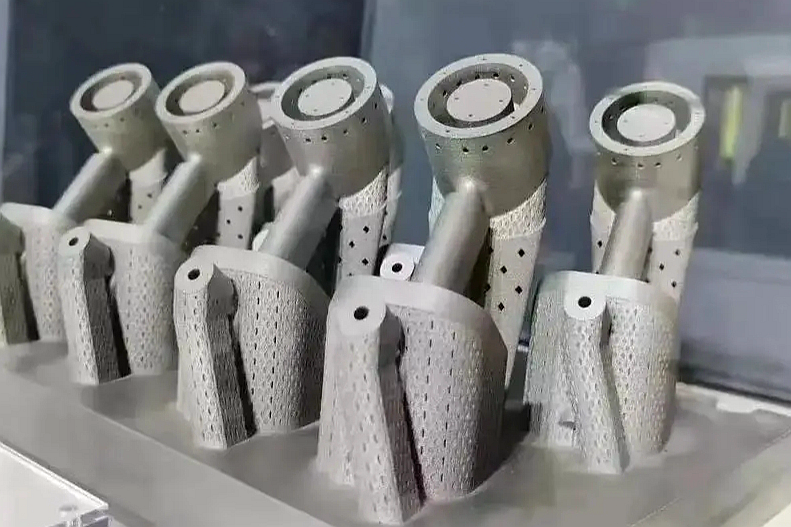
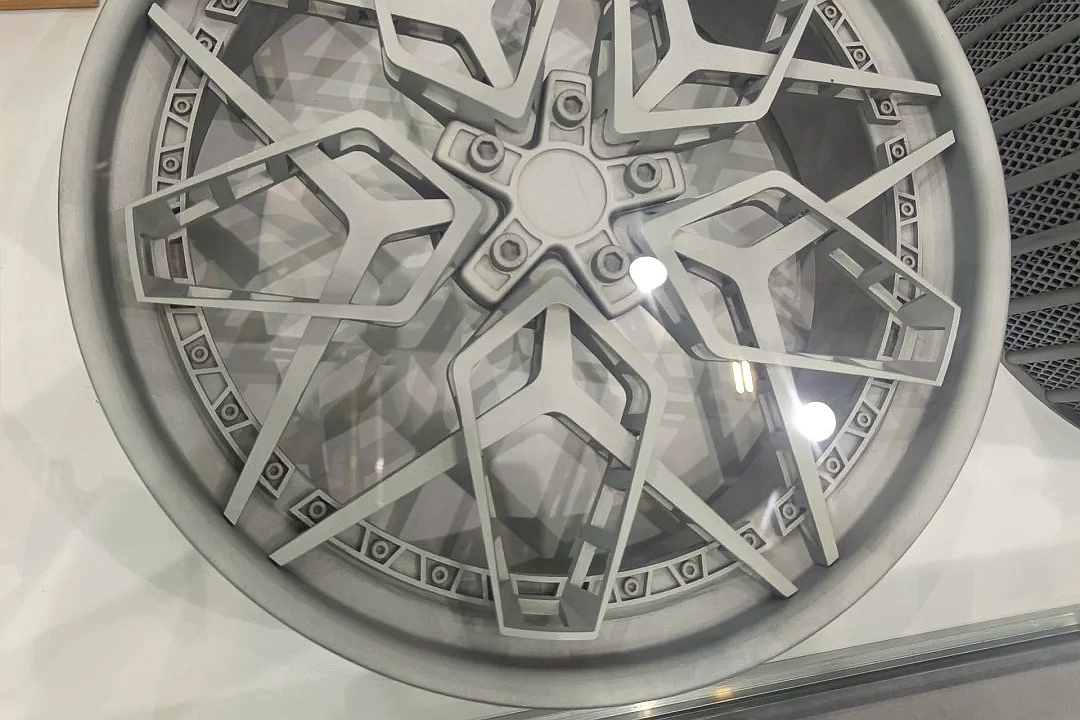
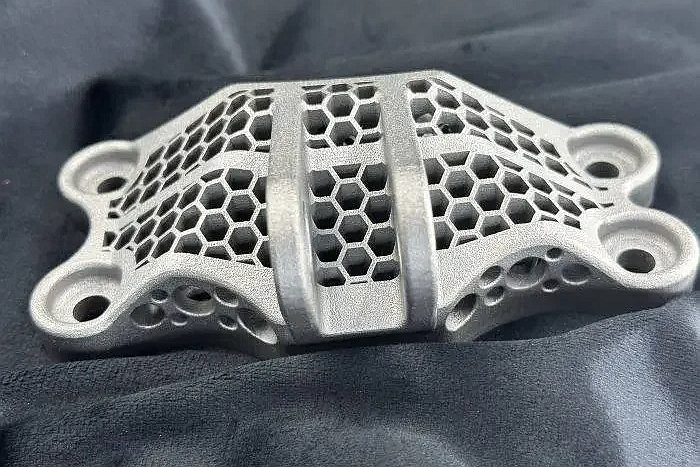
AlMgScZr is a high-performance aluminum alloy developed for demanding lightweight applications where strength, weldability, and structural efficiency are critical. By combining magnesium with scandium and zirconium, this alloy achieves significantly improved grain refinement, high crack resistance, and outstanding strength-to-weight performance compared with conventional cast aluminum alloys. When processed through aluminum 3D printing, AlMgScZr can form dense, fine microstructures with excellent dimensional stability and reduced hot-cracking tendency, making it highly suitable for advanced aerospace, motorsport, robotics, and high-end engineering components. The alloy is especially valuable for topology-optimized parts, lattice structures, load-bearing brackets, and thin-wall designs where low mass and mechanical reliability must coexist. With advanced additive manufacturing, AlMgScZr enables lightweight metal parts that are difficult to produce by conventional casting or subtractive routes.
International Naming Table
Region / Standard | Naming / Designation |
|---|---|
Commercial / AM Industry | AlMgScZr |
Europe (EN) | Custom Al-Mg-Sc-Zr AM alloy family |
USA (ASTM) | Proprietary aluminum powder alloy class |
Germany (DIN) | Scandium-zirconium aluminum AM grade |
China (GB/T) | High-strength Al-Mg alloy with Sc/Zr modification |
Japan (JIS) | Specialized additive aluminum alloy category |
Alternative Material Options
Several lightweight materials may be considered when AlMgScZr is not the best fit for cost, strength, or thermal requirements. For more conventional aluminum additive applications, AlSi10Mg is often selected because of its lower material cost and broad process maturity. When a design requires higher temperature capability or greater structural strength in harsh environments, superalloy 3D printing may become more appropriate. For applications prioritizing very high specific strength, corrosion resistance, and aerospace-grade mechanical performance, titanium alloys such as Ti-6.5Al-1Mo-1V-2Zr (TA15) or Ti-6Al-4V (TC4) may be chosen. Material selection should be based on weight targets, required ductility, heat exposure, structural loading, and budget.
Design Intent of AlMgScZr
AlMgScZr was designed to solve the limitations of conventional high-strength aluminum alloys in additive manufacturing, especially the tendency toward hot cracking, distortion, and insufficient structural stability in thin-wall or highly optimized parts. Magnesium contributes solid-solution strengthening and lightweight efficiency, while scandium and zirconium refine grain structure and promote the formation of stable precipitates that significantly improve strength and weldability. In additive manufacturing, this alloy is intended for advanced structural parts that require low density, high stiffness, reliable fatigue behavior, and excellent printability. It is especially suitable for aerospace brackets, performance bicycle components, UAV structures, motorsport supports, and complex lightweight frameworks where conventional casting or machining would either add too much weight or limit geometry freedom.
Chemical Composition (wt%)
Element | wt% |
|---|---|
Mg | 4.0–5.0 |
Sc | 0.4–0.8 |
Zr | 0.2–0.5 |
Mn | ≤0.5 |
Si | ≤0.15 |
Fe | ≤0.20 |
Others | ≤0.05 each |
Al | Balance |
Physical Properties
Property | Value |
|---|---|
Density | ~2.65–2.70 g/cm³ |
Melting Range | Approx. 570–640 °C |
Thermal Conductivity | Moderate to good |
Electrical Conductivity | Moderate |
Elastic Modulus | ~70 GPa |
Coefficient of Thermal Expansion | Approx. 22×10⁻⁶ /K |
Mechanical Properties (AM + Heat Treated)
Property | Value |
|---|---|
Ultimate Tensile Strength | 450–520 MPa |
Yield Strength | 300–420 MPa |
Elongation | 8–18% |
Hardness | 120–150 HB |
Fatigue Strength | Very good |
Strength-to-Weight Ratio | Excellent |
Material Characteristics
AlMgScZr is distinguished by its rare combination of high strength, lightweight density, good ductility, and excellent weldability. The addition of scandium and zirconium promotes the formation of fine, stable precipitates that strengthen the alloy while maintaining grain stability during thermal cycles. This gives the material notable resistance to hot cracking during printing and improved fatigue behavior in service. Compared with more conventional aluminum AM materials, AlMgScZr is often preferred for load-bearing designs, thin-wall structures, and parts that must combine stiffness with low mass. It also supports topology optimization exceptionally well because the alloy can maintain mechanical consistency even in geometrically complex features. Its corrosion resistance is generally good, and its stable microstructure supports both mechanical reliability and dimensional repeatability. These characteristics make AlMgScZr highly attractive for aerospace, performance mobility, and advanced structural engineering.
Manufacturing Process Performance
AlMgScZr performs especially well in powder bed fusion because it was developed with additive manufacturing limitations in mind. Its refined solidification behavior reduces the risk of hot tears and improves print consistency across thin walls and complex shapes. This makes it suitable for high-performance builds produced by 3D printing service workflows that require high structural accuracy and reduced post-build rejection risk. The alloy also responds well to support removal, stress relief, and precision finishing. Although additive manufacturing is its primary route, finish machining may still be required for interfaces, holes, and assembly-critical surfaces, where superalloy CNC machining can help achieve tight tolerances and superior surface quality. Due to its high-performance application focus, the alloy is frequently selected for parts where geometry complexity, structural weight savings, and mechanical consistency are more important than raw material cost. Process control, heat treatment, and inspection are essential for achieving the full performance potential of AlMgScZr components.
Applicable Post-processing
Post-processing plays a major role in maximizing the performance of AlMgScZr. Stress-relief heat treatment is commonly applied after printing to reduce residual stresses and improve dimensional stability. Additional aging treatments can further optimize precipitation hardening and raise mechanical strength. For critical parts, Hot Isostatic Pressing (HIP) may be considered to reduce internal porosity and improve fatigue reliability, especially for aerospace-grade structural components. Surface finishing operations such as machining, bead blasting, polishing, and shot peening can improve appearance, dimensional accuracy, and long-term fatigue performance. Qualification through material testing and analysis is recommended for parts used in demanding engineering systems.
Common Applications
AlMgScZr is widely suited for aerospace brackets, UAV structural nodes, lightweight support frames, motorsport hardware, robotic arms, bicycle structural components, and custom engineering parts requiring superior weight efficiency. It is especially effective for lattice structures, load-bearing optimized joints, thin-wall housings, and integrated functional assemblies where aluminum mass reduction creates measurable performance benefits. In advanced manufacturing projects, the alloy is also used for prototype-to-functional transition parts because it combines additive design freedom with production-grade mechanical behavior. Its strength and crack resistance make it an attractive choice for premium lightweight applications where standard aluminum alloys may not deliver enough structural performance.
When to Choose AlMgScZr
Choose AlMgScZr when lightweight structural performance is more important than material cost, and when the design includes thin walls, lattice geometries, complex joints, or load-bearing features that benefit from additive manufacturing. It is particularly suitable for aerospace, motorsport, and high-end industrial designs where superior strength-to-weight ratio, crack resistance, and fatigue behavior are critical. This alloy is also a strong option when weldability and dimensional stability are important. If the project mainly requires lower cost, easier sourcing, or general-purpose aluminum printing, AlSi10Mg may be more practical. If the part must operate at much higher temperatures or under more aggressive mechanical loads, titanium or nickel-based materials may be more appropriate.
Explore Related Blogs