Alloy Grade Verification: Direct Reading Spectrometer in Maintaining Superalloy Consistency
Alloy grade verification is a critical quality control step for superalloy parts used in aerospace engines, gas turbines, power generation equipment, chemical processing systems, and high-temperature industrial assemblies. When materials such as Inconel, Hastelloy, Rene alloys, Nimonic alloys, Stellite alloys, and other high-temperature alloys are used, even small composition deviations can affect casting behavior, heat treatment response, machining stability, oxidation resistance, and final service reliability.
A direct reading spectrometer is one of the most practical tools for verifying alloy grade consistency before, during, and after manufacturing. It helps confirm whether the material chemistry matches the required specification, prevents material mix-ups, and supports traceability for critical superalloy components.
For NewayAeroTech, alloy grade verification is not only a laboratory step. It is part of the complete manufacturing control route for Superalloys, including vacuum casting, CNC machining, EDM, heat treatment, coating preparation, and final inspection.
Why Alloy Grade Verification Matters for Superalloy Parts
Superalloys are selected because they can maintain strength, oxidation resistance, corrosion resistance, creep resistance, and dimensional stability under severe operating conditions. However, these properties depend strongly on chemical composition. If the alloy grade is incorrect, the part may look acceptable but fail to perform as expected in service.
Alloy grade verification is especially important for parts used in:
Aerospace engine hot-section components
Gas turbine vanes, blades, heat shields, and seal structures
Combustion liners, transition pieces, and nozzle components
High-temperature fixtures and test rig hardware
Chemical and corrosive environment components
Custom cast, machined, EDM, and heat-treated superalloy parts
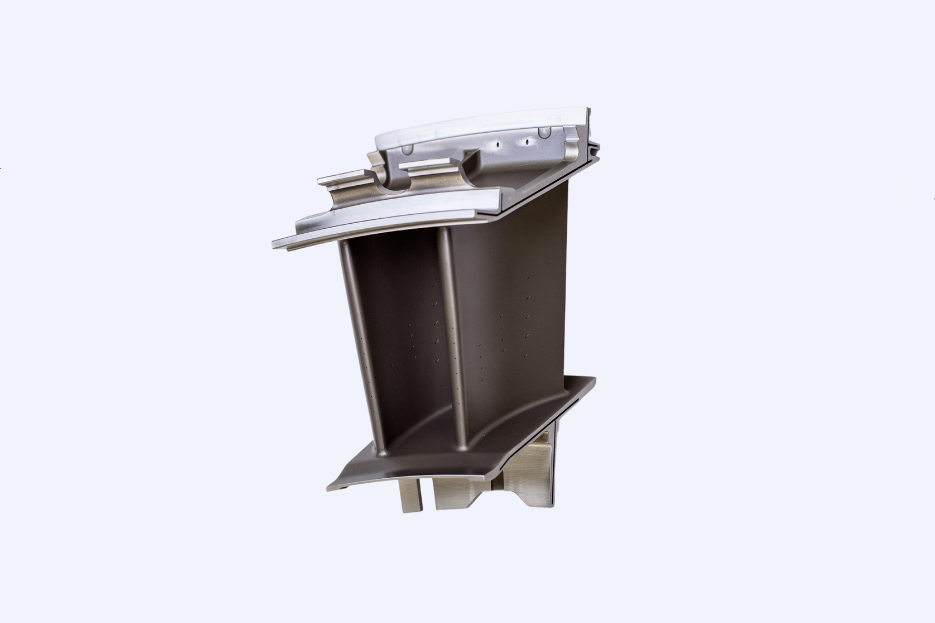
For example, an Inconel 713LC nozzle guide vane, an Inconel 738LC metallic heat shield, or a Hastelloy hot-section component may require different alloy chemistry and process control. If the wrong material is used, casting quality, machining behavior, heat treatment response, and service life can all be affected.
What Is a Direct Reading Spectrometer?
A direct reading spectrometer is an analytical instrument used to measure the chemical composition of metal materials. In superalloy manufacturing, it is commonly used to verify alloy grade by checking major alloying elements and key trace elements against the required material specification.
The instrument generates an excitation on the prepared metal surface and analyzes the emitted spectrum to determine elemental content. This allows the quality team to quickly compare the tested material with the expected alloy grade.
For nickel-based, cobalt-based, and iron-based superalloys, direct reading spectrometry can help verify elements such as:
Nickel
Chromium
Cobalt
Molybdenum
Tungsten
Aluminum
Titanium
Niobium
Iron
Other controlled alloying elements depending on the specification
This makes the direct reading spectrometer useful for incoming material inspection, casting melt verification, semi-finished part confirmation, and final material traceability.
How Spectrometer Testing Supports Superalloy Consistency
Superalloy consistency means that every batch, casting, or machined part follows the required alloy chemistry and remains traceable through production. A direct reading spectrometer helps maintain this consistency by identifying whether the material matches the intended grade before the part moves into expensive downstream processes.
This is important because superalloy manufacturing often includes high-cost operations such as vacuum investment casting, HIP, heat treatment, CNC machining, EDM, coating, and dimensional inspection. If the alloy grade is wrong, discovering the issue after machining or coating can cause major cost loss and delivery delays.
NewayAeroTech supports Superalloy Material Testing and Analysis for projects where alloy grade verification, chemical composition review, defect analysis, and material traceability are required.
Where Alloy Grade Verification Is Used in Manufacturing
Alloy grade verification should be performed at key control points instead of only at final inspection. For critical superalloy parts, checking material chemistry early can prevent incorrect material from entering casting, machining, or heat treatment.
Manufacturing Stage | Verification Purpose | Quality Value |
|---|---|---|
Incoming raw material | Confirm alloy grade before production | Prevents material mix-up and wrong-alloy processing |
Before casting | Check material charge or melt chemistry | Supports stable casting chemistry and batch consistency |
After casting | Verify cast part chemistry against specification | Confirms the casting can proceed to machining and inspection |
Before heat treatment | Confirm the alloy grade before thermal processing | Reduces risk of applying the wrong heat treatment cycle |
Before delivery | Support final material traceability and reporting | Provides confidence for customer quality review |
Importance for Vacuum Cast Superalloy Parts
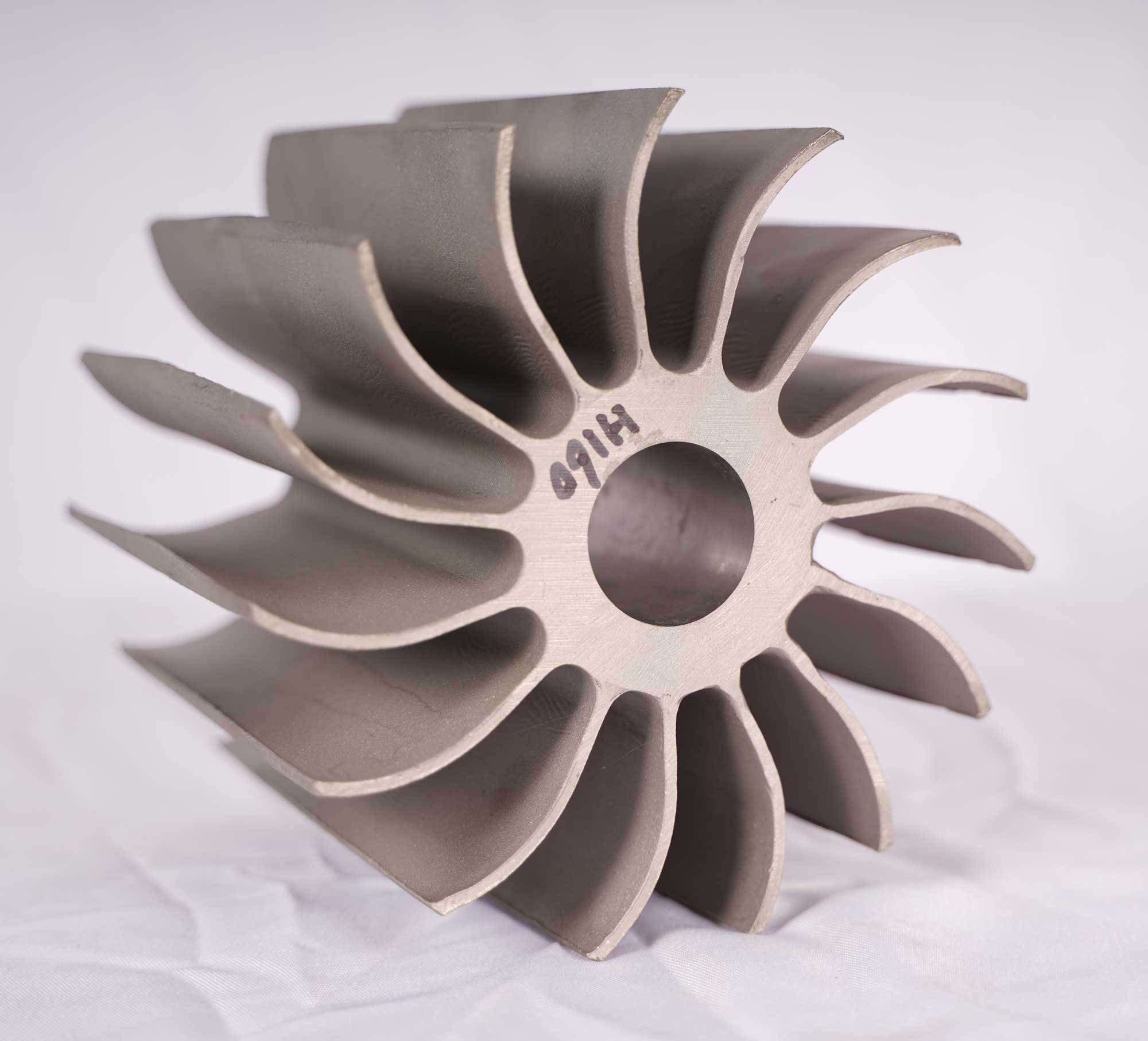
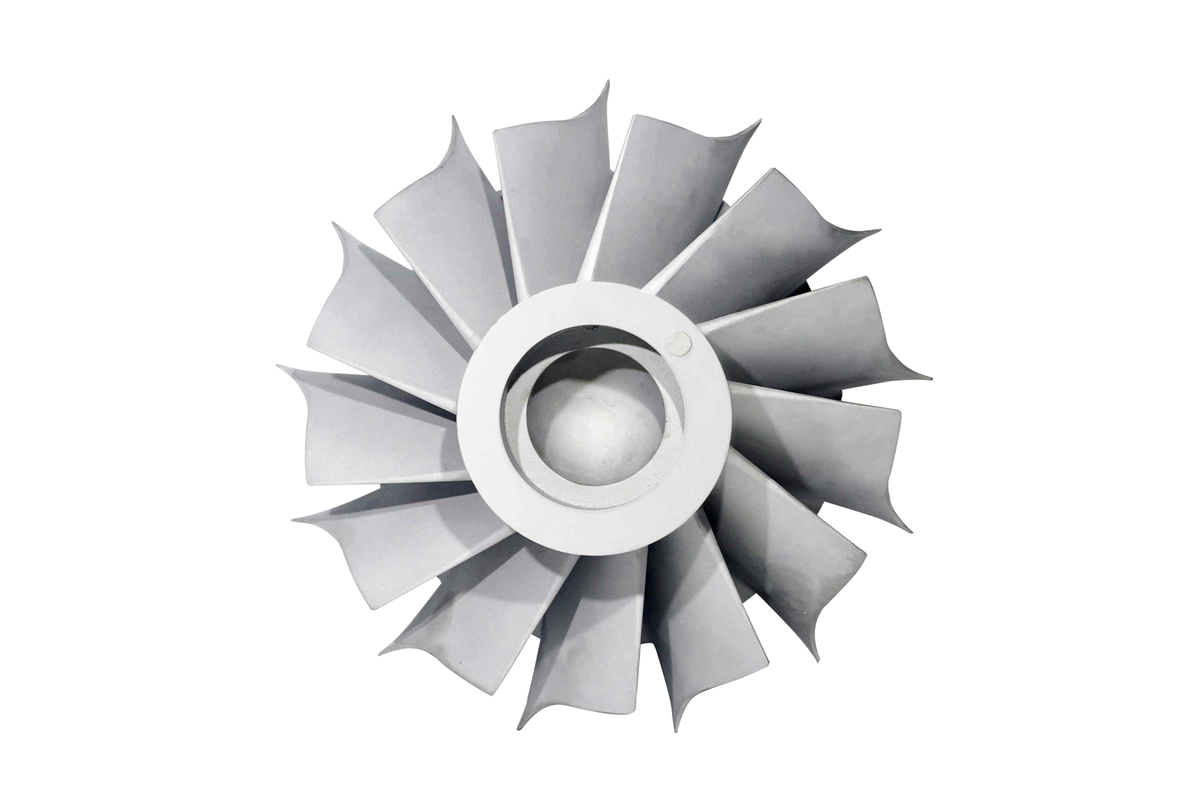
Vacuum casting is widely used for complex superalloy parts such as turbine vanes, nozzle guide vanes, heat shields, shrouds, combustion parts, and high-temperature structural components. In these parts, chemical composition influences melt behavior, solidification, grain structure, casting defects, and final mechanical properties.
For Vacuum Investment Castings, alloy grade verification helps confirm that the correct material is used before tooling, wax pattern production, shell making, casting, and downstream machining are performed. This is particularly important when several visually similar nickel-based alloys are handled in the same production environment.
For static turbine parts, Equiaxed Crystal Casting may be used when the component does not require directional solidification or single crystal structure. In these cases, alloy grade verification supports consistency between the specified alloy, casting route, heat treatment, and inspection plan.
Importance for Inconel, Hastelloy, and Cobalt Alloys
Many high-temperature alloys have similar appearance but very different chemistry and performance. A direct reading spectrometer helps distinguish material grades and reduces the risk of using an incorrect alloy in critical applications.
For Inconel alloy parts, grade verification is important because different Inconel grades may have different aluminum, titanium, niobium, chromium, and molybdenum levels. These elements influence precipitation strengthening, oxidation resistance, casting behavior, and heat treatment response.
For Hastelloy alloy parts, chemical composition verification helps confirm corrosion-resistant alloy grades where molybdenum, chromium, nickel, iron, and other elements must match the required specification.
For cobalt-based alloys such as Stellite alloy, spectrometer testing helps verify cobalt, chromium, tungsten, carbon, and other key alloying elements that affect wear resistance, hot corrosion resistance, and high-temperature performance.
Supporting Heat Treatment and Process Control
Superalloy heat treatment depends on the alloy grade. Applying the wrong heat treatment to the wrong alloy can result in poor precipitation response, unsuitable hardness, unstable microstructure, distortion, or reduced high-temperature performance.
Superalloy Heat Treatment should therefore be supported by material verification before thermal processing. For alloys such as IN713LC, IN738LC, Inconel 718, Rene alloys, or Nimonic alloys, chemistry verification helps ensure that the planned heat treatment cycle matches the actual material.
For example, a nickel-based casting superalloy and a wrought nickel alloy may both appear similar, but their heat treatment requirements and service behavior can be very different. Spectrometer verification helps avoid wrong-route processing before irreversible thermal operations are performed.
Supporting CNC Machining and EDM Quality
Material grade also affects machining performance. Different superalloys may have different hardness, work hardening behavior, tool wear, thermal conductivity, and EDM response. If the material grade is incorrect, the selected machining parameters may not be suitable.
For Superalloy CNC Machining, alloy verification helps the engineering team plan cutting tools, speeds, feeds, fixture strategy, and inspection risk. This is especially important for high-value turbine and aerospace components where scrap cost is high.
For Superalloy Electrical Discharge Machining EDM, alloy chemistry may influence EDM stability, recast layer behavior, edge quality, and post-EDM cleaning requirements. Verifying the material grade before EDM helps reduce process uncertainty.
Preventing Material Mix-Up in Aerospace and Gas Turbine Supply Chains
Material mix-up is a serious risk in aerospace and gas turbine manufacturing because many superalloy parts are visually similar after casting, machining, blasting, or heat treatment. Without proper identification and testing, different alloys may be confused during storage, processing, subcontracting, or final assembly.
Direct reading spectrometer testing helps reduce this risk by adding a technical verification step to material traceability. When combined with heat number control, batch records, traveler documents, part marking, and inspection reports, spectrometer testing supports a more reliable quality management system.
For Aerospace and Aviation applications, material consistency is especially important because parts may be used in high-temperature, vibration, and fatigue-sensitive environments. Alloy grade verification helps customers confirm that the delivered part matches the intended material route.
Limitations of Direct Reading Spectrometer Testing
A direct reading spectrometer is powerful, but it should not be treated as the only quality control method. It verifies chemical composition, but it does not fully replace mechanical testing, metallographic analysis, X-ray inspection, CT inspection, FPI, CMM inspection, or coating inspection.
Typical limitations include:
It mainly confirms chemical composition, not full mechanical performance
Surface preparation affects test accuracy
Small or curved parts may need suitable test areas or sample coupons
Some trace elements may require additional analytical methods depending on the specification
It does not directly detect internal porosity, cracks, or dimensional deviation
For critical aerospace or gas turbine parts, spectrometer testing should be used together with other inspection methods according to the drawing, purchase specification, and customer quality requirements.
Inspection Reporting and Traceability
For custom superalloy parts, customers often need material certificates, chemical composition reports, heat treatment records, inspection reports, and process documentation. Direct reading spectrometer results can support these records by confirming that the actual material chemistry matches the specified alloy grade.
A practical traceability package may include:
Material grade and standard reference
Heat number or batch number
Chemical composition test result
Heat treatment record if required
Dimensional inspection report
NDT results such as FPI, X-ray, or CT when required
Final certificate of conformity or customer-specific documentation
This documentation is especially useful for customers evaluating new suppliers, validating replacement turbine parts, or qualifying custom superalloy components for production.
RFQ Checklist for Alloy Grade Verification
To define alloy grade verification requirements clearly, customers should include material and inspection expectations in the RFQ stage. This allows the supplier to plan the correct testing method, reporting format, and acceptance criteria before production begins.
A complete RFQ should include:
Required alloy grade and material standard
Acceptable equivalent materials, if any
Required chemical composition limits
Whether direct reading spectrometer testing is required for each batch or each part
Required report format and certificate requirements
Heat treatment condition and related documentation
Additional testing requirements such as mechanical testing, metallography, FPI, X-ray, CT, or CMM
Application environment, such as aerospace engine, gas turbine, power generation, or chemical processing
Quantity, delivery schedule, and supplier qualification requirements
Conclusion
A direct reading spectrometer plays an important role in maintaining superalloy consistency. It helps verify alloy grade, prevent material mix-up, support chemical composition control, and improve traceability for high-temperature parts used in aerospace, gas turbine, power generation, and industrial applications.
For superalloy components, material verification should be connected with the complete manufacturing route. Casting, heat treatment, CNC machining, EDM, coating, and inspection all depend on the correct alloy grade. If the material is wrong, the entire process route may become unreliable.
NewayAeroTech supports alloy grade verification and material analysis for custom superalloy parts. Please provide the required alloy grade, material standard, part drawing, quantity, application environment, inspection requirements, and documentation expectations so our engineering team can plan the correct material verification and manufacturing route.