
Superalloy Castings Hot Isostatic Pressing Supplier
Trusted HIP Processing for High-Performance Superalloy Castings
Hot Isostatic Pressing (HIP) is an essential post-casting process for high-temperature superalloy castings used in aerospace, power generation, and industrial gas turbine applications. By applying high pressure and temperature in an inert atmosphere, HIP eliminates internal porosity, heals microshrinkage, and enhances fatigue life—making cast components more robust and inspection-ready.
Neway AeroTech is a specialized HIP supplier for superalloy parts made from Inconel, Rene alloys, Hastelloy, and CMSX single crystal materials. Our HIP service supports investment castings, welded repairs, and pre-machined components in compliance with AMS 2774 and aerospace OEM standards.
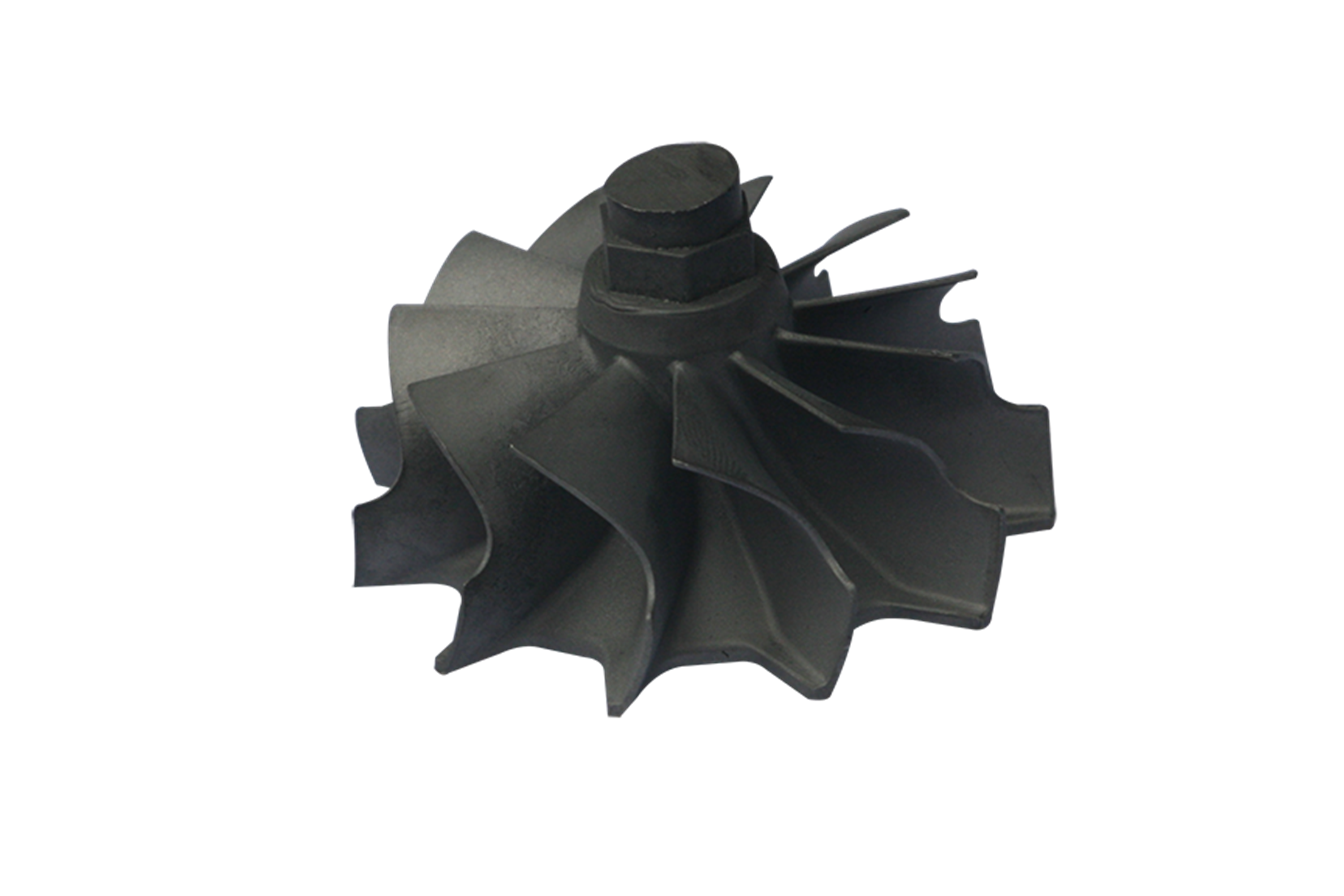
What HIP Achieves in Superalloy Casting
HIP restores casting quality by improving density, microstructure, and high-temperature fatigue resistance—essential for blades, vanes, combustors, and seals.
Removes internal voids and microporosity caused during cooling in vacuum investment casting
Increases fatigue and creep life under sustained thermal cycling
**Supports post-HIP machining and TIG welding without deformation
Prepares surfaces for better coating adhesion and dimensional control
HIP is typically performed before heat treatment and final CNC machining.
Superalloys Commonly Processed by HIP
Alloy | Max Temp (°C) | HIP Temp (°C) | Application |
|---|---|---|---|
950 | 1210 | Nozzle segments, blade castings | |
1050 | 1230 | Turbine blades, vane shrouds | |
1175 | 1170 | Combustion cases, support rings | |
1140 | 1260 | Single crystal turbine airfoils |
All HIP cycles are customized to OEM alloy specifications and casting geometry.
Case Study: HIP of Inconel 713C Turbine Nozzle Castings
Project Background
A client submitted 240 equiaxed Inconel 713C nozzle segments for HIP. Each part was 8 mm thick with complex cooling channels. HIP was performed at 1210°C, 100 MPa for 4 hours. X-ray and SEM confirmed full porosity elimination, and parts passed ultrasonic testing and CMM dimensional inspection.
Typical HIP-Processed Components and Industries
Component Model | Description | Alloy | Industry |
|---|---|---|---|
NGV-310 | Nozzle guide vane with film cooling | Rene 80 | |
HPC-400 | Combustor casing with integral flange | Hastelloy X | |
BLD-710 | First-stage blade with 25 mm fir-tree root | CMSX-4 | |
EXH-580 | Exhaust vane with cross-ribbed structure | Inconel 713C |
All parts were HIPed, heat-treated, machined, and coated for service at ≥950°C.
HIP Benefits for Cast Superalloy Components
Eliminates >99% of porosity, improving ultrasonic inspection and high-cycle fatigue resistance
Prevents crack propagation by healing microvoids and closing shrinkage cavities at grain boundaries
Enhances dimensional stability, critical for post-HIP CNC finishing
Improves bond strength of downstream TBC coatings
Restores weld-repaired parts, enabling extended turbine component service life
HIP Processing Standards and Parameters
HIP temperature range: 1170–1300°C, depending on alloy composition
Pressure range: 100–200 MPa in argon, fully enclosed chamber
Cycle duration: 2–6 hours based on wall thickness and porosity levels
Cooling rate: ≤10°C/min to avoid residual stress and distortion
**Inspection: X-ray, SEM, CMM after HIP to confirm effectiveness
Results and Verification
HIP Execution
Parts were HIPed at 1210°C and 100 MPa for 4 hours. Cooling was controlled at 5°C/min to prevent overaging or cracking.
Post-HIP Processing
Blades and vanes underwent heat treatment per AMS 5662, followed by CNC machining and optional TBC coating depending on end-use application.
Inspection
X-ray inspection verified full porosity closure. CMM confirmed profile tolerances within ±0.008 mm. SEM analysis validated grain integrity and void elimination.
FAQs
Which superalloy grades benefit most from HIP treatment?
Is HIP mandatory before machining or welding turbine parts?
What quality standards are used to validate HIP effectiveness?
Can you perform HIP on single crystal, equiaxed, and welded components?
What is the typical turnaround time for HIP processing?
