
Inconel 718LC Superalloy Equiaxed Casting Steam Turbine Parts Supplier
Introduction
Steam turbines demand components that can withstand elevated pressures, high steam temperatures, and long-duration cyclic stresses. Material selection is critical for ensuring creep resistance, fatigue life, and corrosion stability under such demanding operating environments. Inconel 718LC, a low-carbon modification of the proven Inconel 718 superalloy, is specially developed to enhance weldability, reduce cracking risk, and improve long-term thermal stability. When produced using equiaxed crystal casting, Inconel 718LC components exhibit uniform mechanical behavior and robust microstructural consistency.
Neway AeroTech offers precision vacuum investment casting of Inconel 718LC steam turbine parts, serving as a trusted supplier to global power generation and energy equipment OEMs. Our AS9100- and NADCAP-compliant processes ensure reliable, high-performance parts for steam turbine rotors, casings, blades, and nozzle rings.
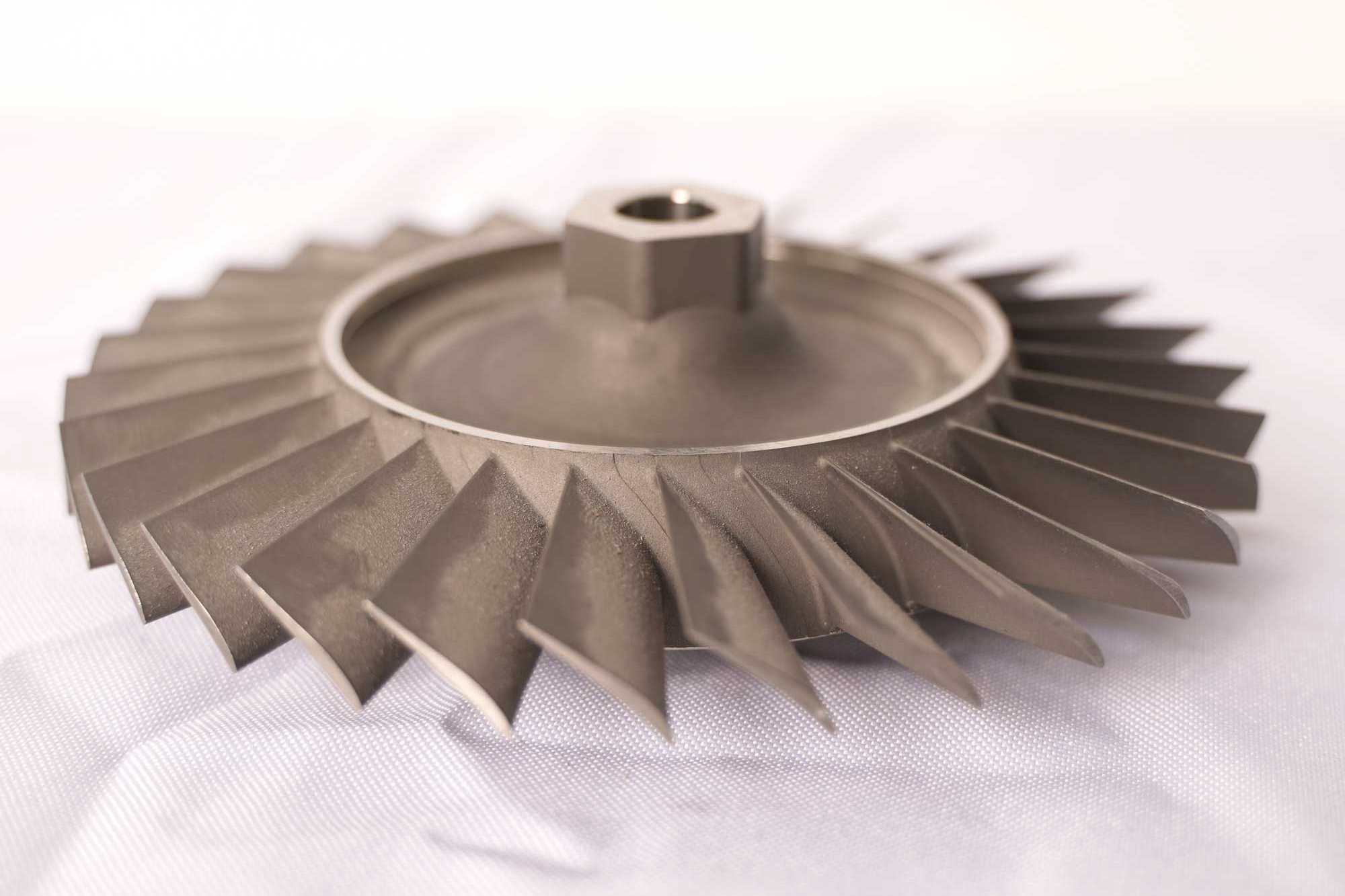
Core Technology of Inconel 718LC Equiaxed Casting
Wax Pattern Injection High-fidelity wax patterns replicate turbine geometries with ±0.05 mm tolerance, including complex vanes, buckets, and shroud structures.
Shell Mold Construction Refractory ceramic shells (6–8 mm) are built in layers for high dimensional stability during metal pouring and solidification.
Dewaxing and Firing Shells are dewaxed via autoclave at ~150°C and fired at ~1050°C to strengthen the mold for high-temperature casting.
Vacuum Induction Melting Inconel 718LC is melted under vacuum (≤10⁻³ Pa) at ~1380–1420°C, maintaining chemical homogeneity and minimizing oxidation.
Equiaxed Solidification The molten alloy solidifies in preheated molds under controlled thermal gradients, forming equiaxed grains of 0.5–2 mm size.
Shell Knockout and Cleaning Ceramic shells are removed via vibration and high-pressure blasting without damaging airfoil or mating surfaces.
Heat Treatment Solution and aging treatments stabilize the γ″ and γ′ strengthening phases, enhancing mechanical performance.
CNC Machining and EDM Final dimensions are achieved using CNC machining and EDM to meet tight tolerance specifications.
Inconel 718LC Material Properties for Steam Turbine Use
Max Operating Temperature: ~700°C
Tensile Strength: ≥1240 MPa at room temperature
Creep Strength: ≥180 MPa at 650°C for 1000 hours
Yield Strength: ≥1030 MPa
Weldability: Enhanced vs. standard Inconel 718 due to lower carbon content
Oxidation and Corrosion Resistance: Excellent in high-pressure steam environments
Grain Size Control: ASTM 5–7
Case Study: Inconel 718LC Blades and Nozzles for 600 MW Steam Turbine
Project Background
Neway AeroTech produced equiaxed-cast Inconel 718LC steam path components for a 600 MW combined-cycle power station. The project included shrouded blades, nozzle segments, and seals operating at 650°C and high mechanical load. The customer required consistent microstructure, tight dimensional control, and validated mechanical properties.
Applications
High-Pressure Turbine Buckets: Require excellent fatigue and thermal shock resistance under cyclic load.
Steam Path Nozzle Rings: Static components subjected to continuous steam flow and oxidation.
Sealing Rings and Shrouds: Demand dimensional stability and erosion resistance for reliable turbine sealing.
Diffuser and Endwall Inserts: Complex cast segments that manage flow expansion and redirection in low-pressure stages.
Manufacturing Solution for Inconel 718LC Steam Turbine Parts
Mold and Gating Optimization CFD analysis supports gating design to ensure uniform filling, minimize porosity, and control grain morphology.
Vacuum Casting Execution Equiaxed casting is performed in preheated ceramic molds under vacuum, producing isotropic mechanical properties with controlled cooling rates.
Post-Casting Heat Treatment Heat treatment cycles homogenize structure, enhance hardness, and stabilize gamma double-prime (γ″) strengthening phases.
Machining and Finishing EDM and CNC are used to finish roots, sealing surfaces, and complex aerodynamic profiles.
Inspection and Certification X-ray, ultrasonic, and CMM validation are conducted per ASME and ASTM power generation standards.
Manufacturing Challenges
Controlling grain structure in thick-section nozzle rings
Avoiding micro-cracks in sharp trailing edges
Managing dimensional stability during multi-stage heat treatment
Ensuring weldability and stress relief in post-machining weld repairs
Results and Verification
Grain size ASTM 6–7 across all turbine segments
0% porosity confirmed post-casting via NDT
Final part dimensions within ±0.03 mm tolerance
Tensile strength >1240 MPa and creep resistance validated at 650°C
100% pass rate in batch ultrasonic and X-ray testing
FAQs
What makes Inconel 718LC suitable for steam turbine applications?
How does equiaxed casting benefit complex steam path components?
What is the difference between Inconel 718 and 718LC?
What types of NDT are used to qualify turbine castings?
Can Inconel 718LC cast parts be repaired or welded after service?
