
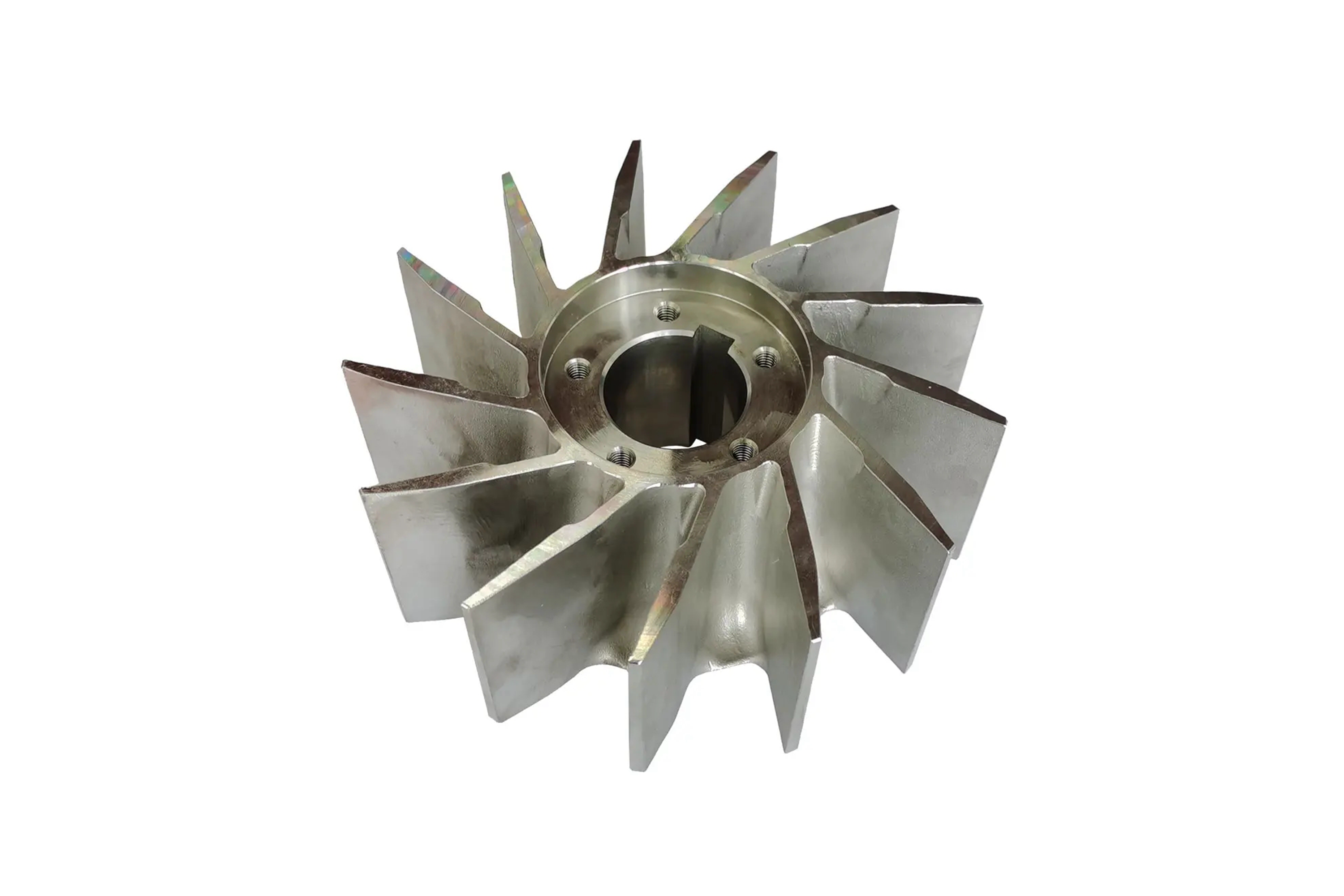
लॉस्ट वैक्स कास्टिंग पंप वाल्व इम्पेलर एक्सेसरीज
परिचय
लॉस्ट वैक्स कास्टिंग एक उन्नत सटीक कास्टिंग प्रक्रिया है जो जटिल पंप वाल्व इम्पेलर एक्सेसरीज के निर्माण के लिए आदर्श है जिनके लिए कड़े सहनशीलता (±0.05 मिमी) और उत्कृष्ट सतह फिनिश (Ra ≤3.2 µm) की आवश्यकता होती है। न्यूवे एयरोटेक में, हम विशेष इन्वेस्टमेंट कास्टिंग तकनीकों का लाभ उठाते हैं ताकि अत्यधिक टिकाऊ इम्पेलर बनाए जा सकें जिनका व्यापक रूप से तेल और गैस, रासायनिक प्रसंस्करण, और बिजली उत्पादन जैसे उद्योगों में उपयोग किया जाता है।
हमारे घटक लगातार संक्षारण प्रतिरोध, यांत्रिक अखंडता (1400 एमपीए तक तन्यता शक्ति), और कठोर परिस्थितियों (700°C तक तापमान) में परिचालन स्थिरता के लिए कड़े मानकों को पूरा करते हैं।
लॉस्ट वैक्स कास्टिंग की मूल तकनीक
मोम पैटर्न उत्पादन: इम्पेलर ज्यामिति की सुसंगत प्रतिकृति के लिए ±0.03 मिमी के भीतर आयामी सटीकता के साथ उत्पादित सटीक रूप से ढले हुए मोम पैटर्न।
सिरेमिक शेल निर्माण: संरचनात्मक अखंडता बनाए रखने के लिए लगभग 10–15 मिमी की मोल्ड मोटाई बनाते हुए, पैटर्न को बार-बार सिरेमिक घोल में डुबोया जाता है।
डीवैक्सिंग प्रक्रिया: सिरेमिक शेल्स को लगभग 250°C तक सावधानी से गर्म किया जाता है, मोम को पूरी तरह से हटाते हुए बिना विकृति के मोल्ड विवरण को संरक्षित किया जाता है।
वैक्यूम-सहायता प्राप्त कास्टिंग: ऑक्सीकरण को समाप्त करने और न्यूनतम सरंध्रता (<0.1%) सुनिश्चित करने के लिए वैक्यूम स्थितियों (≤0.01 एमपीए ऑक्सीजन) के तहत पिघली हुई मिश्र धातुएं (1450–1600°C) डाली जाती हैं।
शेल हटाना और सफाई: सिरेमिक मोल्ड्स को यांत्रिक रूप से तोड़ा जाता है और सावधानी से साफ किया जाता है ताकि सटीक-कास्ट इम्पेलर एक्सेसरीज प्रकट हों, सतह खुरदरापन Ra ≤3.2 µm प्राप्त हो।
नियंत्रित ताप उपचार: घटक लगभग 1050°C पर विलयन उपचार और एजिंग से गुजरते हैं, जिससे अनुकूलित यांत्रिक शक्ति और बेहतर संक्षारण प्रतिरोध सुनिश्चित होता है।
पंप वाल्व इम्पेलर एक्सेसरीज के लिए सामग्री विशेषताएं
गुण | विनिर्देश |
|---|---|
सामान्य सामग्री | स्टेनलेस स्टील, निकल-आधारित मिश्र धातुएं (इनकोनेल 625, इनकोनेल 718), टाइटेनियम मिश्र धातुएं (Ti-6Al-4V) |
तन्यता शक्ति | 900–1400 एमपीए |
उपज शक्ति | ≥800 एमपीए |
संक्षारण प्रतिरोध | अत्यधिक संक्षारक वातावरण में उत्कृष्ट |
परिचालन तापमान | 700°C तक |
आयामी सहनशीलता | ±0.05 मिमी |
सतह फिनिश | Ra ≤3.2 µm |
दबाव रेटिंग | 70 एमपीए तक |
केस स्टडी: लॉस्ट वैक्स कास्टिंग पंप वाल्व इम्पेलर एक्सेसरीज
परियोजना पृष्ठभूमि
एक अग्रणी अंतरराष्ट्रीय पंप और वाल्व निर्माता को महत्वपूर्ण द्रव-हैंडलिंग अनुप्रयोगों के लिए सटीक इम्पेलर एक्सेसरीज की आवश्यकता थी। उद्देश्यों में चरम परिचालन परिस्थितियों में उत्कृष्ट संक्षारण प्रतिरोध, यांत्रिक शक्ति, आयामी सटीकता और स्थायित्व प्राप्त करना शामिल था।
सामान्य इम्पेलर प्रकार और अनुप्रयोग
बंद इम्पेलर: 50 एमपीए से अधिक दबाव और 650°C तक तापमान पर काम करने वाले रासायनिक पंपों में उच्च-दक्षता द्रव स्थानांतरण के लिए डिज़ाइन किए गए।
अर्ध-खुले इम्पेलर: कठोर औद्योगिक वातावरण में अपघर्षक घोल और रासायनिक समाधानों को संभालने के लिए आदर्श, गंभीर परिस्थितियों में सुसंगत प्रदर्शन सुनिश्चित करते हैं।
खुले इम्पेलर: अत्यधिक चिपचिपे या रेशेदार तरल पदार्थों के लिए उपयुक्त, आमतौर पर अपशिष्ट जल और प्रसंस्करण अनुप्रयोगों में उपयोग किए जाते हैं जिनके लिए निरंतर विश्वसनीयता की आवश्यकता होती है।
भंवर इम्पेलर: ठोस-भरे द्रव पंपिंग के लिए इंजीनियर, चुनौतीपूर्ण अपशिष्ट जल प्रबंधन परिदृश्यों में घिसाव और टूट-फूट को कम करते हैं।
इम्पेलर एक्सेसरीज का चयन और संरचनात्मक विशेषताएं
चयनित मिश्र धातुएं (इनकोनेल 625, स्टेनलेस स्टील 316L, Ti-6Al-4V) उनके सिद्ध संक्षारण प्रतिरोध, तन्यता शक्ति (≥900 एमपीए), और थकान प्रदर्शन के लिए चुनी गईं। डिज़ाइन गतिशील भार के तहत सुव्यवस्थित प्रवाह पथ, न्यूनतम अशांति, और संरचनात्मक मजबूती पर केंद्रित थे।
इम्पेलर एक्सेसरीज विनिर्माण समाधान
सटीक मोम इंजेक्शन: मोम पैटर्न को ±0.03 मिमी के भीतर सहनशीलता के साथ ढाला गया, एकसमान प्रदर्शन विशेषताओं के लिए इम्पेलर प्रोफाइल की सटीक रूप से प्रतिकृति बनाई गई।
मजबूत मोल्ड निर्माण: सुसंगत परत मोटाई (10–15 मिमी) के साथ विकसित सिरेमिक मोल्ड, उच्च-तापमान कास्टिंग के दौरान संरचनात्मक स्थिरता सुनिश्चित करते हैं।
वैक्यूम कास्टिंग: पिघली हुई धातु को लगभग 1550°C पर वैक्यूम (<0.01 एमपीए ऑक्सीजन) के तहत डाला गया ताकि सरंध्रता और अशुद्धियों को काफी कम किया जा सके।
ताप उपचार: लगभग 1050°C पर नियंत्रित एनीलिंग और एजिंग यांत्रिक गुणों को बढ़ाता है, जिससे 900–1400 एमपीए की तन्यता शक्ति प्रदान की जाती है।
सटीक सीएनसी मशीनिंग: सुपरएलॉय सीएनसी मशीनिंग ±0.05 मिमी की अंतिम सहनशीलता और इष्टतम वायुगतिकीय ज्यामिति सुनिश्चित करती है।
सतह उपचार: विशेष कोटिंग्स का अनुप्रयोग, जिसमें थर्मल बैरियर कोटिंग (टीबीसी) शामिल है, थर्मल स्थिरता और संक्षारण सुरक्षा को काफी बढ़ाता है।
गैर-विनाशकारी परीक्षण (एनडीटी): रेडियोग्राफिक (एक्स-रे) और अल्ट्रासोनिक निरीक्षण आंतरिक गुणवत्ता और कड़े मानकों के अनुपालन को सुनिश्चित करते हैं।
परिचालन परीक्षण: कठोर हाइड्रोलिक और गतिशील परीक्षण वास्तविक दुनिया के प्रदर्शन मापदंडों को मान्य करते हैं, विश्वसनीय दीर्घकालिक संचालन सुनिश्चित करते हैं।
मूल विनिर्माण चुनौतियां
कड़ी आयामी सटीकता (±0.05 मिमी) बनाए रखना
आंतरिक दोषों को 0.1% सरंध्रता से नीचे कम करना
एकसमान यांत्रिक गुण और संक्षारण प्रतिरोध प्राप्त करना
चरम परिस्थितियों में परिचालन स्थायित्व की पुष्टि के लिए व्यापक परीक्षण
परिणाम और सत्यापन
आयामी सत्यापन: कोऑर्डिनेट मेजरिंग मशीन (सीएमएम) ने ±0.05 मिमी आवश्यकताओं के भीतर सटीकता की पुष्टि की।
शक्ति और थकान प्रदर्शन: तन्यता परीक्षण ने 900–1400 एमपीए के बीच सुसंगत शक्ति प्रदर्शित की, परियोजना बेंचमार्क को पार कर गया।
संक्षारण परीक्षण: एएसटीएम-मानक नमक स्प्रे परीक्षण पास किए, आक्रामक रासायनिक वातावरण के लिए उपयुक्त संक्षारण प्रतिरोध को मान्य किया।
आंतरिक गुणवत्ता आश्वासन: व्यापक एनडीटी विधियों (रेडियोग्राफिक, अल्ट्रासोनिक) ने शून्य महत्वपूर्ण दोषों की पुष्टि की, उद्योग मानकों के अनुपालन को सुनिश्चित किया।
सतह अखंडता मूल्यांकन: Ra ≤3.2 µm प्राप्त किया, द्रव गतिशील प्रदर्शन को काफी बढ़ाया और संक्षारण प्रारंभ बिंदुओं को कम किया।
अक्सर पूछे जाने वाले प्रश्न
न्यूवे एयरोटेक लॉस्ट वैक्स कास्टिंग के साथ कौन सी आयामी सहनशीलता प्राप्त कर सकता है?
पंप वाल्व इम्पेलर एक्सेसरीज के लिए आमतौर पर कौन सी मिश्र धातुएं उपयोग की जाती हैं?
न्यूवे एयरोटेक महत्वपूर्ण कास्टिंग्स में न्यूनतम दोष कैसे सुनिश्चित करता है?
क्या न्यूवे एयरोटेक विशिष्ट पंप अनुप्रयोगों के लिए अनुरूप डिज़ाइन प्रदान कर सकता है?
इम्पेलर कास्टिंग्स पर किस प्रकार के परीक्षण और सत्यापन किए जाते हैं?
