
Roue de turbine en superalliage Inconel 738LC coulée directionnelle
Introduction
La coulée à cristaux équiaxes Inconel 738 est une solution avancée pour la production de roues de turbine à gaz offrant une résistance mécanique exceptionnelle, une excellente résistance à l'oxydation et une grande durabilité en fatigue thermique. Chez Neway AeroTech, nous coulons des roues de turbine à gaz en Inconel 738 destinées aux applications de production d'énergie, de turbines auxiliaires aérospatiales et de systèmes énergétiques. Ces composants fonctionnent de manière fiable en fonctionnement continu à des températures allant jusqu'à 980°C, avec d'excellentes performances en fluage et en fatigue sur de longues durées de service.
La coulée équiaxe permet des géométries complexes, une structure granulaire uniforme et une production rentable de grandes roues de turbine utilisées dans les environnements industriels et aéronautiques.
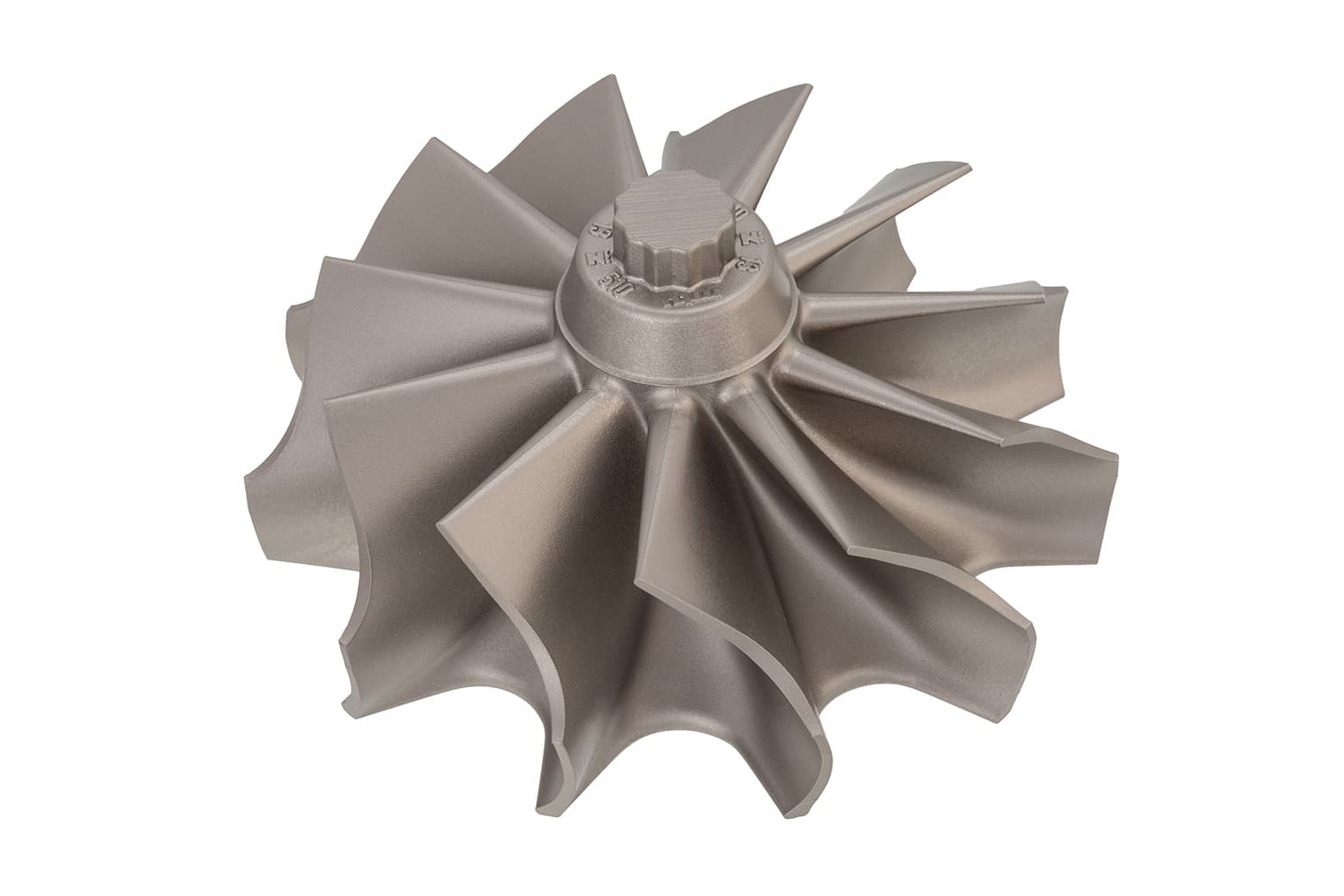
Technologie de base de la coulée équiaxe Inconel 738
Modèle en cire et assemblage : Les modèles en cire haute précision de la roue de turbine sont moulés par injection et assemblés avec une répétabilité dimensionnelle de ±0,05 mm.
Création du moule en coquille céramique : Des coquilles céramiques multicouches (8 à 10 revêtements) sont appliquées pour former des moules haute résistance pour la coulée à la cire perdue sous vide.
Fusion sous vide et coulée : L'alliage Inconel 738 est fondu dans un four sous vide et coulé à environ 1500°C pour minimiser l'oxydation et la porosité.
Solidification équiaxe contrôlée : Le refroidissement est géré pour favoriser la formation uniforme de grains équiaxes, généralement de taille de grain ASTM 3–6.
Traitement thermique post-coulée : Le traitement thermique de mise en solution et de vieillissement affine la microstructure et améliore les propriétés mécaniques et thermiques.
Usinage CNC de précision : L'usinage de l'alésage, de la racine en forme de sapin et des cercles de boulons est réalisé avec une précision de ±0,02 mm en utilisant l'usinage CNC.
Revêtements optionnels : Des revêtements barrière thermique (TBC) sont appliqués pour une résistance prolongée à l'oxydation et aux chocs thermiques.
Caractéristiques du matériau Inconel 738 pour roues de turbine
Propriété | Valeur |
|---|---|
Température de fonctionnement maximale | 980°C |
Résistance à la traction ultime | 1130–1250 MPa |
Limite d'élasticité | ≥850 MPa |
Résistance au fluage | Excellente à haute température |
Résistance à l'oxydation | Supérieure dans les environnements de gaz de combustion |
Taille de grain (équiaxe) | ASTM 3–6 |
Tolérance dimensionnelle | ±0,02 mm (surfaces usinées) |
Étude de cas : Roue de turbine Inconel 738 pour turbine à gaz industrielle lourde
Contexte du projet
Un fabricant d'équipements d'origine (OEM) pour la production d'énergie avait besoin d'une roue de turbine robuste pour une turbine à gaz industrielle de 30 à 50 MW, avec un objectif de durée de vie de 30 000 heures à 950°C. L'Inconel 738 a été sélectionné pour son équilibre entre coulabilité, résistance mécanique et résistance à l'oxydation.
Applications typiques des roues de turbine équiaxes en Inconel 738
Roue de turbine de deuxième étage GE Frame 6B : Roues en Inconel 738 équiaxe utilisées pour des opérations stationnaires en charge de base à 900–950°C dans les centrales électriques industrielles.
Roue de turbine à gaz Solar Mars 100 : Module de turbine compact fonctionnant à des cycles thermiques élevés sur les plateformes de compression de gaz et de production d'énergie offshore.
Roue d'APU de la série Rolls-Royce 501-K : Roues de turbine d'unités auxiliaires de puissance aérospatiales exposées à des contraintes thermiques cycliques avec des performances de longue durée à températures élevées.
Roue de turbine Mitsubishi M501J (composant de secours) : Utilisée dans les modules de turbine de moyenne puissance et d'urgence nécessitant une haute résistance à l'oxydation et une stabilité dimensionnelle.
Roue de turbine de puissance Siemens SGT-400 : Turbine de classe industrielle utilisant des roues en Inconel 738 pour des performances fiables et résistantes à la corrosion dans les systèmes énergétiques à haute température.
Processus de fabrication
Injection de cire et assemblage des modèles : Les modèles en cire moulés reproduisent précisément les formes de la racine des aubes et la géométrie du moyeu. Ils sont assemblés en grappes pour la coulée.
Moulage en coquille : La coquille céramique est construite jusqu'à 10 mm d'épaisseur, offrant une résistance pendant la coulée à haute température.
Coulée sous vide : L'Inconel 738 est fondu et coulé sous vide (<10⁻² torr) pour éliminer la porosité et contrôler la ségrégation de l'alliage.
Solidification et refroidissement : La vitesse de refroidissement est contrôlée pour assurer une structure granulaire équiaxe et minimiser les défauts de déchirure à chaud et de retrait.
Retrait de la coquille et nettoyage : Le matériau de la coquille est retiré à l'aide d'un jet d'eau à haute pression et de grenaillage, suivi d'un nettoyage acide.
Traitement thermique : Le traitement thermique de mise en solution à ~1120°C et le vieillissement à 845–870°C améliorent la formation de la phase γ′ et les performances à haute température.
Usinage CNC : Toutes les surfaces critiques — alésage, trous de boulons, interface de la racine des aubes — sont usinées avec une précision de ±0,02 mm.
CND et inspection : L'inspection par rayons X et la machine à mesurer tridimensionnelle (MMT) sont utilisées pour vérifier la qualité interne et dimensionnelle.
Résultats et vérification
Propriétés mécaniques : Résistance à la traction ultime finale >1150 MPa ; Limite d'élasticité >850 MPa à 900°C ; adapté à un fonctionnement à haute charge de longue durée.
Durée de vie en fatigue : Plus de 25 000 cycles lors des essais de fatigue thermique et mécanique à 950°C.
Résistance au fluage : <0,5 % de déformation sur 1000 heures à 950°C sous contrainte de conception.
Résistance à l'oxydation : Réussite du test d'oxydation cyclique (1000 heures à 980°C) sans desquamation ou dégradation de la calamine.
Contrôle dimensionnel : Les roues de turbine usinées sont vérifiées dans une tolérance de ±0,02 mm via la MMT.
FAQ
Pourquoi l'Inconel 738 est-il adapté aux roues de turbine équiaxes ?
Comment la coulée équiaxe se compare-t-elle à la solidification directionnelle pour les disques de turbine à gaz ?
Les roues de turbine en Inconel 738 peuvent-elles être revêtues de TBC pour une protection supplémentaire ?
Quelle est la durée de vie typique d'une roue de turbine en Inconel 738 ?
Quels essais sont utilisés pour garantir l'intégrité mécanique et thermique des roues de turbine coulées ?
