
Fonderie de Forgeage Isotherme pour Aubes de Turbine en Alliage de Cobalt Inconel 738LC
Introduction
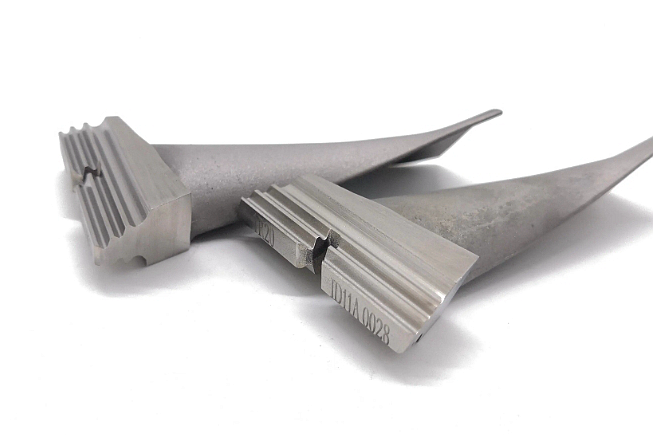
L'Inconel 738LC, un superalliage à base de nickel-chrome-cobalt, offre une résistance au fluage exceptionnelle, une stabilité à l'oxydation et des performances en fatigue à haute température, ce qui en fait un matériau de choix pour la fabrication d'aubes de turbine. Chez Neway AeroTech, nous sommes spécialisés dans les services de forgeage isotherme pour les alliages Inconel, produisant des aubes de turbine en Inconel 738LC avec une précision dimensionnelle exceptionnelle (±0,03 mm), des microstructures affinées et des propriétés mécaniques supérieures pour les applications aérospatiales et de turbines à gaz industrielles.
En utilisant une technologie de forgeage avancée dans des conditions isothermes, nous fournissons des aubes de turbine capables de maintenir une excellente intégrité mécanique lors d'expositions prolongées à des températures extrêmes.
Principaux Défis de Fabrication pour les Aubes de Turbine en Inconel 738LC
Le forgeage d'aubes de turbine en Inconel 738LC dans des conditions isothermes implique des défis techniques complexes :
Gérer des plages de température de forgeage étroites (~1020–1120°C) pour éviter la fissuration et la fragilisation des joints de grains.
Obtenir des microstructures à grains fins et homogènes qui améliorent la résistance au fluage et à la fatigue.
Maintenir des tolérances dimensionnelles ultra-serrées (±0,03 mm) cruciales pour l'assemblage du rotor de turbine et les performances aérodynamiques.
Contrôler les taux de déformation et les températures des matrices minimise les contraintes résiduelles et garantit une haute intégrité métallurgique.
Processus de Forgeage Isotherme pour les Aubes de Turbine en Inconel 738LC
Notre processus de forgeage isotherme de précision comprend :
Préparation des Billettes : Homogénéisation et préchauffage des billettes en Inconel 738LC pour assurer l'uniformité microstructurale.
Chauffage Isotherme des Matrices : Maintenir les matrices à des températures proches de la température de forgeage (~1050–1100°C) pour minimiser les gradients thermiques.
Opération de Forgeage de Précision : Forgeage à vitesse contrôlée et à température constante pour obtenir un affinement optimal des grains et prévenir l'amorçage de fissures.
Refroidissement Contrôlé : Refroidissement au four ou à l'air lent pour réduire les contraintes résiduelles et prévenir la formation de microfissures.
Traitement Thermique Post-Forgeage : Traitement de mise en solution (~1120°C) suivi d'un vieillissement à ~845°C pour optimiser la précipitation de la phase γ' et la résistance mécanique.
Usinage CNC Final : Atteindre des tolérances dimensionnelles finales de ±0,01 mm et des états de surface Ra ≤1,6 µm sur les surfaces critiques.
Comparaison des Méthodes de Fabrication pour les Aubes de Turbine en Inconel 738LC
Méthode de Fabrication | Précision Dimensionnelle | État de Surface (Ra) | Contrôle de la Structure des Grains | Résistance au Fluage | Résistance à la Fatigue |
|---|---|---|---|---|---|
Forgeage Isotherme | ±0,03 mm | ≤3,2 µm | Excellent | Supérieure | Supérieure |
Solidification Directionnelle | ±0,05 mm | ≤3,2 µm | Très Bon | Excellent | Excellent |
Moulage à la Cire Perdue sous Vide | ±0,1 mm | ≤3,2 µm | Modéré | Bon | Bon |
Stratégie de Sélection de la Méthode de Fabrication
La sélection dépend des exigences de performance et des priorités de fabrication :
Forgeage Isotherme : La méthode préférée pour produire des aubes de turbine nécessitant une durée de vie en fatigue supérieure, des microstructures à grains fins et un contrôle dimensionnel exceptionnel. Les aubes forgées en Inconel 738LC présentent des performances en fatigue 30 à 40 % meilleures que les aubes coulées conventionnellement.
Coulée par Solidification Directionnelle : Adaptée aux aubes de turbine fonctionnant sous des contraintes de fluage élevées soutenues, mais avec une précision dimensionnelle légèrement inférieure au forgeage.
Moulage à la Cire Perdue sous Vide : Approprié pour les aubes moins critiques où une résistance modérée et une efficacité économique sont les objectifs principaux.
Matrice de Performance de l'Inconel 738LC
Propriété | Valeur | Notes |
|---|---|---|
Température de Service Max (°C) | 980 | Exposition à long terme dans les sections chaudes des turbines |
Résistance à la Traction (MPa) | 1230 | Résistance à haute température |
Limite d'Élasticité (MPa) | 880 | Stable sous charges mécaniques élevées |
Allongement (%) | 3–5% | Typique pour les superalliages à haute résistance |
Résistance à l'Oxydation | Excellente | Stabilité de surface dans les environnements de gaz chauds |
Résistance au Fluage | Supérieure | Améliorée par le forgeage à grains fins |
Avantages des Aubes Forgées Isothermes en Inconel 738LC
L'utilisation de l'Inconel 738LC dans les aubes de turbine forgées isothermes offre plusieurs avantages critiques :
Résistance Supérieure à la Fatigue : Les microstructures à grains fins empêchent l'amorçage de fissures sous chargement cyclique, prolongeant la durée de vie des composants.
Résistance au Fluage Améliorée : Les structures forgées surpassent significativement les équivalents coulés lors d'expositions prolongées à haute température et haute contrainte.
Précision Dimensionnelle Améliorée : Des tolérances serrées (±0,03 mm) assurent un meilleur ajustement à l'assemblage du rotor et des profils aérodynamiques des aubes.
Excellente Résistance à l'Oxydation : Maintient l'intégrité de surface et protège contre la corrosion par les gaz chauds même à des températures approchant 980°C.
Techniques Clés de Post-Traitement
Le post-traitement optimise davantage les performances des aubes :
Pressage Isostatique à Chaud (HIP) : Densifie la pièce forgée, éliminant la porosité résiduelle.
Traitement Thermique : Recuit de mise en solution et cycles de vieillissement pour optimiser les propriétés mécaniques et la stabilité des phases.
Usinage CNC de Précision : Atteint les géométries finales du profil aérodynamique et de la racine dans une tolérance de ±0,01 mm pour un ajustement et des performances aérodynamiques parfaits.
Finition de Surface : Polissage et application de Revêtements Barrières Thermiques (TBC) pour augmenter la résistance à l'oxydation et aux chocs thermiques.
Méthodes de Test et Assurance Qualité
Toutes les aubes de turbine Neway AeroTech subissent une validation rigoureuse de qualité aérospatiale :
Machine à Mesurer Tridimensionnelle (MMT) : Inspections dimensionnelles avec une précision de ±0,005 mm.
Inspection par Rayons X : Détection non destructive des défauts internes et de la porosité.
Microscopie Métallographique : Évaluation de la structure des grains et de la distribution des phases.
Tests de Traction et de Fluage : Validation des propriétés mécaniques dans des conditions de service.
Nous maintenons une conformité totale avec les normes de gestion de la qualité aérospatiale AS9100.
Étude de Cas : Aubes de Turbine Forgées Isothermes en Inconel 738LC
Neway AeroTech a fourni des aubes de turbine forgées en Inconel 738LC pour un fabricant de turbines à gaz aérospatiales :
Température de Service : Utilisation continue jusqu'à 980°C
Précision Dimensionnelle : Maintenue à ±0,03 mm sur les caractéristiques critiques de l'aube
Durée de Vie en Fatigue : Améliorée de 40 % par rapport aux aubes coulées conventionnellement
Certification : Entièrement conforme aux exigences de qualité aérospatiale AS9100
FAQ
Pourquoi le forgeage isotherme est-il préféré pour les aubes de turbine en Inconel 738LC ?
Quels avantages en termes de performance l'Inconel 738LC offre-t-il pour les applications de turbine à haute température ?
Quelles tolérances dimensionnelles sont réalisables avec les aubes de turbine forgées isothermes ?
Comment le HIP améliore-t-il les performances mécaniques des aubes en Inconel forgées ?
À quelles normes de qualité aérospatiale Neway AeroTech se conforme-t-il pour les aubes de turbine forgées ?
