
Fabricante de Sistemas de Escape de Aeronaves con Fundición de Cristal Equiaxial de Hastelloy B
Introducción
Hastelloy B es una aleación de níquel-molibdeno reconocida por su excepcional resistencia a la corrosión, particularmente contra el ácido clorhídrico, y mantiene la integridad estructural a temperaturas de hasta 900°C. El proceso de Fundición de Cristal Equiaxial garantiza la uniformidad del grano, optimizando propiedades mecánicas como resistencias a la tracción superiores a 550 MPa a temperaturas elevadas.
Aprovechando la tecnología de fundición avanzada, los componentes de Hastelloy B ofrecen una fiabilidad superior en aplicaciones aeroespaciales críticas, específicamente para sistemas de escape de aeronaves y sectores exigentes como la generación de energía.
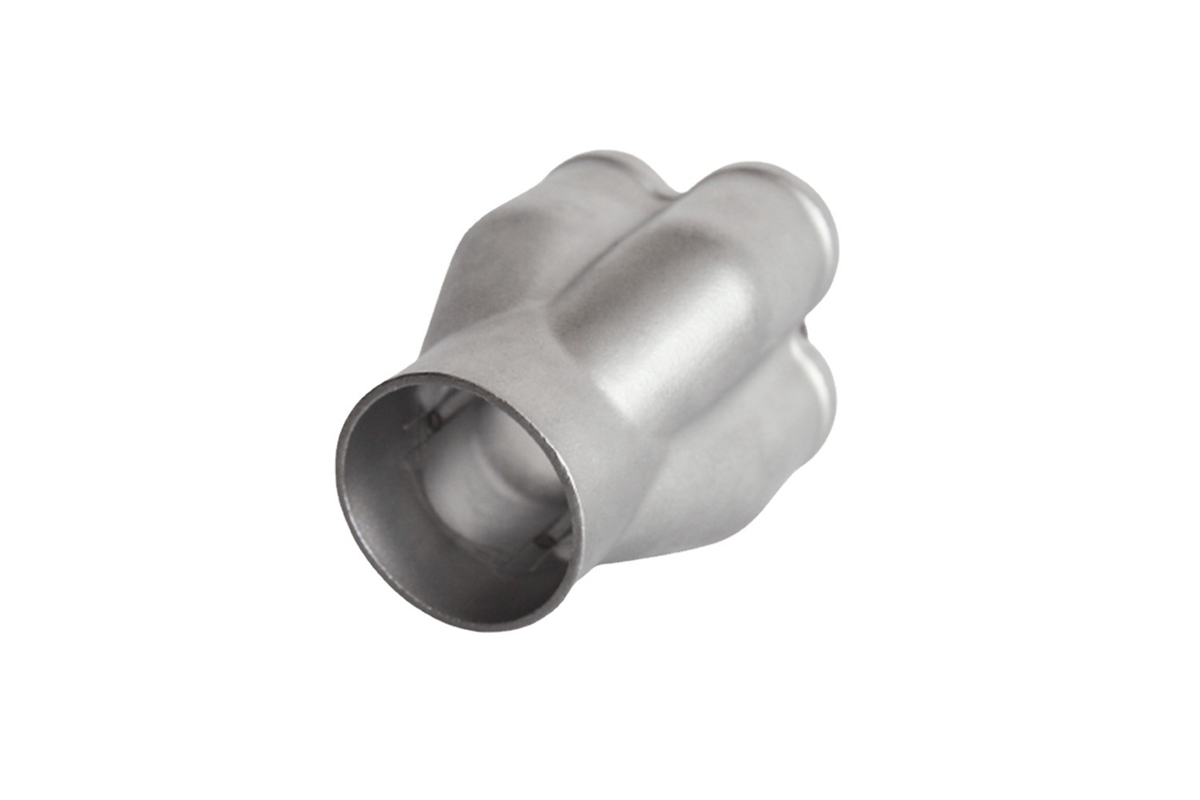
Tecnología Central de la Fundición de Cristal Equiaxial de Hastelloy B
La tecnología de fundición de cristal equiaxial implica procesos de solidificación controlados para producir microestructuras uniformes, mejorando las propiedades mecánicas isotrópicas. Al gestionar con precisión los gradientes térmicos y las tasas de enfriamiento (típicamente dentro de 50-200 °C/min), los fabricantes logran tamaños de grano óptimos que van desde 0.5 hasta 3 mm. Esta tecnología reduce eficazmente defectos estructurales como porosidad y microfisuras, cruciales para garantizar la fiabilidad y longevidad de los componentes de Hastelloy B que operan continuamente a temperaturas superiores a 900°C.
Características del Material Hastelloy B
Hastelloy B, una aleación de níquel-molibdeno, ofrece una resistencia excepcional a la corrosión, particularmente en entornos de ácido clorhídrico y cloruro de hidrógeno. Sus excelentes propiedades mecánicas a temperaturas elevadas la hacen adecuada para aplicaciones aeroespaciales de alto rendimiento. Las características específicas incluyen:
Propiedad | Valor |
|---|---|
Punto de Fusión | 1330–1380°C |
Densidad | 9.24 g/cm³ |
Límite Elástico (a 760°C) | 230 MPa |
Resistencia a la Tracción (a 760°C) | 550 MPa |
Alargamiento | ≥40% |
Coeficiente de Expansión Térmica | 11.2 µm/m°C |
Estas propiedades distintivas posicionan al Hastelloy B como una elección ideal para fabricar componentes de escape de aeronaves de alta tensión.
Estudio de Caso: Fundición de Cristal Equiaxial para Sistemas de Escape de Aeronaves de Hastelloy B
Antecedentes del Proyecto
El proyecto involucró la producción de sistemas de escape de aeronaves de alto rendimiento utilizando Hastelloy B mediante fundición de cristal equiaxial. Impulsada por la necesidad de mayor durabilidad, resistencia a la corrosión y estabilidad térmica en aplicaciones aeroespaciales, los componentes se fabricaron para cumplir con estrictos estándares aeroespaciales (AMS5755, ASTM B333). El entorno de uso final exigía una operación confiable a temperaturas de escape sostenidas superiores a 850°C.
Modelos y Aplicaciones Típicas de Sistemas de Escape
Ductos de Escape del Motor F110: Motores de aviones militares que requieren alta resistencia a la corrosión y estabilidad estructural bajo temperaturas de operación de hasta 900°C.
Conjuntos de Tobera GE CF34: Motores turbofán de aviación comercial que necesitan una resistencia superior a la fatiga térmica y durabilidad a la corrosión durante ciclos de vuelo frecuentes.
Componentes de Escape Pratt & Whitney PW1000G: Piezas de motores turbofán avanzados optimizadas para reducción de peso y resistencia excepcional a temperaturas operativas elevadas.
Escape de APU Honeywell 131-9: Unidades de potencia auxiliar que exigen estabilidad térmica confiable y resistencia a la corrosión por gases de escape durante operaciones terrestres continuas.
Estos componentes resisten eficazmente severos ciclos térmicos, entornos químicos agresivos y tensiones mecánicas inherentes a las operaciones aeroespaciales y de defensa.
Soluciones de Fabricación de Componentes de Sistemas de Escape
Proceso de Fabricación Los componentes se producen mediante fundición a la cera perdida al vacío empleando solidificación de cristal equiaxial. El control preciso de las temperaturas de fundición (alrededor de 1400°C), el precalentamiento del molde a 950-1100°C y las tasas de solidificación estrictas garantizan una microestructura uniforme, un tamaño de grano consistente (1-3 mm) y tolerancias dimensionales dentro de ±0.05 mm.
Proceso de Postprocesamiento Después de la fundición, las piezas se someten a un prensado isostático en caliente (HIP), realizado aproximadamente a 1150°C bajo atmósfera inerte de argón y presiones de 100-120 MPa. Este paso crítico reduce la porosidad por debajo del 1%, mejorando significativamente la densidad estructural, las propiedades mecánicas y el rendimiento a la fatiga.
Tratamiento de Superficie Para proteger aún más contra la oxidación a alta temperatura y los gases corrosivos, los componentes reciben un revestimiento de barrera térmica (TBC) aplicado mediante proyección por plasma. El TBC, que típicamente consiste en zirconia estabilizada con itria (YSZ), aísla eficazmente el sustrato, reduce la temperatura de operación hasta en 200°C y extiende significativamente la vida útil del componente.
Proceso de Pruebas El control de calidad integral incluye inspecciones no destructivas como radiografía digital de rayos X, verificando la integridad interna a menos del 1% de porosidad. Las evaluaciones mecánicas abarcan pruebas de tracción a temperaturas elevadas y exámenes microestructurales detallados mediante microscopía metalográfica, confirmando el cumplimiento de los estrictos estándares de materiales aeroespaciales.
Desafíos Centrales de Fabricación de Discos de Turbina
La fabricación de discos de turbina de Hastelloy B planteó desafíos críticos que incluyen:
Mantener la precisión dimensional dentro de tolerancias de ±0.05 mm.
Gestionar defectos internos debido a la contracción por solidificación de la aleación (~1-2%).
Asegurar propiedades mecánicas consistentes entre lotes de producción, verificadas por una resistencia a la tracción ≥550 MPa a temperaturas elevadas.
Resultados y Verificación
Los componentes de escape finales se sometieron a rigurosos procesos de verificación:
Se logró una porosidad inferior al 1%, verificada por inspección de rayos X.
Pasaron pruebas de vida a fatiga superando 10,000 ciclos térmicos entre ambiente y 900°C.
Cumplieron con los estándares AMS y ASTM, validando el rendimiento mecánico mediante resistencias a la tracción y límites elásticos documentados que superan los umbrales requeridos.
Preguntas Frecuentes
¿Qué hace que el Hastelloy B sea adecuado para fabricar componentes de escape de aeronaves?
¿Cómo mejora la tecnología de fundición de cristal equiaxial la durabilidad de los componentes de Hastelloy B?
¿Cuáles son los métodos de inspección específicos utilizados para garantizar la calidad de la fundición de Hastelloy B?
¿Qué aplicaciones de sistemas de escape aeroespaciales utilizan comúnmente la aleación Hastelloy B?
¿Cómo se controla la porosidad y la uniformidad del grano durante el proceso de fundición de Hastelloy B?
