
Unternehmen für Superlegierungs-Präzisionsguss von Gasturbinen-Düsenträgern
Einführung
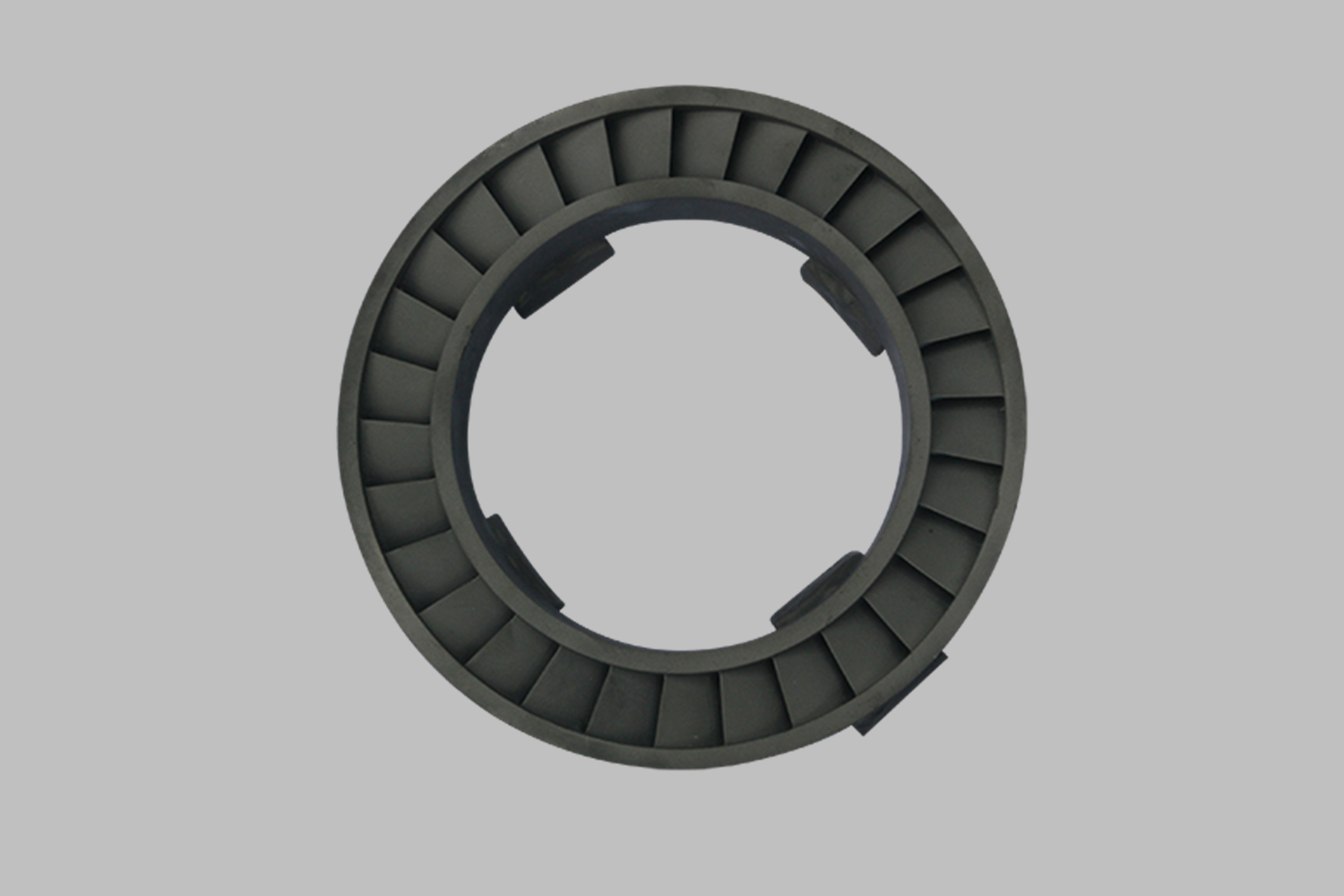
Neway AeroTech ist ein spezialisiertes Unternehmen, das präzise Gasturbinen-Düsenträger unter Verwendung fortschrittlicher Superlegierungs-Vakuumpräzisionsguss-Techniken liefert. Durch den Einsatz von Hochleistungswerkstoffen wie Inconel 713C und Einkristalllegierungen wie CMSX-4 erreichen wir Maßgenauigkeiten innerhalb von ±0,05 mm und Oberflächengüten besser als Ra ≤1,6 µm.
Unsere Düsenträger halten zuverlässig kontinuierlichen Temperaturen von über 1100°C stand und erfüllen die strengen Leistungskriterien, die für Luft- und Raumfahrt- sowie Energieerzeugungsturbinenanwendungen wesentlich sind.
Kernherausforderungen beim Gießen von Superlegierungs-Düsenträgern
Die Herstellung von Gasturbinen-Düsenträgern aus Superlegierungen wie CMSX-4, Inconel 713C und Hastelloy X stellt besondere technische Herausforderungen dar:
Präzise Kontrolle der Kornstruktur (Einkristall, gerichtet erstarrt, gleichachsig).
Handhabung des Legierungsschmelzens bei extrem hohen Temperaturen (1300–1450°C).
Beibehaltung der Maßgenauigkeit von ±0,05 mm für komplexe aerodynamische Merkmale.
Erreichen einer optimalen Oberflächenintegrität (Ra ≤1,6 µm), die für den Turbinenwirkungsgrad entscheidend ist.
Detaillierter Präzisionsgussprozess
Der Präzisionsgussprozess für Superlegierungs-Düsenträger umfasst:
Wachsmodellherstellung: Hochgenaue Wachsmodelle werden mittels CNC-Bearbeitung oder additiver Fertigung geformt.
Keramikschalenherstellung: Aufeinanderfolgende Schichten von Keramikschlicker und feuerfesten Sandbeschichtungen auf den Wachsmodellen.
Wachsentfernung und Schalenvorbereitung: Autoklav-Entwachsung bei ~150°C und Schalensintern bei 1000°C.
Vakuumlegierungsschmelzen: Hochreine Superlegierungen werden in Vakuumumgebungen (<0,01 Pa) geschmolzen, um Verunreinigungen zu eliminieren.
Kontrollierte Erstarrung: Gerichtet kontrollierte oder einkristalline Erstarrungstechniken zur Optimierung der mechanischen Eigenschaften.
Endgültige Schalenentfernung und Nachbearbeitung: Präzise Schalenentfernung und finale CNC-Bearbeitung, um spezifizierte Toleranzen und Oberflächengüten zu erreichen.
Vergleich von Fertigungsmethoden für Düsenträger
Methode | Maßgenauigkeit | Oberflächengüte (Ra) | Kornstrukturkontrolle | Mechanische Leistung | Kosteneffizienz |
|---|---|---|---|---|---|
Vakuumpräzisionsguss | ±0,05 mm | ≤1,6 µm | Hervorragend | Überlegen | Mittel |
Pulvermetallurgie | ±0,03 mm | ≤1,2 µm | Hervorragend | Überlegen | Hoch |
Präzisionsschmieden | ±0,2 mm | ≤3,2 µm | Gut | Gut | Mittel |
CNC-Bearbeitung | ±0,01 mm | ≤0,8 µm | Begrenzt | Gut | Hoch |
Strategie zur Auswahl der Fertigungsmethode
Die optimale Auswahl der Fertigungsmethode umfasst:
Vakuumpräzisionsguss: Ideal für komplexe aerodynamische Düsengeometrien, enge Maßgenauigkeit, hervorragende Oberflächenqualität und spezifische Kornstrukturen.
Pulvermetallurgie: Geeignet für Düsenträger, die maximale Festigkeit und engste Toleranzen erfordern, insbesondere für kritische Luft- und Raumfahrtanwendungen.
Präzisionsschmieden: Am besten für einfachere Designs geeignet, die moderate Genauigkeit und höhere Serienproduktionseffizienz benötigen.
CNC-Bearbeitung: Geeignet für Prototypen, Kleinserien oder finale Bearbeitungsvorgänge, die extreme Genauigkeit erfordern.
Leistungsmatrix für Superlegierungswerkstoffe
Legierung | Schmelzbereich (°C) | Einsatztemperatur (°C) | Zugfestigkeit (MPa) | Oxidationsbeständigkeit | Typische Anwendungen |
|---|---|---|---|---|---|
1315–1345 | 1150 | 1250 | Überlegen | Einkristall-Turbinendüsen | |
1310–1355 | 950 | 1200 | Außergewöhnlich | Hochtemperatur-Gasturbinendüsen | |
1260–1355 | 900 | 860 | Überlegen | Brennkammerdüsen | |
1320–1360 | 950 | 1200 | Hervorragend | Gasturbinen-Düsensegmente | |
1320–1365 | 1150 | 1150 | Überlegen | Fortschrittliche Luftfahrt-Düsenträger | |
1260–1350 | 800 | 870 | Hervorragend | Ventil- und Pumpendüseneinsätze |
Leitlinien zur Werkstoffauswahl
Leitlinien zur Werkstoffauswahl für Gasturbinen-Düsenträger umfassen:
CMSX-4: Bevorzugt für einkristalline Düsenträger, die außergewöhnliche Kriechfestigkeit und Stabilität bei Temperaturen bis zu 1150°C erfordern.
Inconel 713C: Optimal für Hochtemperatur-Turbinendüsenträger, die robuste Oxidationsbeständigkeit und Zugfestigkeiten (1200 MPa) bei bis zu 950°C benötigen.
Hastelloy X: Ausgewählt für Brennkammerdüsen aufgrund hervorragender Oxidationsbeständigkeit, moderater mechanischer Festigkeit und zuverlässiger Leistung bei 900°C.
Nimonic 90: Ideal für Düsensegmente, die hervorragende Festigkeit, Kriechbeständigkeit und Oxidationsstabilität bei 950°C benötigen.
Rene N5: Empfohlen für fortschrittliche Luft- und Raumfahrt-Düsenträger, die außergewöhnliche Kriech- und Ermüdungsbeständigkeit bei Temperaturen bis zu 1150°C erfordern.
Stellite 6: Gewählt für Düseneinsätze in Ventilen und Pumpen, die überlegene Verschleißfestigkeit und gute mechanische Eigenschaften bei moderaten Temperaturen benötigen.
Wesentliche Nachbearbeitungstechnologien
Wichtige Nachbearbeitungsvorgänge umfassen:
Heißisostatisches Pressen (HIP): Beseitigt innere Porosität und verbessert die Bauteilzuverlässigkeit erheblich.
Wärmedämmschicht (TBC): Keramische Beschichtungen (100–250 µm Dicke) verbessern die Wärmebeständigkeit und verlängern die Lebensdauer.
Präzisions-CNC-Bearbeitung: Sicherstellt die endgültige Maßgenauigkeit und Oberflächengüteanforderungen, die für den Turbinenwirkungsgrad entscheidend sind.
Kontrollierte Wärmebehandlung: Maßgeschneidertes Glühen und Altern verbessern die mechanischen Eigenschaften und optimieren die Mikrostrukturen.
Prüfmethoden und Qualitätssicherung
Neway AeroTech wendet fortschrittliche Prüfmethoden und strenge Qualitätssicherung an, um die Integrität der Düsenträger sicherzustellen:
Koordinatenmessmaschine (CMM): Sicherstellt Maßgenauigkeit innerhalb von ±0,005 mm.
Röntgenprüfung: Erkennt interne Defekte und sicherstellt die strukturelle Integrität.
Metallografische Mikroskopie: Bewertet Kornstrukturen und bestätigt optimale Mikrostruktur.
Zugprüfung: Validiert mechanische Eigenschaften, einschließlich Zug- und Streckgrenzen.
Alle Fertigungsprozesse halten sich strikt an AS9100 Luft- und Raumfahrtstandards und gewährleisten optimale Qualität und Zuverlässigkeit.
Fallstudie: CMSX-4 Einkristall-Düsenträger
Neway AeroTech lieferte präzise CMSX-4 Düsenträger und erreichte:
Kontinuierlicher Betrieb: bis zu 1150°C
Ermüdungslebensdauerverbesserung: ~40%
Maßgenauigkeit: ±0,03 mm
Zertifizierung: AS9100 Luft- und Raumfahrtkonformität
FAQs
Warum ist Vakuumpräzisionsguss ideal für Gasturbinen-Düsenträger?
Welche Superlegierungen erfüllen am besten die Anforderungen an Turbinendüsenträger?
Welche Toleranzen kann Präzisionsguss für Düsenträger erreichen?
Wie verbessern Nachbearbeitungsbehandlungen die Haltbarkeit von Düsenträgern?
Welche Qualitätssicherungsmaßnahmen gewährleisten die Zuverlässigkeit von Düsenträgern?
