
Stellite-Legierungsbasierte Turbinenrotorteile vom führenden Superlegierungs-Schmiedezulieferer
Einführung
Stellite-Legierungen sind für ihre außergewöhnliche Verschleißfestigkeit, Korrosionsbeständigkeit und thermische Stabilität bekannt, was sie ideal für die Herstellung kritischer Turbinenrotorkomponenten macht. Bei Neway AeroTech sind wir spezialisiert auf Präzisionsschmiededienstleistungen für Stellite-Legierungen und liefern Turbinenrotorteile mit Maßtoleranzen von ±0,05 mm, ausgezeichneter Ermüdungsfestigkeit und überlegener Leistung in rauen Betriebsumgebungen.
Mit fortschrittlichen Schmiede-, Wärmebehandlungs- und Oberflächenverarbeitungstechnologien stellt Neway sicher, dass Stellite-Rotorteile unter den anspruchsvollsten Turbinenbedingungen eine optimale Lebensdauer und Zuverlässigkeit erreichen.
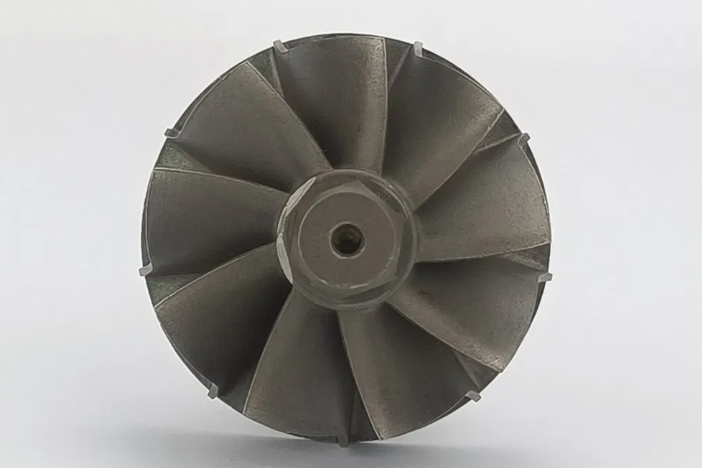
Kernherausforderungen bei der Herstellung von Stellite-Turbinenrotorteilen
Das Schmieden von Turbinenrotorteilen aus Stellite 6 und Stellite 21 stellt einzigartige Herausforderungen dar:
Hohe Materialhärte (HRC 40–55) erhöht den Werkzeugverschleiß und die Schmiedekomplexität.
Einhaltung präziser Maßtoleranzen (±0,05 mm) für aerodynamische Effizienz und Rotorauswuchtung.
Erzielung einer gleichmäßigen Kornstruktur für verbesserte Ermüdungslebensdauer und Wärmebeständigkeit.
Steuerung der Karbidphasenverteilung zur Verbesserung der Verschleiß- und Korrosionsbeständigkeit ohne Versprödung.
Präzisionsschmiedeprozess für Stellite-Rotorkomponenten
Der Präzisionsschmiedeprozess für Stellite-Turbinenrotoren umfasst:
Vorwärmen der Knüppel: Gleichmäßiges Erwärmen von Stellite-Knüppeln auf 1150–1200°C, um optimale Schmiedbarkeit sicherzustellen.
Gesenkschmieden: Anwendung kontrollierter Verformungsraten, um Zielgeometrien und homogene Mikrostrukturen zu erreichen.
Kontrollierte Abkühlung: Allmähliche Luftabkühlung oder kontrollierte Ofenabkühlung (~20–40°C/h), um die Korngröße zu verfeinern und Eigenspannungen zu minimieren.
Wärmebehandlung nach dem Schmieden: Lösungsglühen und kontrollierte Auslagerung, um Härte, Zugfestigkeit und Kriechbeständigkeit zu optimieren.
Finale CNC-Bearbeitung: Präzisionsbearbeitung, um Toleranzen innerhalb von ±0,01 mm und Oberflächengüten Ra ≤1,6 µm für den Rotordynamikausgleich zu erreichen.
Vergleich von Fertigungsmethoden für Turbinenrotorteile
Fertigungsmethode | Maßgenauigkeit | Oberflächengüte (Ra) | Verschleißfestigkeit | Thermische Stabilität | Kosteneffizienz |
|---|---|---|---|---|---|
Präzisionsschmieden | ±0,05 mm | ≤3,2 µm | Überlegen | Überlegen | Mittel |
Vakuum-Fein- bzw. Präzisionsguss | ±0,1 mm | ≤3,2 µm | Gut | Gut | Mittel |
CNC-Bearbeitung (aus Vollmaterial) | ±0,01 mm | ≤0,8 µm | Gut | Mäßig | Hoch |
Strategie zur Auswahl der Fertigungsmethode
Die Auswahl der geeigneten Methode für Turbinenrotorteile hängt von den Leistungsanforderungen ab:
Präzisionsschmieden: Ideal für kritische Rotoren, die überlegene mechanische Festigkeit, kontrollierte Mikrostrukturen und enge Toleranzen (±0,05 mm) erfordern. Geschmiedete Stellite-Rotorteile bieten bis zu 30–40 % bessere Verschleiß- und Ermüdungslebensdauer im Vergleich zu gegossenen Äquivalenten.
Vakuum-Feinguss: Geeignet für komplexe Geometrien, bei denen das Schmieden schwierig ist. Erzielt angemessene mechanische Eigenschaften und Oberflächengüten.
CNC-Bearbeitung (aus Vollmaterial): Bevorzugt für Prototypen oder ultrahochpräzise Teile, die finale Bearbeitungstoleranzen (±0,01 mm) und ausgezeichnete Oberflächengüten (Ra ≤0,8 µm) erfordern.
Stellite-Legierungsleistungsmatrix
Legierungsmaterial | Härte (HRC) | Zugfestigkeit (MPa) | Verschleißfestigkeit | Oxidationsbeständigkeit | Typische Anwendungen |
|---|---|---|---|---|---|
43–50 | 900 | Überlegen | Ausgezeichnet | Turbinenrotoren, Ventilsitze | |
35–45 | 870 | Gut | Ausgezeichnet | Hochbelastete rotierende Teile | |
48��55 | 950 | Überlegen | Gut | Schneidrotoren, Luftfahrtdichtungen | |
42–48 | 870 | Überlegen | Überlegen | Turbinenwellen, Verschleißringe | |
30–38 | 850 | Mäßig | Ausgezeichnet | Luftfahrt-Turbinenrotoren |
Legierungsauswahlstrategie für Stellite-Rotorteile
Legierungsauswahlstrategien basieren auf dem Einsatzumfeld und den erforderlichen Eigenschaften:
Stellite 6: Bevorzugt für universelle Turbinenrotorteile, die ausgezeichnete Verschleiß- und Korrosionsbeständigkeit mit hoher Härte (HRC 43–50) erfordern.
Stellite 21: Gewählt für Rotorkomponenten, die unter thermischen Wechselbedingungen bessere Duktilität und Zähigkeit benötigen.
Stellite 12: Ideal für Schneidrotoren und Dichtungen, die extrem abrasiven Bedingungen ausgesetzt sind, mit Härten bis zu HRC 55.
Stellite 6B: Geeignet für Turbinenwellen und Verschleißringe, die hohe Härte und überlegene Oxidationsbeständigkeit erfordern.
Stellite 25: Verwendet in Luftfahrt-Turbinenrotoren, bei denen Hochtemperaturfestigkeit und Korrosionsbeständigkeit wesentlich sind.
Wichtige Nachbearbeitungstechniken
Wesentliche Nachbearbeitungsbehandlungen für Turbinenrotorteile umfassen:
Heißisostatisches Pressen (HIP): Verbessert die Dichte und Ermüdungsfestigkeit durch Beseitigung von Porosität.
Präzisions-CNC-Bearbeitung: Finale Maßanpassungen mit ±0,01 mm Präzision.
Wärmebehandlung: Maßgeschneidertes Glühen und Auslagern zur Optimierung der mechanischen und thermischen Ermüdungseigenschaften.
Oberflächenveredelung: Schleifen, Polieren und Schutzbeschichtungen zur Verbesserung der Verschleißlebensdauer und Reduzierung der Reibung.
Prüfmethoden und Qualitätssicherung
Neway AeroTech garantiert die Bauteilqualität durch:
Koordinatenmessmaschine (CMM): Maßprüfung innerhalb von ±0,005 mm.
Röntgenprüfung: Interne Fehlererkennung für die strukturelle Integrität.
Metallographische Mikroskopie: Mikrostrukturelle Bewertung der Karbidverteilung und Kornstruktur.
Zugversuch: Überprüfung der mechanischen Festigkeit.
Die Qualitätssicherung entspricht vollständig den Luftfahrtstandards AS9100.
Fallstudie: Präzisionsgeschmiedete Stellite-6B-Turbinenrotoren
Neway AeroTech lieferte erfolgreich Stellite-6B-Turbinenrotorkomponenten für ein industrielles Turbinenprojekt und erreichte:
Maßpräzision: Konsistent eingehaltene ±0,03 mm
Oberflächengüte: Erreichtes Ra ≤1,2 µm nach der Endbearbeitung
Ermüdungslebensdauer: Verbessert um 32 % nach HIP- und Auslagerungsbehandlung
Zertifizierung: Vollständige Konformität mit AS9100-Luftfahrtstandards
Häufig gestellte Fragen (FAQ)
Was sind die Vorteile der Verwendung von Stellite-Legierungen für Turbinenrotorteile?
Welche Stellite-Legierungsgrade eignen sich am besten für hochverschleißfeste Turbinenkomponenten?
Wie verbessert das Schmieden die Leistung von Stellite-Rotorteilen?
Welche Nachbearbeitungstechniken erhöhen die Haltbarkeit von Stellite-Rotoren?
Welche Qualitätsstandards erfüllen Ihre geschmiedeten Stellite-Turbinenkomponenten?
